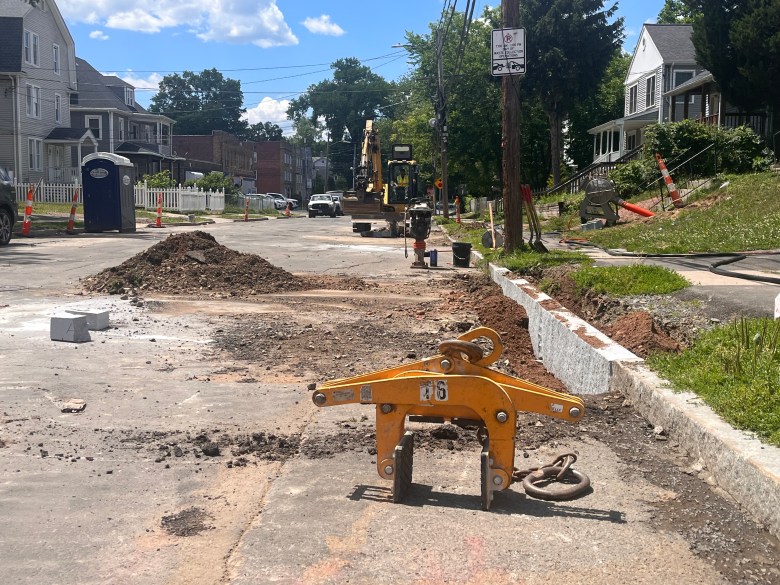
When Cynthia Jennings moved into her home on Hartland Street in Hartford’s North End around a decade ago, heavy storms would occasionally flood her street’s sewer system, causing a mixture of storm water and raw sewage to overflow into her and her neighbor’s basements.
The first time it happened, Jennings said, she had been storing several boxes of her late mother’s personal belongings in the basement.
“I had no idea that I’d have to throw all that, all her things out, all her memorabilia, everything,” Jennings said. “It’s a really disconcerting feeling to lose so much, and you can’t replace a lot of those things.”
Jennings, a former Hartford city councilwoman and longtime community advocate, said sewage backups continued for years until around 2024, when the Metropolitan District Commission sent a crew to begin addressing the issue at every home on her street. After inspecting her home, the workers installed a sump pump and new valves to prevent backups.
Since then, Jennings said, she no longer has to fear the rain. “That basement is bone dry,” she said.
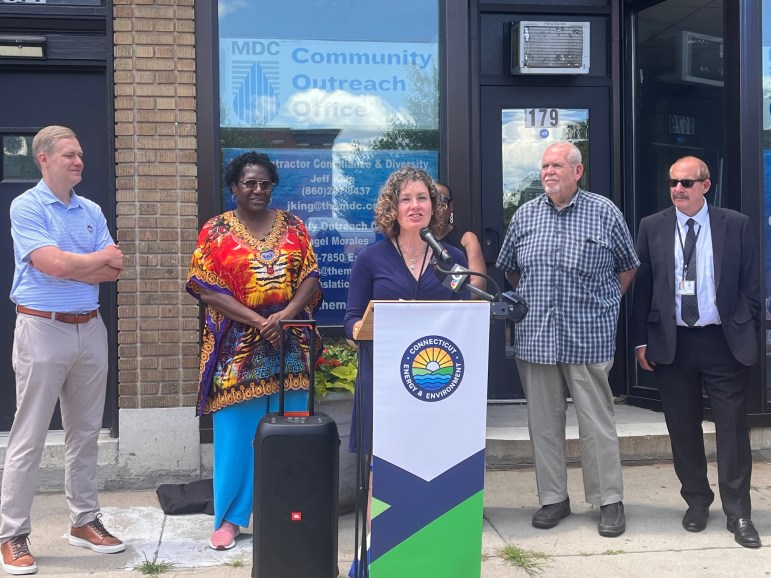
Jennings was among a handful of officials who gathered in the North End on Wednesday to celebrate the results of a $170 million pilot program launched by the state and the MDC in 2023 to tackle chronic issues with flooding that neighborhood residents said had been ignored for years.
Over the last three years, officials said, they have spent about two-thirds of the money to rehabilitate older sewer pipes, build separated stormwater collection systems and install lateral lines or other backup prevention devices on more than 5,000 properties.
“It was not only life-altering, it was defeating for people,” said House Speaker Matt Ritter, D-Hartford. “It was to the point where their homes were unusable, their basements unusable, a lifetime of investment — a house not worth a third of the value it was just a year ago — and it was affecting thousands of homes.”
The funding for those repairs was announced during a news conference in June 2023, during which state and local leaders apologized for failing to heed residents’ calls for help.
“If there were sewage bubbling up in a basement in Guilford or Greenwich, they’d be getting that fixed overnight,” Gov. Ned Lamont said that the time.
Just a week after that news conference, torrential rains caused widespread flooding in many of the homes that politicians were promising to protect.
About half of the money, $85 million, came from the state’s Clean Water Fund, administered by the Department of Energy and Environmental Protection. The rest of the funding cam from the MDC, which provides water and sewer services to the greater Hartford area.
State officials say the flooding problems in North Hartford stem from the city’s century-old wastewater infrastructure.
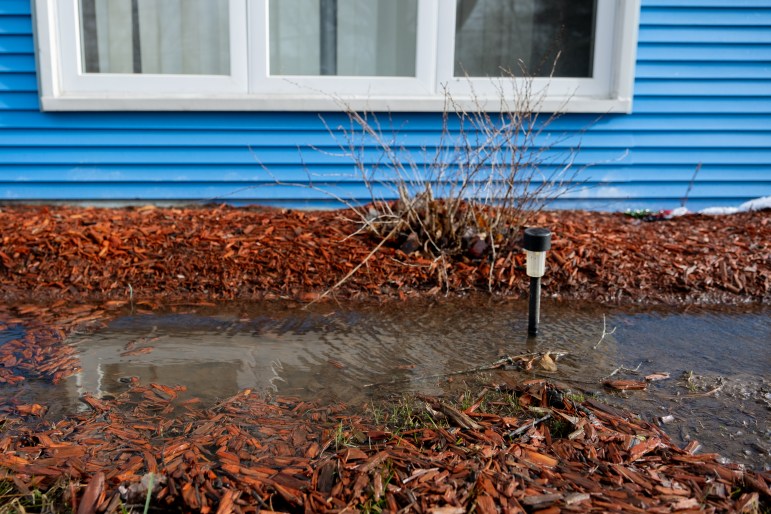
Unlike more modern systems that keep sewage and stormwater separate, Hartford’s combined system can become easily overwhelmed during storms. That causes untreated wastewater and sewage to be discharged directly into the Connecticut River, while in some areas the dirty mixture can spill over into people’s yards and basements.
“The challenge for communities like Hartford is that we have aging, antique infrastructure that was built a long time ago when we had a very different relationship to our rivers and streams, and we treated them like sewers,” DEEP Commissioner Katie Dykes said Wednesday.
While the environmental and pollution problems caused by sewer overflows are well documented, Dykes said that the related impacts on urban communities often get overlooked.
“The uncomfortable question that … everyone else in the community was asking is, what about us, and what about the people, and the residents, and the small businesses in this community who are being impacted by that same aging infrastructure now, as we see extreme weather events and really intense rain rainstorms becoming more frequent,” she said.
As part of the pilot program, Dykes said, DEEP agreed to allow Clean Water Funds to be used to make repairs and install better infrastructure on private property — saving homeowners from having to pay for costly renovations that can exceed $10,000.
The U.S. Environmental Protection Agency is also working with the state to address the issue of combined sewer overflows, including through a 2006 consent decree with the MDC by which the district agreed to improve the infrastructure and maintenance of its system.
Scott W. Jellison, the chief executive of the MDC, said the district has already spent over $1.8 billion on that effort throughout its service territory. He added that work on the North End pilot program is ongoing and urged residents who are having issues in their homes to contact the agency for help.
“We will be here for the next 20 years,” Jellison said. “We’re not going away.”