



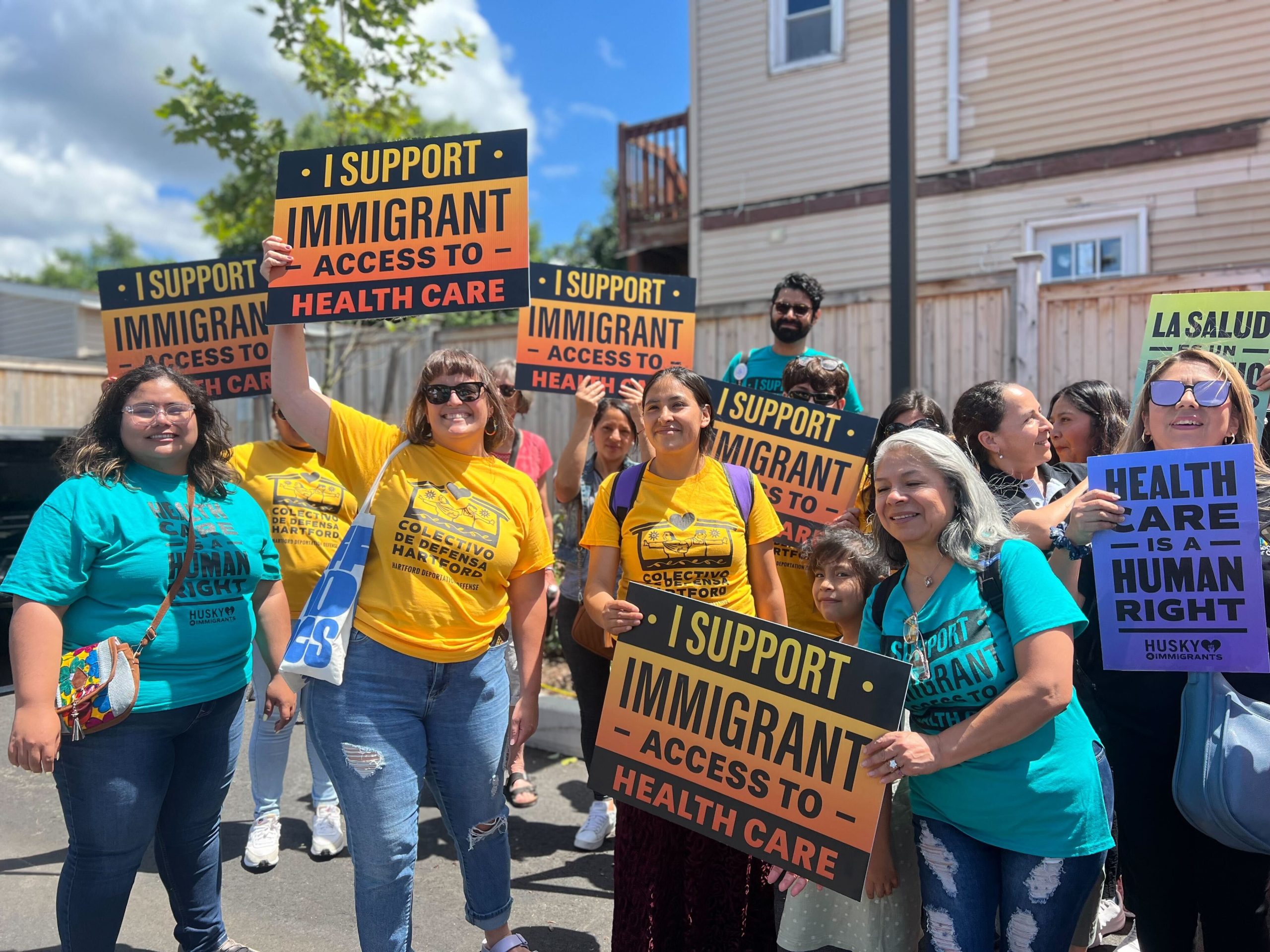
Today, July 1, 2026, marks two years since the expansion of HUSKY medical insurance to include immigrant youth through age 15 in Connecticut.
While this hard-fought victory has been meaningful for many of Connecticut’s young people, including public school students, their loved ones, and our communities, it is remarkable to me that coverage stops so abruptly, and at such a young age. Is a 16-year-old somehow better able to access healthcare through other means than a 15-year-old? Does a 16-year-old have less need for medical care? Of course not.
I have taught many undocumented students, and as both an educator and community member, I care deeply about their wellness. These resilient young people have limited access to counseling and medical care, but when they age out of HUSKY, much of that care is discontinued. Students who were receiving counseling for trauma or mental illness abruptly halt therapy. Prescriptions become out of reach and are rationed or dropped altogether. Most troubling to me, young women lose coverage of reproductive and gynecological healthcare, just at the age when it becomes essential.
The exclusion of older teens and adults from the 2024 extension of HUSKY leaves a good idea unfinished. Early treatment and intervention reduce the cost of healthcare over the long term and improve wellness outcomes. It is shameful that the norm for our undocumented neighbors (once they turn 16) is to go without preventative care, instead waiting until their health issues become a crisis requiring emergency treatment. This cycle is penny-wise and pound-foolish, leading to the development of entirely preventable illnesses and conditions, and ultimately ratcheting up hospital bills for all of us.
Undocumented immigrants in Connecticut contribute a great deal to our economy, paying over $370 million in state taxes every year. These funds land in Connecticut’s coffers for programs that claim to be for all Connecticut residents, but undocumented individuals are not able to access many of them, including HUSKY once they reach age 16. This is unfair. Undocumented residents deserve an equal opportunity to access the programs they help to fund.
In addition, we must not forget what we learned from the COVID-19 pandemic: like it or not, our neighbors’ wellness affects our own. We are all in this together. Even if you somehow begrudge immigrants access to healthcare, HUSKY for all immigrants is a safeguard for public health, for all of us.
As the U.S. health insurance industry has become more convoluted and costly for the average family, it’s unsurprising that many of us feel beaten down by its systems and are tempted to retreat into our respective corners, protecting what little resources we have for ourselves. However, this feeling of scarcity is fabricated – there is, in fact, enough to go around.
At this time of budget surpluses and an overflowing Rainy Day Fund, the Connecticut legislature should preserve the coverage gains that Connecticut Students for a Dream and the HUSKY for Immigrants Coalition have won for children and pregnant/postpartum people. In addition, our representatives can expand progressive revenue options and adjust the fiscal controls to robustly fund our social safety net programs, including HUSKY for immigrants of all ages.
Kristin Bengtson Mendoza, Ed.D., is a long-time Connecticut educator and an incoming Assistant Professor of Curriculum and Learning at Southern Connecticut State University. The opinions expressed here are hers alone.