



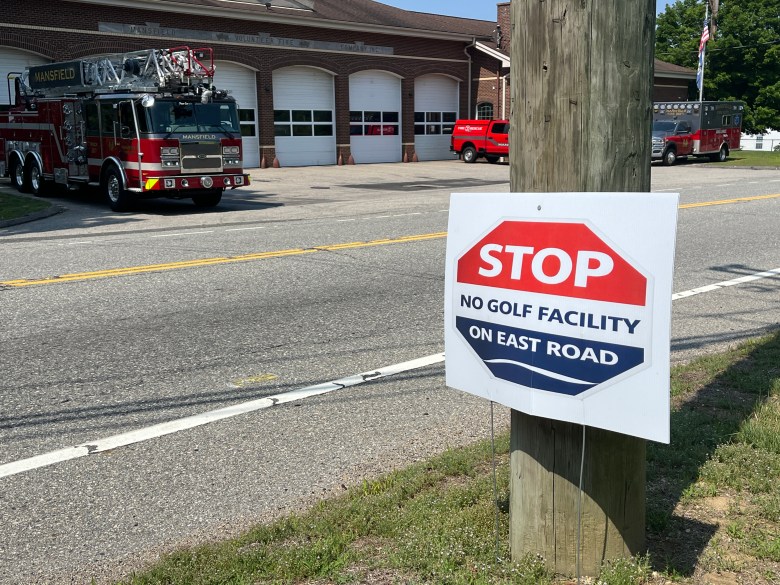
When students learned of The University of Connecticut’s plans to construct a golf practice facility on Mansfield’s East Road, opposition was immediate.
To our university’s administration, this reaction should not have been surprising. As of 2019, each student at UConn is required to pass a three-credit course in environmental literacy, which has served to shape a strong understanding of environmental justice among the general campus.
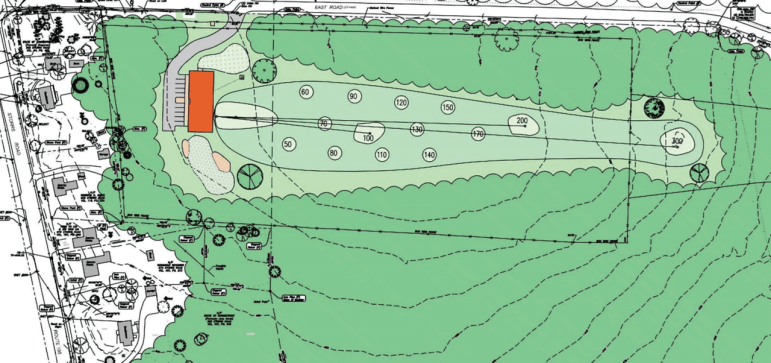
Thanks to our university’s environmental curriculum, we had been taught to identify the grave danger posed by the golf facility’s planned construction along East Road. Not only would any run-off pollution pose a danger to our community’s drinking water, but the nature of the construction threatens to interrupt key biological processes present on East Road.
The facility would replace the Waxman Conifer Collection created by former UConn horticulturalist Sidney Waxman.
Most notably, the removal of trees and the destruction of the site’s many natural springs would lead to significant and unchecked erosion — an issue already present in the area. Coupled with the replacement of the area’s mixed shrubbery with a wide variety of impervious surfaces, the damage would only be exacerbated.
UConnifer — a student coalition opposed to the golf facility project — was founded to uphold these sentiments, and the sustainable values we students hold dear. What began as a general outcry quickly spiraled into ice cream bar meetings, and from there, hushed gatherings in borrowed lecture halls.
We became everything our university taught us to be: a student-run coalition of writers, ecologists, researchers, activists and, more important, everyday inspired individuals. We rally in defense of our community and in support of the university: fighting to uphold its values in the face of our administration’s own failure to do so.
Since our first meeting, UConnifer has seen unprecedented success. In only a few short months, our campaign has gathered over 3,200 supporting signatures, attracted statewide media attention, earned the support of a number of state lawmakers, and has been backed by regional environmental watchdog groups. As a result, we have stalled progress toward the construction of the golf facility, with no significant updates about the continued development of the site.
Despite these victories, our work is not done. UConn’s Board of Trustees, led by President Radenka Maric, continues to push for the development of the location. Although the board claims to be taking local concern into consideration, no formal meeting between the residents and the university has taken place to discuss ongoing concerns. Further doubt on any intent to listen to scientifically backed concerns is raised when the university’s FAQ page for the project flags any local claims as “disinformation.”
The disconnect is hard to ignore. Our school prides itself on its 2024 Sustainability Action Plan , as well as its Land and Sea Grant Status. President Maric, in particular, has placed emphasis on upholding community relationships at both the state and local levels. At present, these commitments are being actively ignored.
As a public institution, UConn represents all of us in Connecticut. We support it through our tuition, our taxpayer dollars, and our philanthropic donations. We celebrate its championship wins, buying tickets and merchandise to support our team. We encourage our friends and family members to become Huskies, joining the educational tradition that has long defined our state. We hang the school’s logo from our porch step, representing it on our sweatshirts and the decals of our cars.
What we must ask ourselves, however, is whether we can continue to support an institution that would undermine its own self-proclaimed environmental commitments. How does that reflect on us, and our state? As critical facilitators of our school’s ongoing success, the duty of the Connecticut public is to hold its flagship university responsible. If we fund an institution in support of its values, we have an obligation to intervene and demand change if it fails to do so.
Injustice at a local scale should therefore not negate reaction and reproach. UConn taught us that environmental stewardship is not just a responsibility, but a commitment to uphold.
Please join us as we ask the university to live up to the lesson it taught us. Use the information provided below to reach out to officials involved in the ongoing consideration of this facility. Voice your dissent, so that we may all strive towards reminding UConn of the university it ought to be. For more information, do not hesitate to reach out to us at uconnifers@gmail.com .
Who to contact:
- Ian Dann, Project Manager: ian.dann@uconn.edu
- Sean Vasington, Director of Planning, Design & Construction: sean.vasington@uconn.edu
- Katy Dykes, DEEP Commissioner: deep.commissioner@ct.gov
- Dan Toscano, Board of Trustees Chair: daniel.toscano@uconn.edu
- Radenka Maric, UConn President: radenka.maric@uconn.edu
Colin Hamilton of Simsbury is a student at the University of Connecticut and a member of UConnifer.