It should not take a sustained public controversy for a town to realize that process matters as much as outcomes.
And yet, the rollout of Fairfield’s traffic cameras has done something unexpected. It has drawn widespread attention across the town and pushed a broader conversation about how local decisions are made, how they are communicated, and how much opportunity residents truly have to shape them before they are implemented. That conversation has continued well beyond the initial announcement, suggesting that the issue at stake is not only the policy itself, but the process behind it.
Fairfield is both tightly connected to the region and still deeply local in its daily governance. It is the kind of place where school zones structure morning routines, beaches and parks define summer weekends, and local policy decisions are expected to feel visible, accessible, and accountable to the people they affect. That expectation is now under strain.
Every Fairfield resident wants safer streets. That is not in dispute. The disagreement is not about whether safety matters, but about how safety is designed, communicated, and governed in practice. The town’s rollout of automated speed enforcement in school zones has become more than a transportation policy. It has become a test of whether residents meaningfully shape the systems that govern their daily movement or whether participation is increasingly reduced to reacting after decisions have already been implemented.
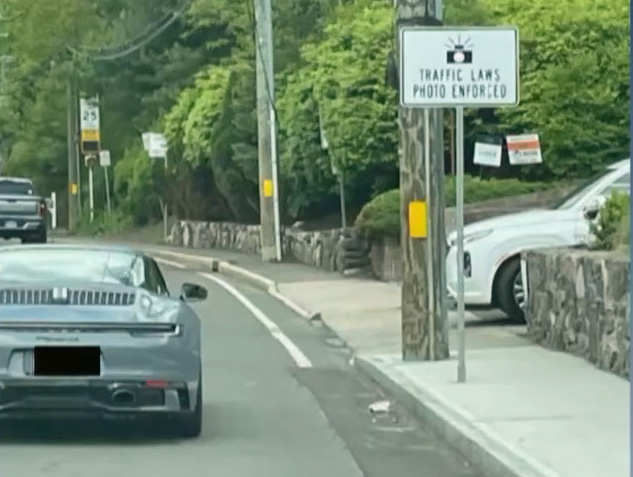
The speed camera program, implemented in spring 2026 following state authorization in late 2025, introduced automated enforcement in multiple school zones, beginning with a warning period in May 2026 before issuing citations shortly thereafter (Connecticut Insider, 2026). Early reporting documented rapid rollout and high volumes of violations in initial weeks, alongside claims of reduced speeding in targeted areas (Connecticut Insider, 2026). But even as safety outcomes are cited as justification, a more structural concern has emerged. By early June 2026, town leadership itself reflected visible disagreement over implementation details, including questions about whether the system aligned with what residents believed had been approved (CT Post, 2026). That gap between what was decided and what people understood was decided is where public trust begins to weaken.
Across Fairfield, residents have consistently pointed to key recurring breakdowns in the process.
First is communication timing. Information often becomes fully clear only after implementation begins. While official records and notices exist, many residents experience municipal communication as difficult to track in real time, particularly when updates are dispersed across meetings, agendas, and departmental channels.
Second is implementation speed relative to shared understanding. Systems move from approval to enforcement in a short window. Once active, they immediately generate citations, data, and fiscal impacts. When enforcement tools become operational before their implications are fully absorbed by the public, understanding lags behind.
Residents are continuing to describe frustration with a gap between how decisions are made, how they are recorded, and how they are experienced. The record exists, but it is not equally legible to all residents in real time. Some can follow policy development closely. Others encounter outcomes only after implementation. That is the warning sign: not absence of transparency, but asymmetry in participation during the decision-making window.
This is not unique to Fairfield. Across Connecticut suburbs, including places like Greenwich, traffic safety initiatives have followed a familiar pattern: safety framing, rapid deployment, and post-implementation debate over process, communication, and inclusion. The policy tools differ, but the governance challenge is consistent.
Criticism in this moment from residents is not rooted in opposition to safety or to the town itself. It is rooted in concern about process integrity and long-term trust. Many residents now feel this rollout reflects a breakdown in how early stakeholders were engaged and how much influence public input had before implementation decisions were finalized. That is not a minor procedural issue. It is a trust issue, and trust does not recover passively once it has been strained.
It is on the Town of Fairfield to not react to voters after decisions are already in motion, but to include them at the starting line. At minimum, it is on local leadership to listen and meaningfully respond when residents raise concerns early in the process, rather than treating public input as something to be processed after outcomes are already set.
And it remains on us as residents and community members to continue to demand full transparency, to show up early in the process rather than after decisions are finalized, and to insist that accessibility, communication, and meaningful participation are treated as core parts of governance, not optional steps once implementation has already begun.
Tara McVeigh lives in Fairfield.