
In early July, Danbury Municipal Airport administrator Michael Safranek received a message on his walkie-talkie. It was air traffic control: There were birds congregating on a taxiway. If an airplane hit one, the strike could endanger humans and wildlife alike. Could he shoo them away?
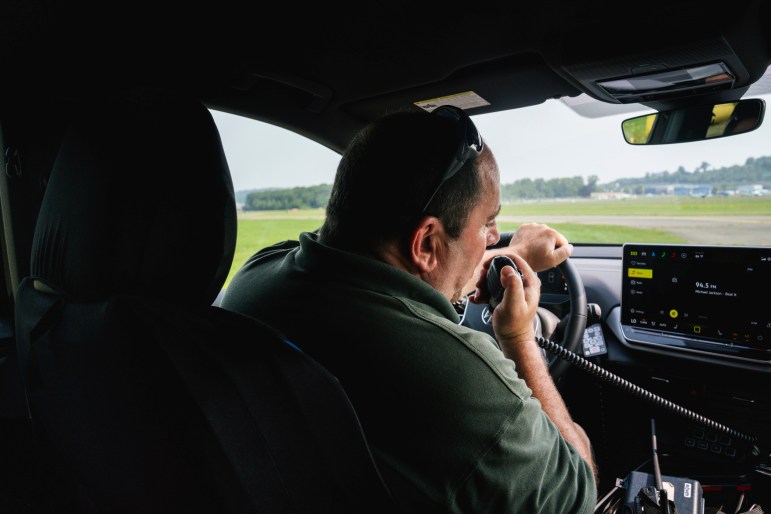
Safranek immediately got into his car and headed for the taxiway. He’s one of just eight workers who serve Danbury Municipal each day. His job means he must ensure that one of Connecticut’s busiest general aviation airports, which he said will accommodate 71,000 flights this year, runs smoothly. Part of that mandate means deterring wildlife — mostly geese, sometimes gulls and occasionally deer, coyotes and other animals — from hanging around.
Airports are not necessarily financially liable for bird strikes as long as they do their due diligence to keep birds off the runway. Safranek feels responsible for ensuring that strikes do not happen under his watch. “It’s on me,” he said.
A report by the Federal Aviation Administration notes that, between 1990 and 2024, 313,716 wildlife strikes occurred in the U.S. They’ve killed 82 people, damaged 20,439 aircraft and destroyed 162 of them. In that time frame, they’ve cost Connecticut at least $2.8 million and the U.S. more than $1.2 billion in repairs and delays.
Safranek has seen, firsthand, the damage wildlife strikes can afflict. On Sept. 7, 2017, Danbury Municipal was the site of Connecticut’s most expensive recorded wildlife strike, according to the FAA’s Wildlife Strikes Database. A Citation 500, a small business jet, was half a mile away from landing when it struck several Canada geese 150 feet in the air. The plane ingested at least one goose into an engine, which immediately shut down. Though the pilot landed safely, the report on the FAA’s database notes that repairs cost the airport $750,000.
The number of wildlife strikes across the country increased by 26% from 2023 through 2025. But in Connecticut, during the same period, the number of strikes decreased by 44% and continues to drop. Safranek believes the state’s airport workers have become more vigilant in taking preventive measures. Almost two years have passed since Danbury Municipal’s most recent wildlife strike, and he wants to maintain that streak.
“It’s a very dangerous, detrimental thing to life and property,” Safranek said. “We better keep up on it.”
Two birds, one propane cannon
On the morning of July 15, Safranek got into an airport police car and began driving around the greenery surrounding the 250-acre airport. Morning patrols have been part of his daily routine since he first began working at the airport in 2005. Most bird strikes in Connecticut happen between 7 a.m. and 10 a.m., which Safranek said coincides with most airports’ busiest times.
Wildlife strikes in Connecticut peaked in 2023 with 138 reported strikes. Safranek attributes at least part of it to increased aircraft activity after the coronavirus pandemic, when more people began traveling again — and, in Danbury Municipal’s case, when private, noncommercial pilots resumed their travels.
Wildlife, especially birds, flock to airports. Big open spaces of grass teeming with insects serve as resting spots and feeding grounds. On rainy days, they bathe in small ponds that form in natural depressions. They do not have to worry about predators, thanks to extensive fencing.
“It’s like being on vacation for them,” Safranek said.
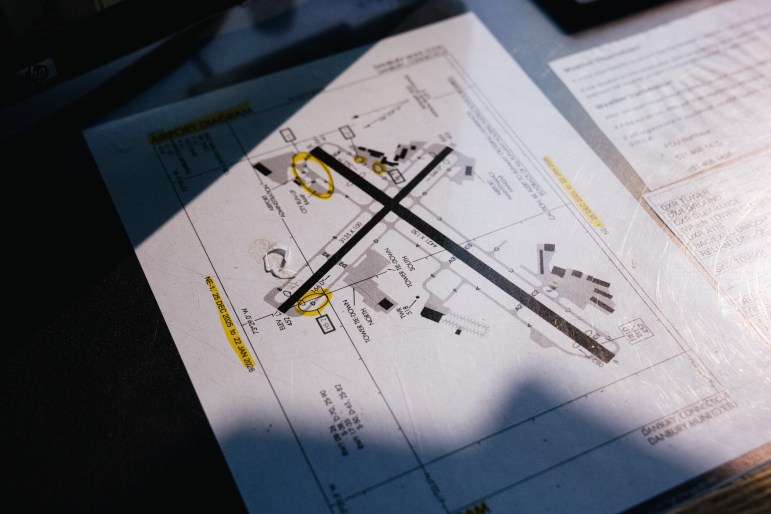
Habitat management forms the first line of protection against wildlife strikes. Measures such as removing standing water, putting up deer-proof fencing and mowing grass short make the airport unattractive for different species.
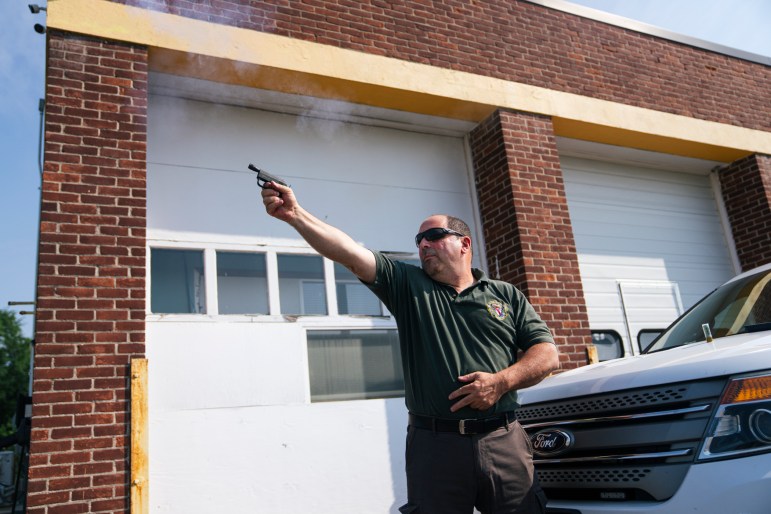
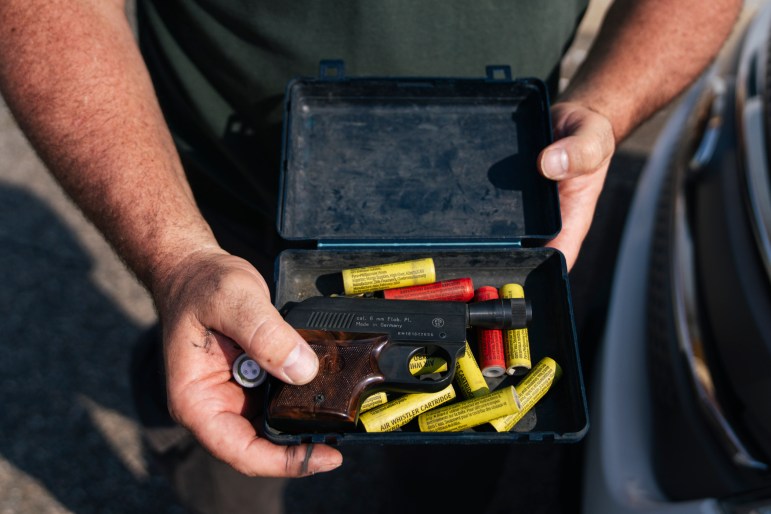
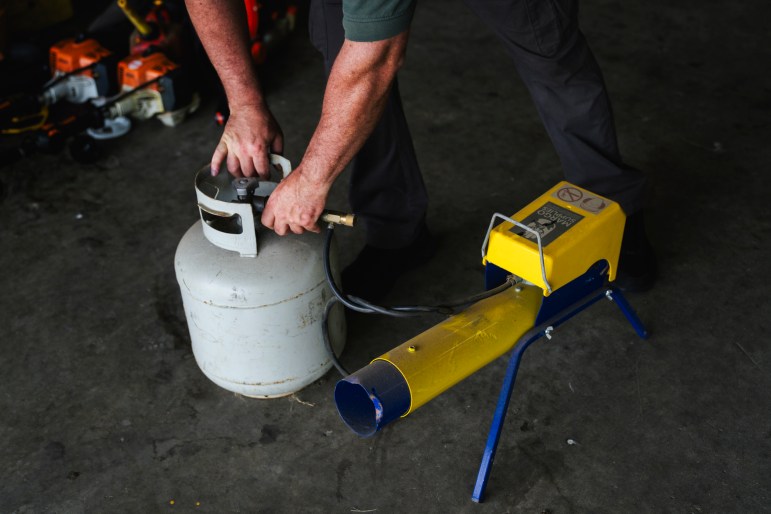
If wildlife choose to stay, harassment is the next move. Some larger airports recruit falcons or border collies to chase birds away, but Danbury Municipal relies on technology. Safranek often fires pyro shells, nonlethal rounds that whistle and crackle in the air loud enough to scare wildlife away. He also uses a propane cannon to emit sonic blasts of up to 120 decibels, mimicking the sound of a gunshot.
During the first half of the year, Safranek and his colleagues focus on disrupting wildlife mating patterns. Birds tend to gather at the airport and start mating in the spring. If the airport team doesn’t drive them away by the summer, birds will give birth to chicks and begin traveling in larger flocks. About 56% of Connecticut’s wildlife strikes occur from July through October, when declining temperatures prompt birds to migrate to warmer places.
“We have a deal with the birds — February, March, April and beginning of May, we push them out using scare tactics, and if they’re here in June and July, we use whatever methods we can,” Safranek said. “We give them free reign for a couple of months, and then it’s time to have them leave.”
But if wildlife don’t leave and pose an immediate threat to air traffic, Safranek turns to his last resort: depredation. His permit with the FAA allows him to kill any animal except humans and bald eagles, which are federally protected by the Bald and Golden Eagle Act. Safranek estimates that Danbury Municipal uses fewer than three live rounds a year, and most years, that number is zero.
“If there’s geese on the runway and a plane with people on board or landing, it’s a last-minute decision we have to make,” he said. “I don’t like using live rounds if I don’t have to.”
Eagle eyes
While making his rounds, Safranek spotted a blue heron above the runway. He called the air traffic control tower to get the all-clear before rolling down the window and loading a starter pistol with a nonlethal pyro shell. But when he gauged the distance of the heron from the runway, he put the pistol down.
“He’s far enough away,” Safranek said. “I’m not going to bother him.”
Richard Dolbeer, who is among the world’s foremost experts on wildlife strikes, views such judgment calls as fundamental to the philosophy of wildlife strike prevention. Dolbeer, 80, was one of the creators of the FAA’s wildlife strike database and still consults for the USDA. To him, the question of prevention is not simply “How can we kill as few birds as possible?” but “How can humans and nature coexist?”
Airport staff have understood the dangers of wildlife strikes for decades, but the issue captured public awareness with the “Miracle on the Hudson” in 2009. A plane leaving New York City’s LaGuardia Airport flew into a flock of Canada geese and immediately lost both engines, forcing the crew to make an emergency landing in the Hudson River. All 155 people on board survived.
After the “Miracle on the Hudson,” Danbury Municipal, which previously hadn’t placed much emphasis on consistent wildlife removal, ramped up its harassment measures. Safranek made sure every airport vehicle had a gun that could shoot sound projectiles and introduced propane cannons, which can be controlled remotely and fired at set intervals.
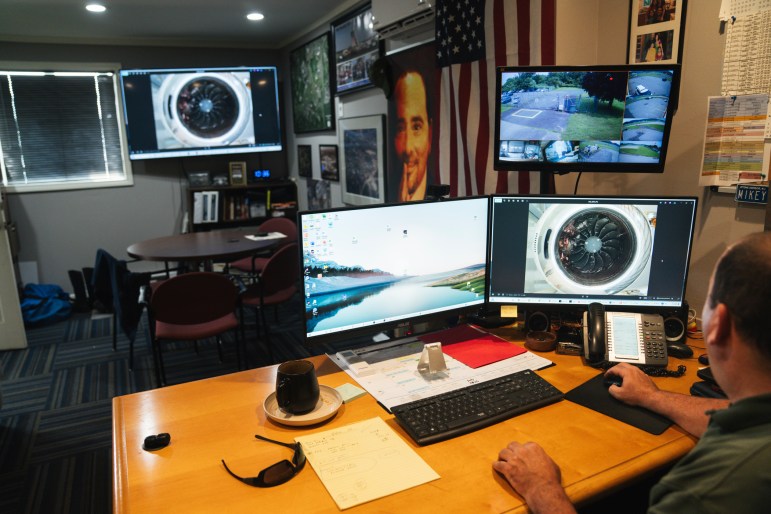
Danbury Municipal, like other airports across the country, also began documenting wildlife presence more carefully. Each day, Safranek updates a spreadsheet tracking the number of wildlife seen at the airport. And if a plane hits a bird, he must fill out an extensive report for the FAA’s database and photograph “snarge,” or the mangled debris of blood, feathers and flesh. Sometimes, he can’t figure out the species of the crushed bird, so he sends the snarge to the Smithsonian’s Feather Identification Lab for testing.
“Airports in Connecticut have done a good job for a number of years reporting strikes,” Dolbeer said. “For the nation as a whole, we’re seeing greater effort being made in some areas and some airports to report the strikes.”
All airports in Connecticut work closely with the Connecticut Department of Energy and Environmental Protection and U.S. Wildlife Service to ensure best practices. Larger commercial airports, such as Bradley International, have hired specialists from the U.S. Department of Agriculture to serve as airport wildlife biologists. And in addition to the several thousand dollars Danbury Municipal budgets each year, the airport has received funding from the FAA to maintain prevention measures, such as a $500,000 grant in 2000 to put up a deer-proof fence.
Dolbeer isn’t sure whether Connecticut’s decreasing wildlife strike numbers represent a long-term trend, noting that strikes in the state have increased slightly over a 10-year period. But he notes that better conservation has led to growing bird populations and growing awareness to more diligent reporting — both of which may contribute to the overall increase in strikes.
To Dolbeer, the “new frontier” of wildlife strike prevention lies in the aircraft themselves. He hopes to help others devise technology such as bird-detecting radar and ultraviolet landing lights, which he described as similar to flashing lights on a police car.
“I’m on a mission,” he said. “I have no retirement plans right now.”
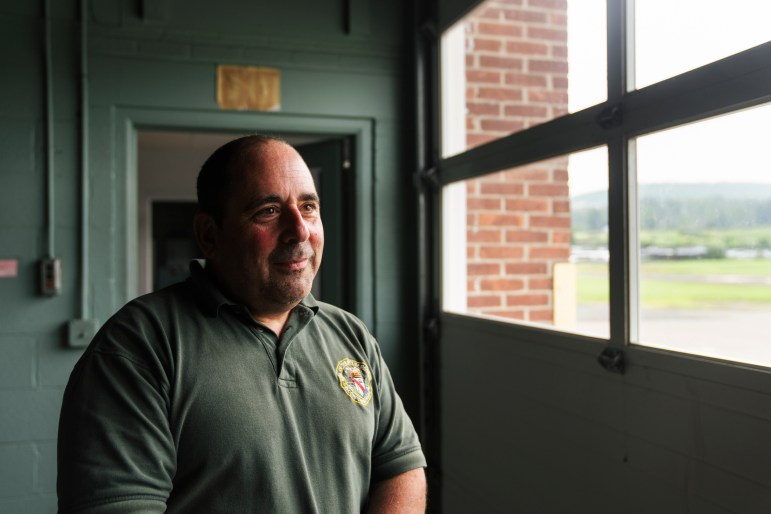
Safranek does not intend to implement any new measures. Strike prevention technology is expensive, and wildlife already seem to have learned to stay clear of aircraft. Half an hour after his morning patrol, a dark blur in the air caught his eye — the heron, returning.
“If you notice, he stays away from the runway,” Safranek said. “He knows.”