



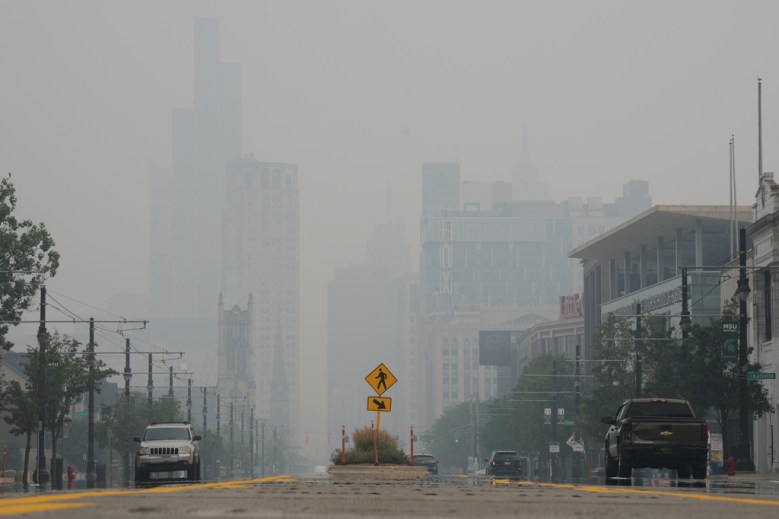
Recent fires in California and smoke from Canadian wildfires drifting across the Northeast are different events, but they point to a shared reality: wildfire conditions and smoke do not respect borders.
Together, they raise a broader question about what is making dangerous fire conditions more likely and how the consequences reach communities here.
Science does not say that rising temperatures caused a particular spark. Wildfires may be ignited by lightning or people, and forest management matters. A warming atmosphere changes the conditions in which fires burn.
Researchers studying eastern Canada’s extraordinary 2023 fire season found that warming caused by human activity made peak fire weather at least twice as likely and about 20 percent more intense. Warmer temperatures and lower humidity dry vegetation, making severe fires more likely.
The United States should also recognize its role. More than four fifths of our energy consumption still comes from petroleum, natural gas, and coal. Burning fossil fuels is the primary driver of the warming atmosphere, contributing to hotter and drier conditions that can make fire weather more dangerous. Focusing only on where the fires are burning leaves out our own part of the story.
The health consequences are neither abstract nor distant. The Environmental Protection Agency reports that wildfire smoke can worsen respiratory and cardiovascular disease and contribute to premature death. During the widespread wildfire smoke events that reached the United States in 2023, the Centers for Disease Control and Prevention found that asthma related emergency department visits were 17 percent higher than expected on smoke days.
Those visits become medical bills, missed work, prescription costs, pressure on hospitals, and public expense. The burden is often greatest for children, older adults, people with existing health conditions, outdoor workers, and families who may not be able to afford air filtration or lose a day’s income by staying home. Smoke can also cancel outdoor work, youth activities, and community events.
We pay for fossil fuels once at the pump or through our utility bills. We then pay a second, less visible bill through health care costs, lost wages, taxes, disrupted lives, and the growing expense of responding to extreme weather events.
The atmosphere does not recognize national borders. Smoke over Connecticut is not simply something another country is doing to us. It reflects decades of fossil fuel use and energy choices across borders, including our own.
Moving away from harmful fuel sources will take time. But delay is not free. The smoke is sending us a signal, and we are already paying the bill.
Mike Urgo is the former First Selectman of North Stonington and Founder of People for Planet and Democracy.