
Emergency rooms aren’t equipped to meet the needs of patients in the midst of a mental health crisis.
The rush of people, beeping machines and bright, fluorescent lighting can all worsen anxiety, confusion and agitation. In many cases, hospital safety protocols also require removing all personal belongings from patients arriving with a psychiatric emergency and dressing them in paper gowns without strings or ties that could be used for self-harm.
“It’s a very uncompassionate, cold way to receive care when you’re already at a low point in life,” Lindsay Slaybaugh, director of the emergency department at Griffin Health in Derby, said during a press conference last year.
Today, Griffin is one of three hospitals in Connecticut, along with Stamford Hospital and Yale New Haven Hospital, that is reimagining the emergency room experience for behavioral health patients.
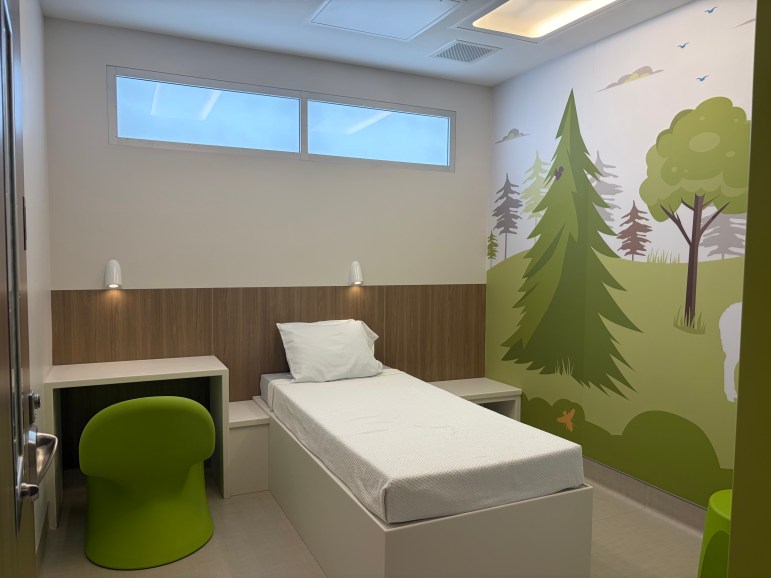


The Emergency Psychiatric Assessment, Treatment and Healing, or EmPATH, Unit at Griffin is technically part of the emergency department but is physically separate, designed to be a calming, welcoming environment — outfitted with natural light, recliner chairs and open space. It’s staffed with behavioral health specialists who work to stabilize patients within 12-48 hours and connect them to outpatient mental health services.
“This is the standard of care that psychiatric crisis patients deserve,” Griffin Health CEO Pat Charmel said at an October press conference marking the unit’s soft launch. By that time, the number of patients arriving at the hospital in psychiatric crises had increased by 50% since 2019, Charmel said.
The 12-person EmPATH unit fully opened at Griffin in January. EmPATH is a national model developed to address the surge in patients arriving to crowded emergency departments with mental health crises.
Now, when patients arrive at the Griffin ED with a mental health emergency, they receive a quick medical assessment and are transferred to the EmPATH unit as quickly as possible.
Slaybaugh said patients seem much more at ease in the calmness of the EmPATH unit than the more chaotic surroundings of a traditional emergency department.
“The biggest thing my team is taking away is how a therapeutic environment really does change the trajectory of care,” she said.

A solution for kids and adolescents
Last week, Stamford Hospital and Yale New Haven Children’s Hospital held ribbon-cutting ceremonies to mark the openings of specialized behavioral health units of their emergency departments — designed specifically for children and adolescents.
A community health needs assessment published by Stamford Hospital in 2025 identified behavioral health as the highest-priority health need for the surrounding area.
Raviv Berlin, Stamford Hospital’s chair of psychiatry, said the hospital chose to open a pediatric unit because of the particularly acute behavioral health crisis facing children and the shortage of services available to them, which means they’re more likely to end up in the hospital with an emergency.
In 2023, about 40% of high school students in the U.S. reported feelings of sadness or hopelessness in the 12 months prior, according to the Centers for Disease Control and Prevention. One in five reported “seriously considering” attempting suicide and 9% reported attempting suicide in the prior year.
On any given day, there are three to five kids experiencing a mental health crisis who are stuck boarding in Stamford’s emergency department because there aren’t any available inpatient beds, Berlin said during a press conference on Thursday.
“Emergency departments, including ours, were simply not built or designed for this influx of kids in crisis. The system was broken. Until today,” he said.
The unit at Stamford, which also uses the EmPATH model, will aim to stabilize children, connect them to services and discharge them as soon as possible. Behavioral health specialists will continue to work with patients for up to 12 weeks after they leave, addressing a chasm in the current system. Provider shortages often mean families leave the ER without the ability to secure robust follow-up behavioral care for their child, Berlin said.
Yale New Haven Hospital president Kate Heilpern also emphasized the importance of continuity of care during a press conference to mark the opening of the hospital’s Children’s Crisis Intervention Center.
“Behavioral health is a journey, and this center is primed to connect children and their families with the resources needed along that path,” she said at a press conference last week.
Hospital leadership estimated the unit would serve about 1,500 patients a year.
Connecticut also has four state-funded, privately run Urgent Crisis Centers, in Hartford, New Haven, New London and Waterbury. They were also founded in response to the increase in the number of children reporting severe mental health needs and designed as an alternative to hospital emergency departments.

Yale New Haven Hospital operates the UCC in New Haven.
The unit at Yale New Haven cost $4.6 million and was funded through grants from the Department of Public Health and the Department of Children and Families, a hospital spokesperson confirmed. Stamford Hospital’s unit cost $2.7 million and was funded mostly through private donations, according to a spokesperson. Both are slated to open in August.
A spokesperson for Griffin Health declined to disclose the cost of the hospital’s EmPATH unit.
Griffin Hospital CEO Charmel said that, historically, hospitals have fallen short in providing healing environments when treating behavioral health emergencies. He sees the EmPATH unit as a way to change that.
“We went to great lengths to make sure that we make a clear statement to patients that we really do care about them — not only their physical needs but their mental and emotional needs as well,” Charmel said.