



When I traveled to Cuba in 2013, it was a country where people had excellent, free health care, ample food, and good education for their children. It is a very different political system than that of the United States, but it is not our right to force regime change upon a sovereign country.
We especially do not have the right to do so by causing so much human misery that, in their desperation, the Cuban people will overthrow their government and allow in a government that is acceptable to the U.S.
The current situation in Cuba is a humanitarian crisis.
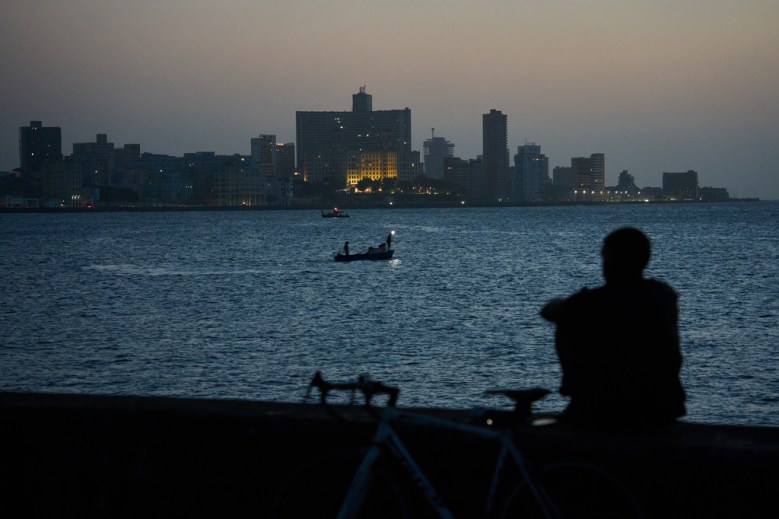
There is almost no electricity. Cuban homes have, at most, two or three hours of electricity per day to light and cool their homes. Cooking gas is no longer available to most people, and Cubans must use charcoal and burn plastic in their homes to prepare food. There are no longer any buses operating in the city of Havana. For those who can find gasoline, it costs about $22 per gallon, so there are almost no cars on the streets.
I know something about fuel. I spent my career working in the fuel industry. A modern society is dependent on fuel for electricity and transportation. Every aspect of human well-being is affected by energy —electricity for hospitals, having light in your homes after dark, electricity for refrigerators to keep food from spoiling, and gasoline for buses and cars. The list is endless.
The most direct cause of the intolerable living conditions in Cuba is the fuel blockade imposed by the U.S. government. President Trump has said in many contexts that the goal of these increasingly severe sanctions is to see a new government in Cuba. But what we are doing is inhumane and immoral.
Human beings have a right to simply exist, without being starved into desperation by the U.S. government.
President Trump imposed a fuel blockade on Cuba in January 2026.[2] Any country that sends oil to Cuba was threatened with retribution in the form of crippling tariffs. As a result, Mexico, which had provided Cuba with about 20 percent of its oil, had little choice but to terminate that arrangement. Russia, which had supplied much of Cuba’s oil, has only sent one shipload of oil in six months. Venezuela had supplied much of Cuba’s oil, but after the U.S. arrested Nicolás Maduro in January, Venezuela’s oil exports to Cuba stopped.
During the Cold War, the U.S. sanctions against Cuba did little damage, because of Cuba’s economic relation with the Soviet Union. But after the fall of the Soviet Union, the U.S. tightened the sanctions drastically, targeting every major part of Cuba’s economy—shipping, foreign investment, exports, and so forth. As Cuba rebuilt its economy, with new trade partners and foreign investors, the U.S. sanctions then targeted these, creating constant obstacles for Cuba’s economic recovery.
While the Obama Administration lifted many of the sanctions, opening up trade and travel from the U.S., the first Trump Administration imposed severe new measures. Most recently, in May, President Trump issued an Executive Order that would impose severe penalties on banks, mining companies, and other international companies that engage in trade with Cuba or provide banking services. Shortly after that, the remaining banks that did business with Cuba terminated their relationships. This affects not only Cuba’s ability to receive revenues, but also makes it nearly impossible for the government to buy food and fuel.
Secretary of State Marco Rubio claims the administration is motivated by concern for the Cuban people, and that worsening the sanctions—and imposing a fuel blockade on the country—will restore their human rights.
As a country that claims that we support human rights, we should not be creating more suffering for an entire people. We should end the fuel blockade, lift the sanctions, and let the Cuban people decide for themselves what their political path should be.
John Santa is a Bridgeport-area businessman, Vice Chair of the CT Sentencing Commission and chairman of the Malta Justice Initiative.