

This story has been udpated.
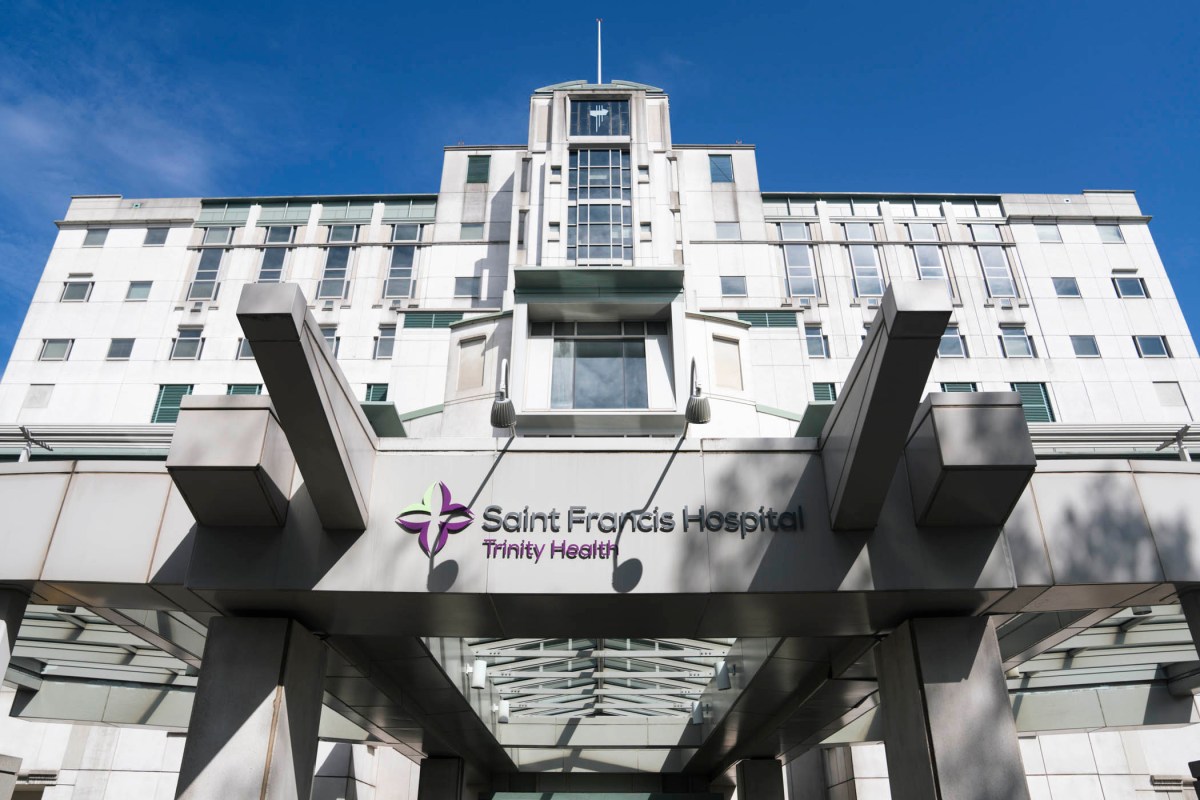
Two Connecticut hospitals owned by one of the largest nonprofit Catholic health systems in the country have struggled in recent years with serious shortcomings when it comes to patient care.
Since 2023, hospitals operated by Trinity Health of New England have received more “immediate jeopardy,” or “IJ,” citations than hospitals in any other Connecticut health system. An IJ is the most serious quality and safety finding the U.S. Centers for Medicare and Medicaid Services, CMS, can issue to a hospital.
An immediate jeopardy violation indicates a situation in which CMS determines that the provider “has placed the health and safety of recipients in its care at risk for serious injury, serious harm, serious impairment, or death.”
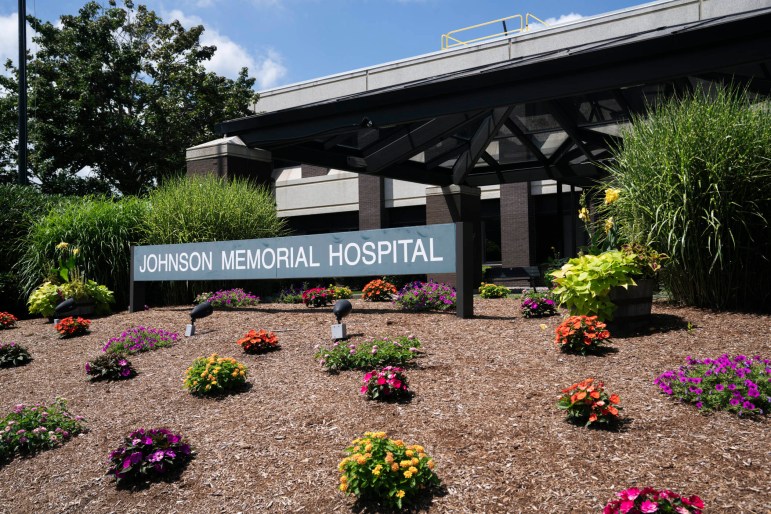
Saint Francis Hospital in Hartford has been issued nine IJs since January 2023, the most of any hospital in the state, and Johnson Memorial in Stafford ranks second, with five IJs over the same period, according to Connecticut’s Department of Public Health. Both are owned and operated by Trinity Health of New England. (The noncompliance reports at Saint Francis were reported last month by the Hartford Courant.)
In a statement, Stephanie Valickis, a spokesperson for Trinity Health of New England, rejected the notion that the trend represents broad safety issues.
“The suggestion of systemic quality issues across our hospitals is inconsistent with the quality and safety outcomes we continue to achieve. Across our system, hospitals have earned national recognition for clinical excellence,” she stated.
But state elected officials say the system is falling short of its commitment to Connecticut.
“Trinity Health, as a national organization, has a lot of resources. And I don’t think they’re putting enough of those resources into the state of Connecticut,” Comptroller Sean Scanlon said. “I would like to see them do that.”
Valickis said in a statement that Johnson Memorial has made strides more recently to strengthen oversight and recruit additional staff. The facility earned a Leapfrog Hospital Safety Grade “A” rating in the last four reporting periods, Valickis said. And Johnson Memorial’s last IJ finding occurred in June 2025.
Leaders at the health system have acknowledged that there is still work to do at Saint Francis.
Valickis declined to make Steven Hanks, chief executive officer, and Robert Roose, president of acute care, available for interviews with The Connecticut Mirror. But on Thursday, Hanks and Roose invited state Sen. Saud Anwar, D-South Windsor, and reporters on a tour of Saint Francis, where they acknowledged the issues that plagued the hospital and showed some of the work that’s been done to improve patient care.
Anwar has for the last few years been sounding the alarm about the hospital’s issues and used the opportunity to ask about the kind of investments Saint Francis could expect from its national leaders.
Roose said Saint Francis has received $6 million in recent months from the parent organization and that it could expect to receive “tens of millions of dollars every year over the course of the next several years.”
“The commitments that we have been shown is that the capital that is needed for Saint Francis and for Trinity Health of New England will be provided,” Roose told Anwar during the tour.
In a statement, Gov. Ned Lamont said the state is working with Trinity leadership to monitor improvements at Saint Francis.
“Connecticut residents deserve accessible, affordable, high-quality healthcare. The Department of Public Health has been working cooperatively with Trinity to ensure they meet these expectations,” Lamont said.
Trinity Health’s safety issues in CT
Trinity Health is a $25 billion Michigan-based health system that touts itself as “one of the largest not-for-profit, faith-based healthcare systems in the nation.” The organization operates in 23 states and includes more than 90 hospitals across the country.
The system has three short-term acute care hospitals in Connecticut — Saint Francis in Hartford, St. Mary’s in Waterbury and Johnson Memorial in Stafford — through its Trinity Health of New England subsidiary, which also includes a rehabilitation hospital in Hartford and Mercy Medical Center in Springfield, Mass.
In April, Trinity Health of New England signed an agreement to transfer ownership of Mercy Medical Center to Baystate Health for an undisclosed amount. The transaction will take effect in November, pending regulatory approval.
A review of CMS reports going back to 2020 revealed that Trinity Health of New England was dealing with quality issues at both Saint Francis and Johnson Memorial Hospitals between 2023 and 2025.
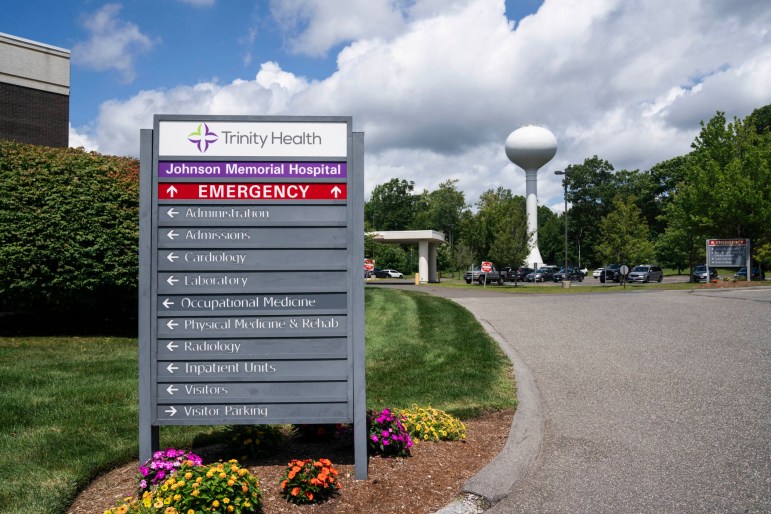
Johnson Memorial
On April 10, 2023, a patient was admitted to Johnson Memorial’s emergency department with suicidal ideation, according to a CMS report published that month.
“The patient was not provided a timely suicide risk screen, was not searched for contraband items, was not changed into hospital safe clothing prior to being unsupervised, and was allowed unsupervised in the bathroom prior to a contraband search, where he/she cut their wrist with a razor, resulting in a finding of Immediate Jeopardy,” the report stated.
In an interview with regulators that day, the hospital’s emergency department director said, “the hospital had a behavioral health unit within the ED, which was safe for patients, but it was closed due to a lack of staff. Additionally, the hospital did not have a policy or procedure on how to manage a patient with behavioral health needs in the main ED.”
The report states that the hospital reviewed and revised its changing and search policies for patients, “educated staff, and initiated audits.”
The challenge of maintaining a safe environment for behavioral health patients in emergency departments is not unique to Johnson Memorial. A review of inspection reports for all hospitals going back to 2020 revealed that several have been cited for failing to adequately monitor people being treated for mental health crises in EDs.
The following year, 2024, Johnson Memorial got hit with two more Immediate Jeopardy findings, according to a CMS report, though neither was directly related to staffing.
In January of that year, an Immediate Jeopardy finding was issued for failure to properly sterilize surgical instruments. That February, the hospital received another IJ for failing to properly observe a patient with suicidal ideation, though not as a result of inadequate staffing.
But staffing shortages resulted in at least one more Immediate Jeopardy finding at Johnson Memorial in 2025. On Jan. 3, a patient initially admitted to the medical / surgical unit of the hospital with shortness of breath was experiencing declining blood pressure and needed to be moved to an Intensive Care Unit, or ICU. But Johnson Memorial’s ICU was closed because of inadequate staffing, according to a CMS report.
The patient had to wait nearly four hours before being transferred to an ICU at another hospital, where the medication the doctor had prescribed could be safely administered, resulting in an IJ finding. In an interview with regulators on Jan. 22 of last year, the hospital’s director of patient care services said the ICU was closed and had been since Dec. 20, 2024.
In response to CMS, hospital administrators said the ICU reopened on Feb. 3, 2025, and the facility had instituted protocols to guide nursing staff in how to adequately provide care during gaps in ICU coverage.
But when regulators returned for a visit in June 2025, the ICU was closed and, once again, a patient in need of intensive care didn’t receive it in a timely manner, according to a CMS report.
“Hospital staff failed to implement the protocol to open the ICU which resulted in a delay in care. The delay resulted in a finding of Immediate Jeopardy (IJ),” the report stated.
Valickis, the Trinity Health of New England spokesperson, said in her statement that hospital leadership has worked hard to address the issues at Johnson Memorial and to restore the quality of care it provides today.
“Johnson Memorial Hospital is a strong and stable healthcare facility, fully compliant with all regulatory requirements and deeply committed to serving our community,” Valickis stated.
Schaefer, the spokesperson for DPH, confirmed that on follow-up visits, Johnson Memorial was found to be in “substantial compliance” with CMS requirements.
Valickis said the behavioral health pod of the emergency department “has been continuously open” and the ICU “is open based on capacity and utilization, with clear protocols in place to respond to the critical needs of patients when they arise.”
Saint Francis
Progress at Saint Francis isn’t as far along. Over the last several years, regulators have found quality and safety issues resulting in patient abuse, neglect and death.
In August 2023, staff failed to monitor a patient’s cardiac function in accordance with policy, and, according to a CMS report, “the patient’s change in condition was not identified in a timely manner when the patient was found pulseless and expired.”
The hospital entered into a consent order with the state in September 2024, committing to allow an independent consultant to assess its progress on staffing and safety. That consent order is still in effect, Schaefer confirmed.
But the issues continued, reports show.
In 2026, Saint Francis has received three immediate jeopardy citations — two in February and one in March. In one instance, staff failed to monitor and notify a physician when a patient’s condition worsened. The patient was found “unresponsive, cold to the touch with no palpable pulse.” Physicians attempted resuscitation, but the patient died.
The Department of Public Health entered into another consent order with Saint Francis just last month, which stated that it “remains concerned that prior remediation efforts have not resulted in sustained compliance across all cited areas.”
In recent months, Trinity Health of New England has acknowledged the problems at Saint Francis. In April, the health system replaced its president and CEO with Hanks. Roose was named interim president of Saint Francis Hospital and now serves as president of acute care for the system.
Hanks, who also leads Trinity Health New York, replaced former Trinity Health of New England president and CEO Montez Carter. Roose replaced Valerie Powell-Stafford at Saint Francis.
Both Hanks and Roose are physicians and longtime employees of Trinity Health. The pair signed a full-page ad that appeared in the Hartford Courant on a Sunday in July in which they acknowledged Saint Francis’ lagging performance and pledged to address the problems with safety and quality.
“Transparency requires us to acknowledge a simple truth: we have work to do,” the ad read. “We are not asking anyone to overlook the challenges of the past. We are saying clearly that a new direction is underway, guided by accountability, transparency and an unwavering commitment to excellence.”
During Thursday’s hospital tour, Roose and Hanks told Anwar that they’ve made progress. The system is deploying new capital investment, and over the last couple of months, voluntary turnover has fallen to its lowest level in several years.
Afterwards, Anwar said, there’s still a long way for the hospital to go. But he said he found the transparency from Roose and Hanks reassuring and a marked difference from previous leaders of the hospital system.
“It was a breath of fresh air,” Anwar said. “In the past I heard denials and rationale for [the] things happening.”
Scanlon, too, said he’s encouraged by Trinity’s recent efforts but said the state needs to ensure that momentum continues.
“It’s incumbent on all of us in the state to monitor their progress to make sure they’re actually making progress,” Scanlon said.
Correction:
An earlier version of this story mischaracterized Baystate Health’s acquisition of Mercy Medical Center from Trinity Health of New England. The value of the transaction, which is pending regulatory review, was not disclosed by the parties. Mercy Medical Center’s most recent annual operating revenue was $293 million.