


There is the Declaration of Independence Americans learn about in school, the one signed in Philadelphia in 1776 and celebrated every July 4.
Then there are thousands of more personal, individual declarations of independence that came afterward — from people who had been enslaved and used their stories, writing and activism to demand freedom and recognition of their humanity.
The Stowe Center for Literary Activism in Hartford is putting those stories at the center of its new exhibition, “6,000+ Declarations of Independence.”
Through original comic art by Connecticut artist Joe Young, the exhibit features the stories of Black freedom seekers and abolitionists including Frederick Douglass, Harriet Jacobs, Sojourner Truth, Josiah Henson and Phillis Wheatley. It asks visitors to look beyond the familiar story of America’s founding and consider what July 4 meant to the millions of people who remained enslaved, and what independence meant to those who had to fight for it.
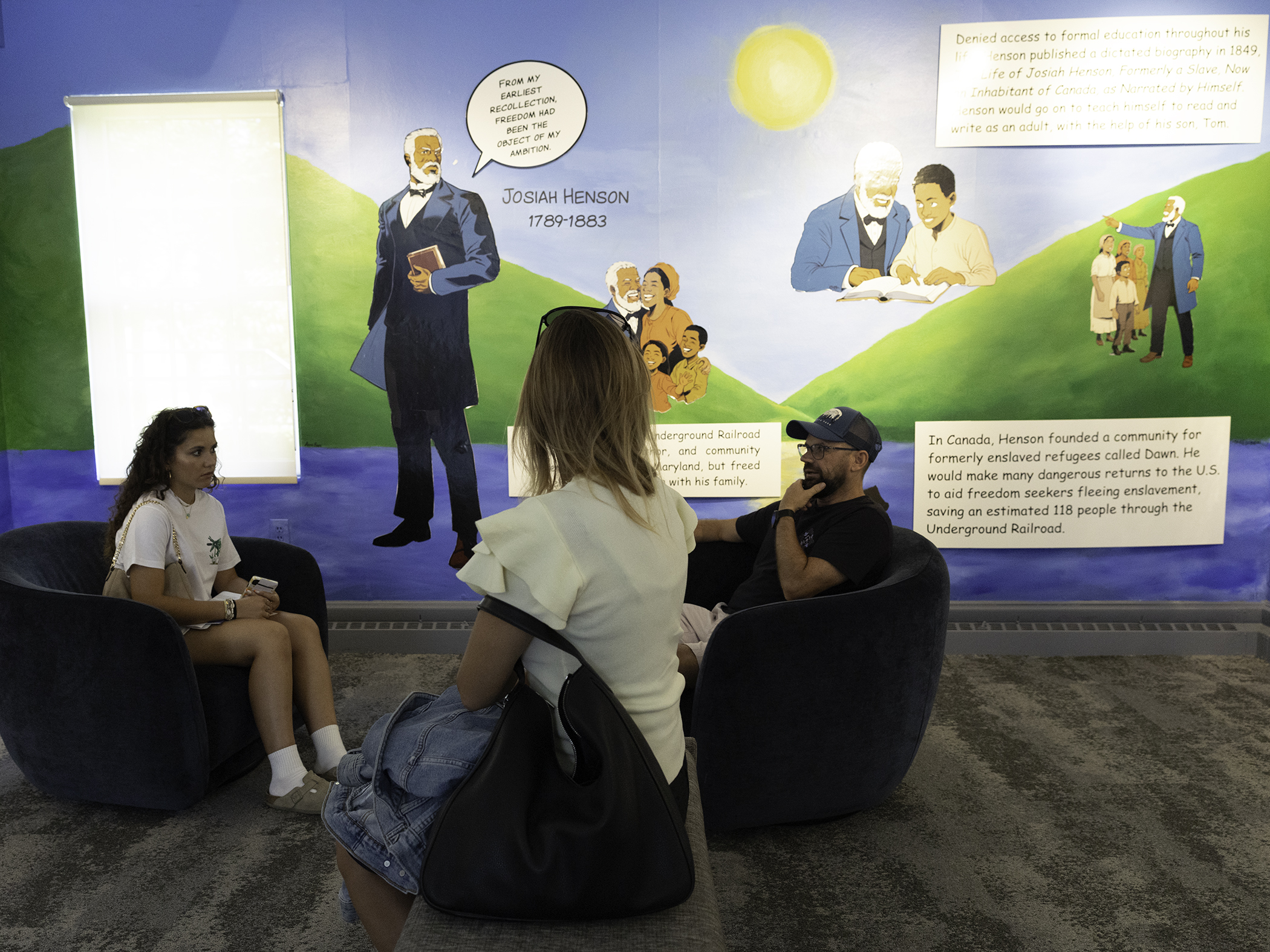
For Erika Slocumb, the Stowe Center’s director of interpretation and visitor experience, the exhibit reflects a broader effort to change how American history is told.
“We’ve inherited our freedom because of the work that they put in,” Slocumb said.
The idea for the exhibit began in the Stowe Center’s archives, when Director of Collections Kat White discovered an unpublished narrative written by the Rev. William Phillips after the Civil War. In it, Phillips described a Fourth of July gathering where he stood before his community and delivered a speech declaring his freedom.
White began wondering whether stories like Phillips’ could be understood as their own declarations of independence.
That idea became the foundation for the exhibit’s title, which refers to more than 6,000 freedom narratives identified by historians. Some were written by people who experienced enslavement, others were dictated, and some were preserved through oral traditions. The Stowe Center intentionally uses the term “freedom narratives” rather than “slave narratives” to emphasize the voices and agency of the people telling their stories.
For Slocumb, those stories are also about helping people see themselves in American history. She said she grew up loving Black history but rarely saw those stories reflected in what she learned in school.
“I hated history growing up because I never saw my story,” she said.
Now she wants children who visit the Stowe Center to see Black history as part of the broader American story, rather than as something separate. “I want to tell Black history in a way that is relatable, that doesn’t feel separate,” she said.
Young approached that same goal through comic art. The Hartford artist said comics helped him when he struggled in school. He used to call himself “the fisherman,” he said, because his grades were “below sea level.”
Young said he believes visual storytelling can help young people connect with history in ways traditional presentations sometimes cannot. “Comic art is just so inviting, and it’s fun,” he said.
Young also deliberately centered Black figures, he said, because “they were left out.” He wants the exhibit to highlight both well-known and lesser-known Black individuals whose voices and actions helped shape the country.

The exhibit comes as America is commemorating 250 years since the Declaration of Independence, but Slocumb said the Stowe Center’s work is about more than marking an anniversary. Over the past two and a half years, the center has reshaped how it presents history, placing greater emphasis on Black freedom seekers and the narratives that helped inspire change.
Slocumb said she hopes broader understanding can help people recognize the connections between America’s past and present. If everyone understood that history, she said, “I think we would have a less divisive country.”
Young said he hopes young visitors leave with more than knowledge of figures such as Douglass, Truth, Henson and Wheatley. He wants them to recognize their personal connections to the nation’s history.
“Black folks, we’re part of the whole American story,” he said.
The “+” in the exhibition’s title leaves room for the stories still being discovered in archives, family collections and oral traditions — as well as the declarations that have yet to be written, its curators said.
“Come out and learn about history and be inspired to tell the next story where Black folks are included,” Young said.
The exhibition is on view through December.
