



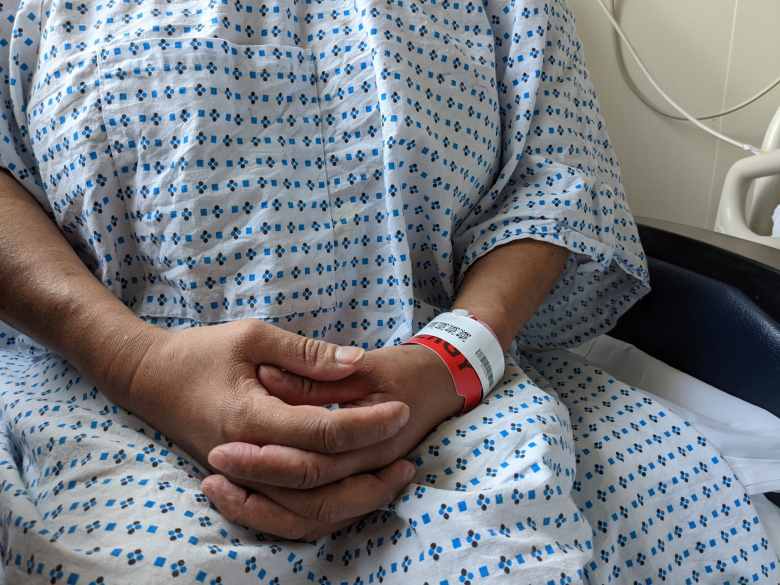
Patients with one particular disease have heard it over and over: “Your tests came back normal.”
They heard it after the viral infection they never recovered from. They heard it when walking to the mailbox left them bedbound for days. They heard it as their careers ended, their savings drained, and their doctors suggested the problem might be stress. Or anxiety. Or all in their heads.
The disease is myalgic encephalomyelitis/chronic fatigue syndrome, or ME/CFS: a serious neuroimmune, neuroinflammatory illness afflicting an estimated 38,000 Connecticut adults. There is no FDA-approved treatment and no validated diagnostic test.
Congress can change that this year. For the first time, a rigorous federal research plan exists: the National Institutes of Health (NIH) ME/CFS Research Roadmap, approved in 2024 and built by scientists, clinicians, and patients. Executing it starts with $50 million in the FY27 appropriations bill. Connecticut’s congressional delegation, with its senior seats on the committees that write that bill, is positioned to deliver it.
The hallmark of ME/CFS is brutal. Even minor exertion, physical or mental, can trigger a crash lasting days, weeks, or months. One in four patients is housebound or bedbound at some point; clinicians compare the disability to end-stage renal disease.
This neglect was never random. ME/CFS affects women three times more often than men, and its history shows what happens when medicine doesn’t believe women.

For decades, it was written off as psychosomatic, and the federal research budget followed the stigma. Today, it receives roughly 11 percent of the funding allocated to diseases with a comparable burden — about $13 million a year — even though it affects more people than Parkinson’s and MS combined.
The dismissal follows patients out of the exam room. Women with ME/CFS keep, on average, just 49 percent of their pre-illness income; men keep 63 percent. Women are nearly four times more likely to be denied disability benefits, and frequently report that evaluators simply did not take them seriously.
Patients of every gender spend an average of $4,439 a year out of pocket chasing answers that don’t yet exist. One in five leaves the workforce for good. More than 60 percent depend on unpaid care from parents, spouses, and children — a hidden workload that, once again, falls mostly on women.
If this disease once felt obscure, it no longer is. As many as 45 percent of Long COVID patients meet the diagnostic criteria for ME/CFS, meaning thousands of Connecticut residents who got sick in the last six years and never recovered are living this story too.
That is the problem. The Roadmap is the answer. It lays out concrete priorities: biomarker discovery, a validated diagnostic test, and clinical trials of the most promising treatments. Congress has recognized it and directed NIH to prepare an implementation plan. Only the funding is missing.
This cause belongs to no single party; ME/CFS strikes Democrats and Republicans alike. But I will say plainly, as a Democrat, why this speaks to everything we stand for. We say healthcare is a right — these patients have been locked out of it. We say we believe women — these women were disbelieved for generations, in exam rooms and disability hearings and budget negotiations. We say government should follow the science and deliver for people the system has failed. Here is a chance to prove all of it with a single appropriation.
So I am asking our delegation to use its influence over this bill now. Put $50 million for the ME/CFS Research Roadmap in the FY27 budget.
Somewhere in Connecticut today — in Bridgeport, in Willimantic, in a quiet bedroom with the curtains drawn — someone is hearing those words again: your tests came back normal. What they deserve to hear instead is that their government finally went looking for the test that will come back with the truth.
Subramani Seetharama MD is Chief of Rehabilitation Medicine at Hartford Hospital and an assistant professor at UConn School of Medicine.