



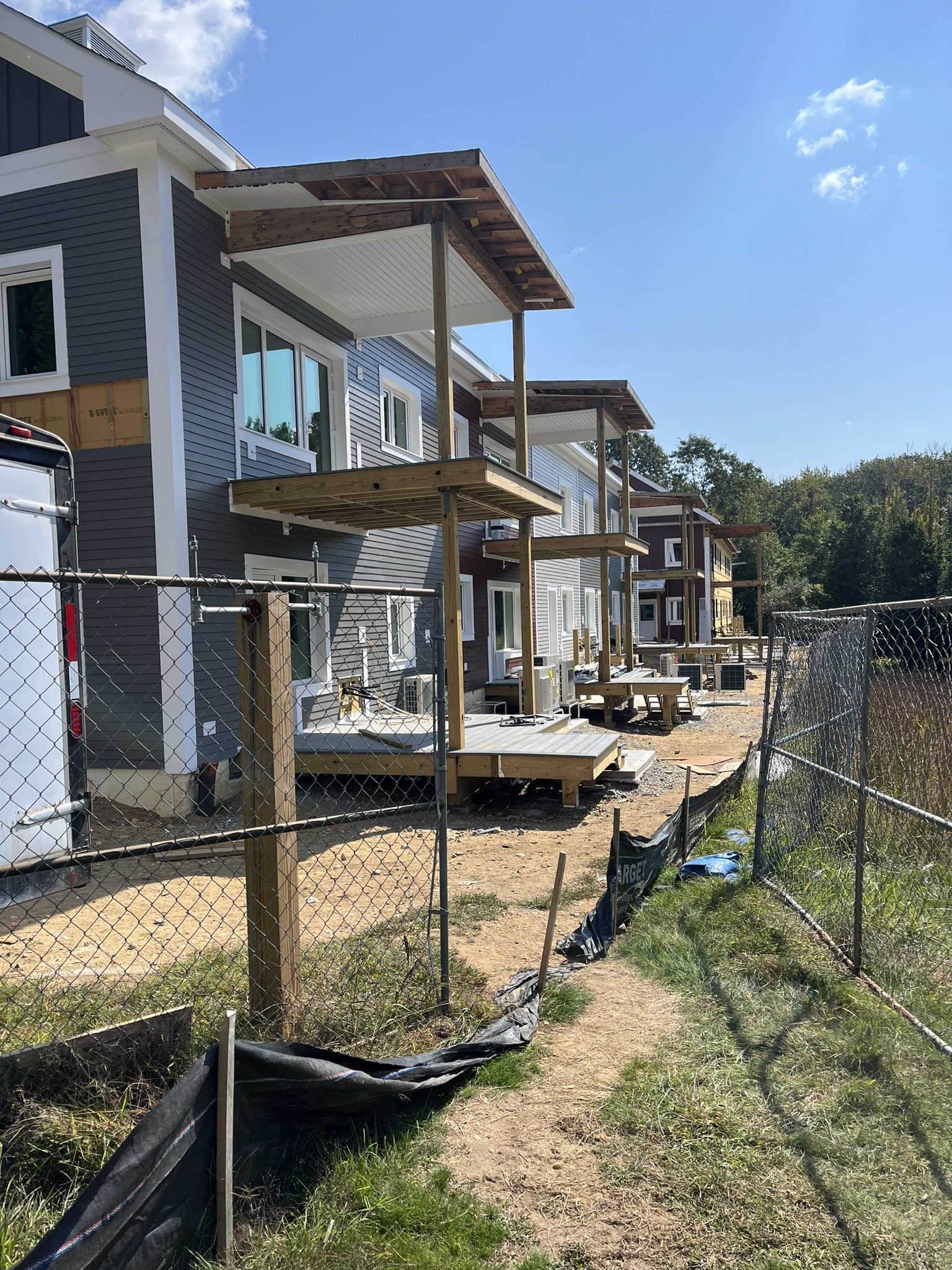
Recently, lawmakers in Connecticut and the United States Congress have passed significant legislation facilitating increases in affordable housing. Connecticut is in the process of implementing HB 8002, An Act Concerning Housing Growth, which requires towns and regional bodies to estimate needs and goals for affordable housing. This will be aided by the 21st Century ROAD to Housing Act that provides federal financial incentives along with regulatory reforms aimed at boosting affordable housing production.
At a time of housing shortages nationally and in Connecticut, these are well-timed and needed initiatives.
The gains represented by additional funding in this important legislation might be wiped out by changes proposed by two federal bank agencies, the Federal Deposit Insurance Corporation (FDIC) and the Office of the Comptroller of the Currency (OCC), to the regulations implementing the Community Reinvestment Act (CRA).
Passed in 1977 in response to redlining (discrimination against modest income neighborhoods and communities of color), CRA obligates banks to serve community needs in all neighborhoods. CRA requires federal bank agencies to rate banks on the extent to which they make loans, investments, or provide services in low- and moderate-income neighborhoods.
CRA exams include various subtests for evaluating banks reinvestment activities. Large banks have the most comprehensive exams that include separate tests for lending, investments, and services. Intermediate banks have less complex exams that assess retail lending and community development activities including financing for affordable housing and economic revitalization. Small banks have the most streamlined exams assessing retail lending only.
Purporting to reduce regulatory burden, the FDIC and OCC are adjusting the asset thresholds for determining which banks undergo which exams. Under the proposal, the small bank asset threshold qualifying banks for the most streamlined exam would be moved from $412 million to $1 billion. The intermediate bank asset range would be $1 billion to $10 billion, changed from $412 million to $1.649 billion. The large bank threshold would move from $1.649 billion to above $10 billion.
While this sounds technical, one harmful result would be to sharply reduce the number of banks expected to engage in affordable housing and community development finance in Connecticut.

By moving the small bank threshold to $1 billion, nine banks headquartered in Connecticut would no longer have any obligations to engage in community development financing. This would involve banks ranging from Jewett City Savings Bank on the lower end of the asset range to Torrington Savings Bank that is just shy of $1 billion in assets. Based on a review of their CRA exams, I estimate that these banks made approximately $3.7 million annually in community development financing. Over the CRA exam cycle of about three to four years, the banks combined made a total of $144 million in community development financing. Their community development financing equals about 2.5 percent of their assets.
If the proposed changes are implemented and CRA examiners no longer assess community development financing for the nine banks, the banks may very well continue some of this financing because they have found it is profitable business. But would the finance continue at the same level of 2.5 percent of assets? The prudent approach is not to find out! Reductions by significant amounts, even if they are just one fourth or one third less, would likely frustrate and possibly stymie efforts in Connecticut to build affordable housing as required by HB 8002.
A micro analysis further shows the innovation and responsiveness of the community development financing undertaken by the banks. Some examples of community development financing found on the CRA exams included a $9.5 million loan for 400 units in multifamily housing in Bridgeport for which 40 percent of the units were reserved for low- and moderate-income households. Not only does this provide needed affordable housing, it also promotes integration within the building and in the neighborhood.
Other projects involved mixed-income housing in Torrington and energy efficiency upgrades in affordable housing. Non-housing financing included a line of credit to an organization providing transportation to modest income households and investing in small business loan pools. CRA has encouraged financing a wide array of community needs, which helps promote holistic development enabling neighborhoods to thrive.
Another harmful change triggered by the asset threshold adjustments is moving nine other Connecticut-based banks from the large to the intermediate category. They would still have community development finance responsibilities, but they would no longer be subject to a service test examining their branching patterns and provision of affordable deposit products. Together, these nine banks have 162 branches, of which 36 or 22 percent are in low- or moderate-income census tracts.
While it is unlikely that these banks would close most of their branches just because they no longer have a service test, they would not have to contemplate CRA implications if any of them are thinking about branch closures, including when they want to merge with other institutions. Research has found that CRA has encouraged banks to maintain branches in modest income neighborhoods.
Again, the prudent course of action is not to find out what happens to branches for small businesses and residents in economically challenged neighborhoods should these changes be implemented.
A third agency, the Federal Reserve Board, did not join the FDIC and OCC in these proposed changes. Perhaps the Federal Reserve believed that the harmful impact of the proposal exceeded the benefits of reduced costs for banks. After all, since the last major changes to CRA in 1995 and 2005, banks have been subjected to the current exams for decades. They have learned how to make profitable loans, investments, and services under CRA that benefit them and communities.
Instead of these changes, the agencies should update CRA to improve data collection, account for activities beyond bank branch networks, and make CRA more community-friendly and responsive to neighborhood needs as I outline in my recent book, Ending Redlining through a Community-Centered Reform of the Community Reinvestment Act.
A public comment period is now open on these proposed changes. Now is the time to make your voices heard. Let’s keep community and affordable housing in the CRA!
Josh Silver, a resident of Morris, is a Senior Fellow with the National Community Reinvestment Coalition.