



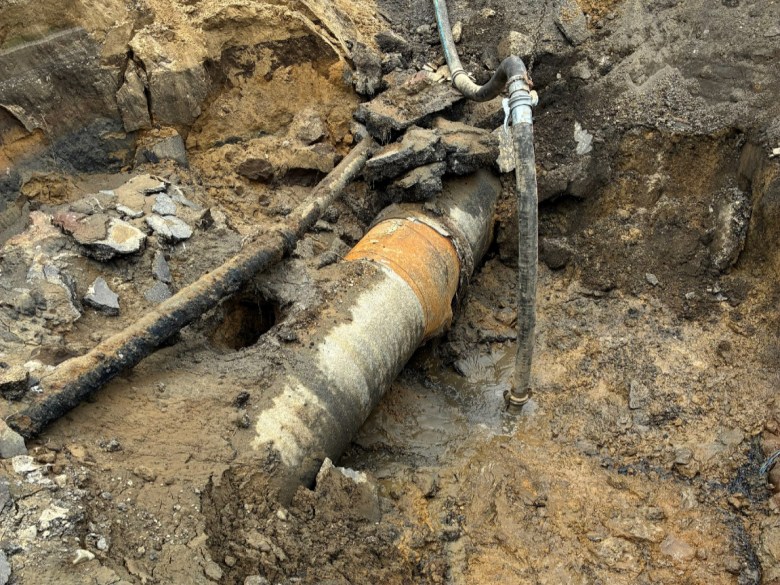
When a 42-inch sewer main ruptured in Haverhill, Massachusetts, days before July Fourth weekend, millions of gallons of untreated sewage poured into the Merrimack River.
Beaches closed. Shell fishing and oystering halted. Public health warnings dominated headlines.
And unfortunately, it wasn’t until summer vacation plans were interrupted that residents paused to question how something this catastrophic could happen in 2026? The truth is, due to systemically underfunded, aging and inadequate clean water infrastructure, there’s an average of a dozen water main breaks every single day in New England.
That should concern everyone.
The easy answer is to blame the city and the state for not doing enough or ignoring a problem. Not only is that untrue, but the real story behind the crisis is far more worrisome.
This wasn’t a failure of one pipe. It was the predictable outcome of a nation that has spent decades starving one of its most essential public services. One rainstorm was enough to shine a spotlight on a national crisis and expose the vulnerabilities of New England’s aging clean water systems.
New England’s infrastructure cannot handle today’s realities. Climate change is producing more intense rainfall that overwhelms systems designed decades ago. Population growth demands additional capacity before communities can build more housing. New environmental standards require advanced treatment technologies that cost millions to install and operate.

Haverhill, Massachusetts is not a community that has ignored its infrastructure. In fact, it is one that has proactively been preparing for the future. Since 2016, the city has invested $50 million to make improvements, comply with federal guidelines and improve its infrastructure. The irony – city officials had already warned that this crisis was imminent. The 42-inch pipe that was overcome by the capacity of the torrential rainstorm on June 26 had already been identified by city officials as ‘insufficient’ and it is on the city’s five-year plan for expansion.
If Haverhill is vulnerable despite its notable investment, what does that say about the thousands of communities that simply cannot afford to keep pace? The answer should concern everyone.
Across America – particularly in New England, a region with some the oldest infrastructure, clean water professionals are fighting a losing battle against infrastructure built for another century. Pipes installed before World War II are expected to handle larger populations, more stringent environmental regulations, heavier rainfall fueled by climate change, and contaminants that engineers couldn’t have imagined when those systems were built.
America’s water infrastructure is in jeopardy because of insufficient funding. Federal investment has steadily declined since the 1970s, shifting the financial burden almost entirely onto local ratepayers. Communities are now expected to rebuild trillion-dollar systems through monthly sewer bills – a mathematical impossibility. In a 2022 report, the U.S. Environmental Protection Agency estimates the nation needs more than $630 billion in clean water infrastructure investments over the next 20 years – an increase of 73 percent.
Water infrastructure isn’t glamorous, and when stacked against other priorities in Washington, it falls to the bottom of the list. Politicians don’t cut ribbons on buried pipes. Residents don’t think about clean water treatment plants until something breaks. When our systems work, rivers stay clean, neighborhoods don’t flood with sewage, beaches remain open, and drinking water continues to be safe. The invisibility of our water infrastructure has become one of the industry’s greatest challenges.
For decades, we’ve treated water infrastructure as something that can wait until next year’s budget. We’ve delayed maintenance, deferred replacement, and expected local utilities to solve a national infrastructure problem with local resources and creative problem-solving.
The lesson from Massachusetts isn’t that infrastructure failed. It is that, while we can’t predict where or when, the same public health crisis will happen in another community if we continue to neglect critically needed investments in water infrastructure.
Every million dollars invested in water infrastructure generates approximately $2.5 million in economic output. It creates jobs. Supports housing development. Protects businesses. Preserves tourism. Safeguards public health. And strengthens resilience against increasingly severe weather. This is not frivolous spending. It is one of the highest-return investments government can make.
Water is the foundation of every community, every economy, and every public health system in this country. Treating it as an afterthought is no longer an option.
Mary Barry is executive director of the New England Water Environment Association.