


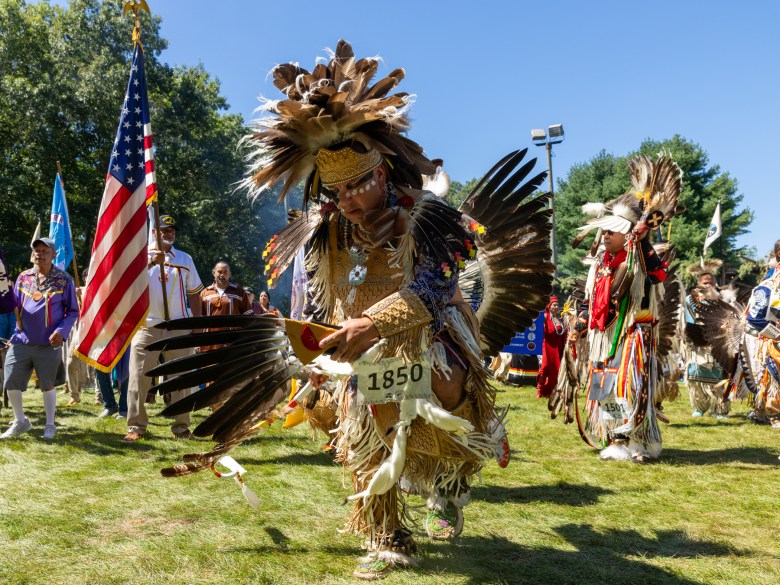
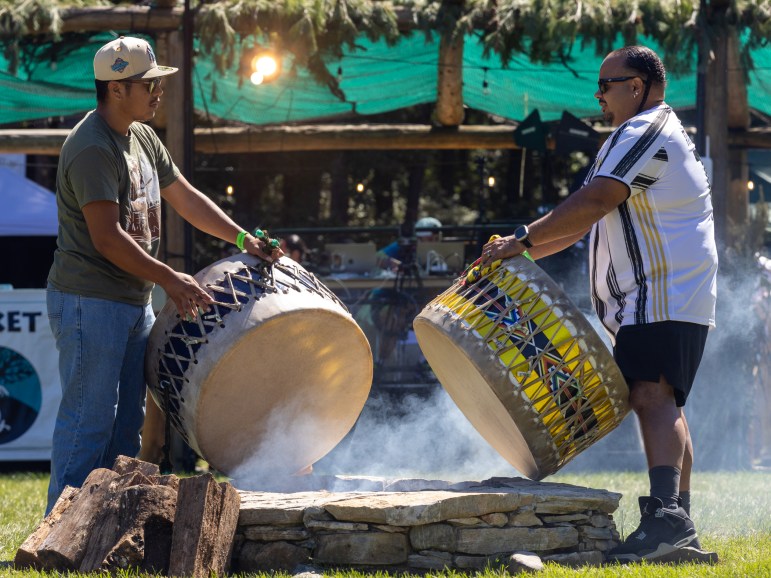
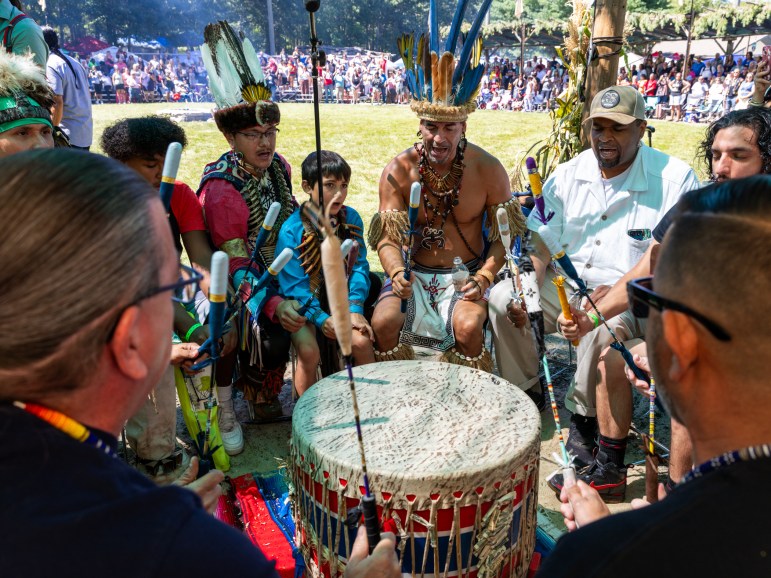
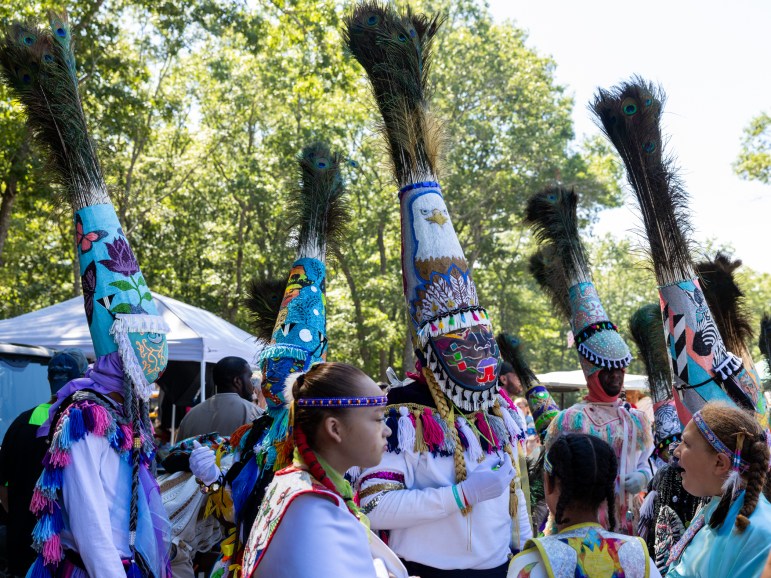
The sounds of drums, the smell of wood smoke and visions of colorful regalia filled the Mashantucket Pequot Cultural Grounds as Schemitzun: Feast of Green Corn and Dance celebrated the traditions of the harvest season last week.
Latoya Cluff, vice-chairwoman of the Mashantucket Pequot Tribal Council, said the event, which was open to the public, brought together tribes from “coast to coast, east to west, north to south.”
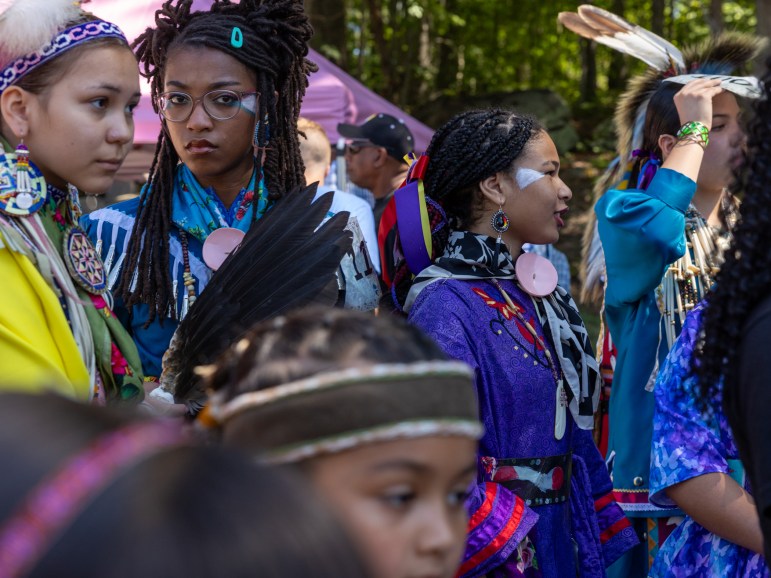
The three-day festival featured dancing competitions, authentic Native cuisine, Native American artists and championship drum groups. Visitors could witness open-fire cooking, wampum making, canoe carving and other traditional lifeways at 17th-century Pequot Village.
For Cluff, the annual gathering is more than just connecting with friends and family and honoring their ancestors.
“It allows us to remember why we’re all here,” she said. “We’re tribes from all over, but at the end of the day we all have the same common goal.”
For her, that goal is to “honor our ancestors, keep our history, our culture alive.”
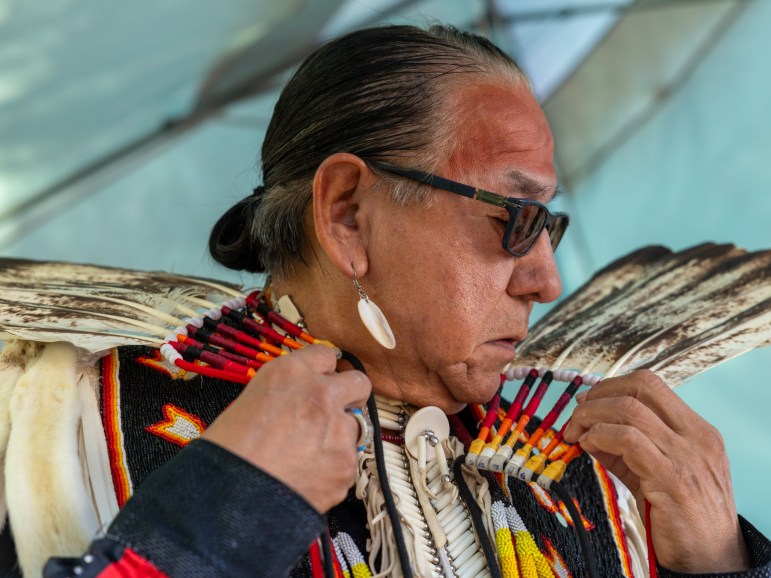
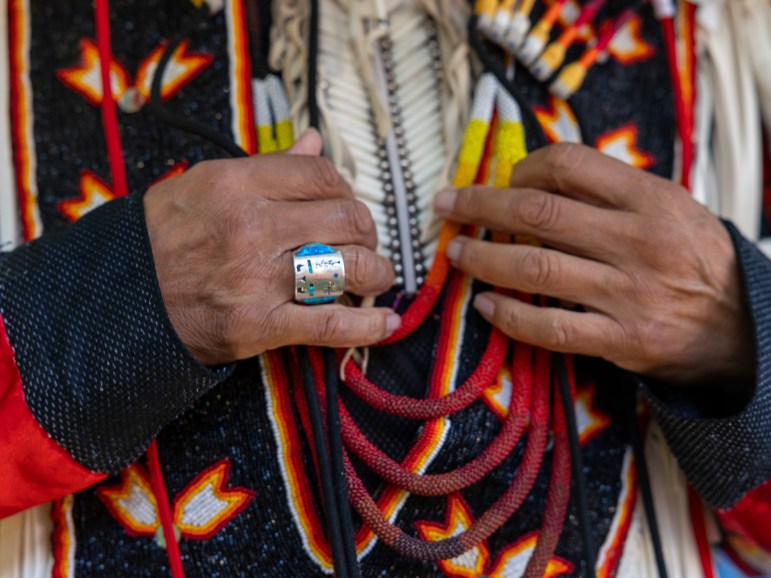
Amos Key Jr., of Ontario, a member of the Six Nations of the Grand River, stood under a tent with his cousins as he got ready for Grand Entry. He has been attending Schemitzun with other members of his tribe for around 30 years.
“These are special moments for all tribes, not just one,” he said as he tried his bustle. “We have to continue these important traditions.”
He often spends many long weekends in the summer and fall attending powwows across North America.
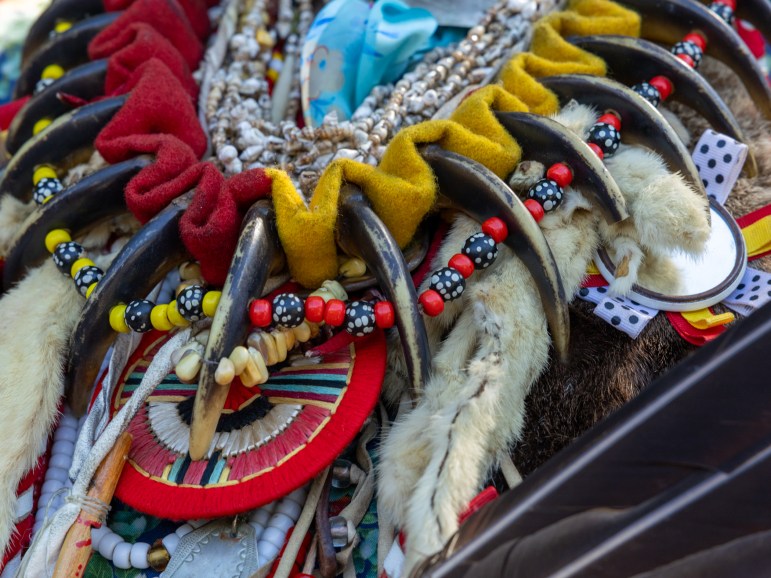

This was the first time Keith Anderson, a member of the Nansemond Indian Nation, participated in Schemitzun. He drove over 10 hours from Virginia to participate in the weekend’s fest.
“Over the years, I’ve heard so much about how great Schemitzun is how and this festival is really about tribes all over the country and Canada coming together,” he said as he waited for the Grand Entry to start.
He pointed out how every little piece of his regalia, from the floral patterns to colors, tells a story of his family and his tribe.
“One of my favorite parts about being a part of this community is supporting our tribes, our history, our culture, through these gatherings.”
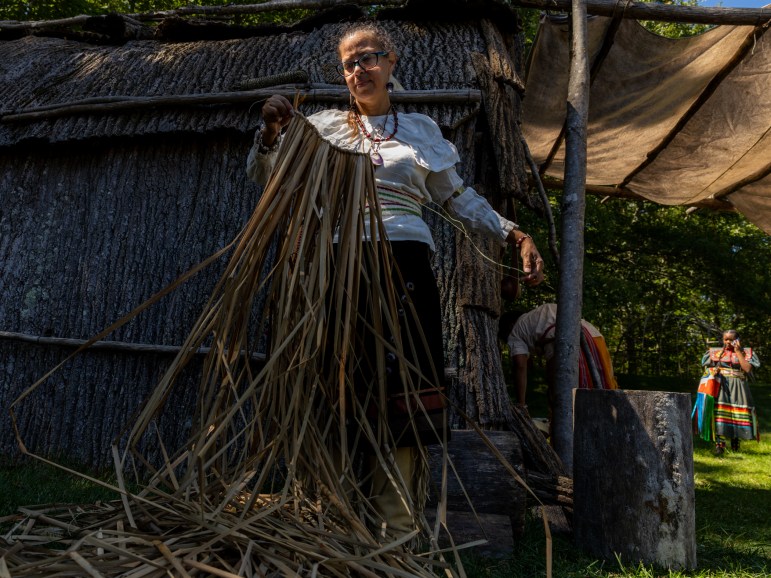
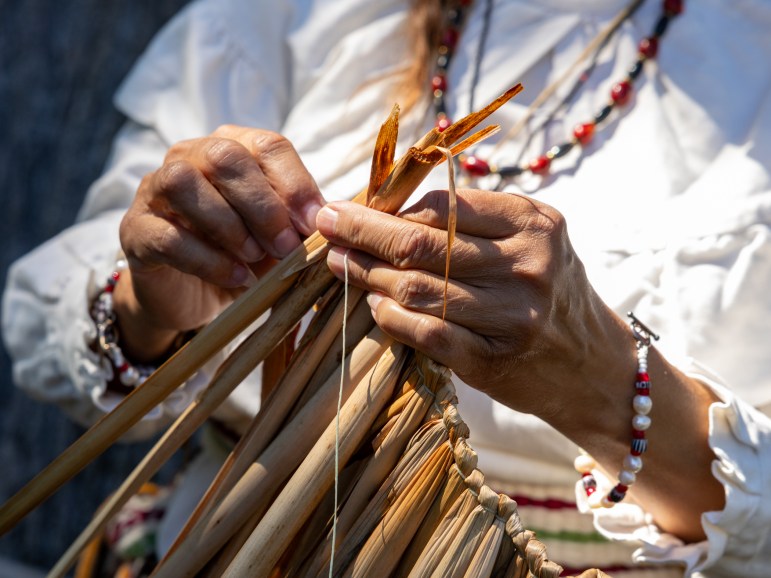
Elizabeth James-Perry, of Martha’s Vineyard, a member of the Wampanoag Tribe of Gay Head (Aquinnah), has been coming to Schemitzun since it started. She stood outside a replica of a 17th-century Pequot village, hand-sewing a cattail mat that would traditionally be used for shade or insulation.
“It’s a way to address erasure,” she said as she worked. “If you’re representing, if you have public forums to share and educate, then I think you’re combating the erasure of native people.”
Personally, she said, it helps her to connect with her ancestors and plant materials and natural dyes of the earth.
James-Perry noted, “there are some deeper reasons I’m here besides just demonstrating art.”
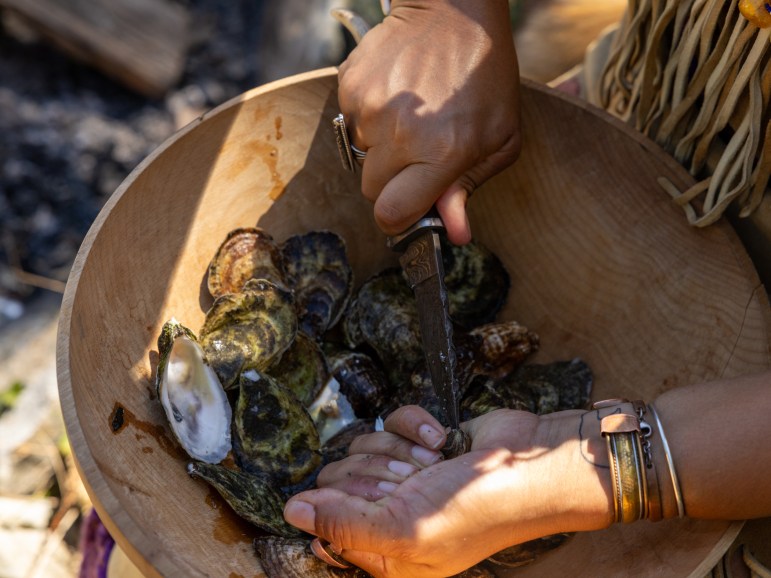

Nearby, Lauren Peters, of Cape Cod, a member of the Mashpee Wampanoag Tribe, shucked oysters from a wooden bowl using a knife to steam over the fire burning nearby for lunch.
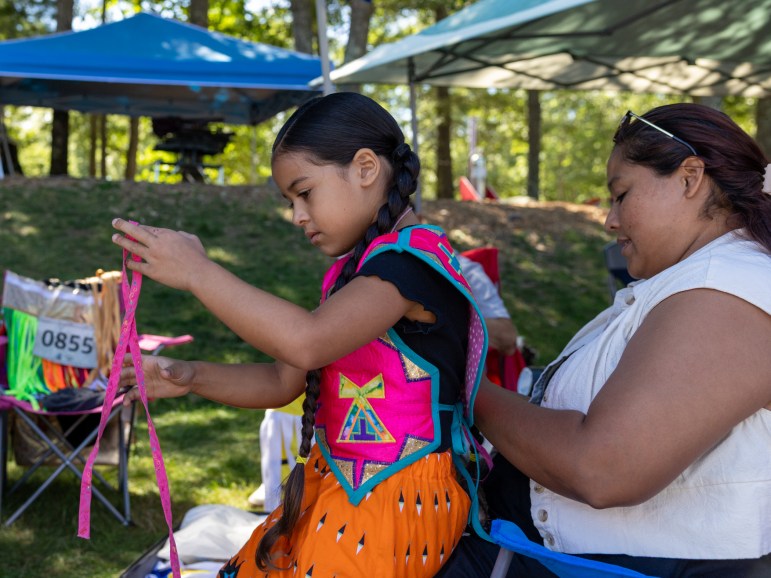
A flute player started as Cluff helped get her grandson Essence Brown Young, 9 months old, dressed in his regalia for Grand Entry. It was his first Schemitzun, and he wore traditional moccasins and a leather apron around his diaper. She carried him through the arena for Grand Entry, dancing as intertribal drum groups took turns playing and hundreds of representatives of indigenous tribes danced.

“Our people were once tried to be erased. Eliminated,” Cluff said in conversation earlier in the morning.
“The fact is we are still here a hundred years later, still able to speak our language, wear our clothing, have our powwows.”
“We can come and gather and receive medicine and send our prayers, cook our traditional foods. This weekend is celebrating all of that for our people across the globe.”
