
David Elliott stood on his front porch in sweatpants in the pre-dawn darkness in rural Northeastern Connecticut, waiting for his golden retriever to come inside for breakfast.
His alarm went off at 4:40 a.m., the start of his second 24-hour shift of the week. This is the hard one, he said.
Elliott waited for the Keurig to fill his carrot-colored mug with coffee. His duffel bag was packed.
He turned the TV to the morning news and changed into his red Fairfield Fire Department T-shirt. It takes nearly two hours to drive there, where he works as a career firefighter.
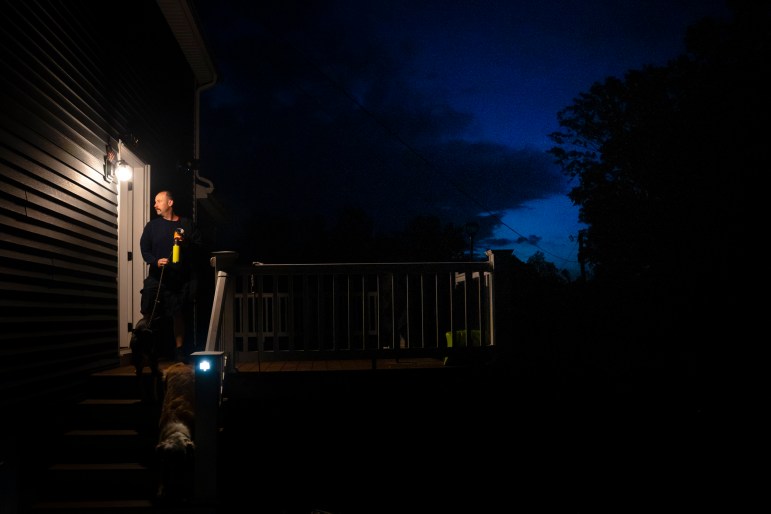
Finley (Elliott’s pup) and Sweetie (Elliott’s girlfriend’s dog) piled into the back seat of his car. He drove just down the street, to the house where his parents still live, on Lake Bungee in Woodstock. They would look after the dogs while he was at work on the other side of the state.
Elliott’s next stop was the Bungay Fire Brigade, the volunteer fire station where he is chief, to drop off reports he wrote the day before. Then he started his commute southwest, through the mist and the sunrise.
Elliott is not the only firefighter in Connecticut to work in a paid department and volunteer elsewhere. But Elliott also works as a fire marshal, he serves on committees in the Fairfield department and is a state firefighting instructor, among other things.
He and others like him have become increasingly vital to the fire service in Connecticut as the number of certified firefighters shrinks.



Data released by Comptroller Sean Scanlon’s office in May 2025 revealed “sobering insights into the severity of Connecticut’s dwindling firefighting forces,” according to the report. Since 2017, the state has seen a 62.7% decrease in volunteer firefighters.
In 2020, the National Fire Protection Association recorded the lowest overall number of volunteer and career firefighters since 1991 and saw a drop off in the number of volunteer firefighters about 10 years ago. Almost 25% of volunteer firefighters have left since 2008, according to the NFPA.
But the shortage of volunteers indirectly points to an increase in the number of paid firefighters across the country as more departments realize the only way to keep their forces intact is to pay them.
Keith Wucik, the chief of the Preston Fire Department, said the town transitioned from an entirely volunteer to partially paid department when a 2005 consultant recommended hiring administrative and chief roles. A couple of years later, the department started hiring paid firefighters as well.
“The town of Preston had to hire full-time firefighters and part-time firefighters to make sure we could get out the door to do our job,” Wucik said.
The fire department now has six full-time, 12 part-time and nine volunteer firefighters, and the department spends $1.2 million on firefighter salaries and benefits, excluding gear and training costs.
“It’s a lot of money,” Wucik said.
Fire departments across Connecticut, like Preston’s, rely on grants along with taxpayer money to fund fire departments, but budgets in small communities are generally tighter.
Woodstock’s town government budget for fire protection is $631,760 for the 2026-2027 fiscal year, which includes funding for the town’s three volunteer departments, administrative work and contracts, notably without any firefighter labor costs.
According to a 2022 report, about 64% of all Connecticut fire departments are fully volunteer.
“The volunteer service is dying. There’s no question about that,” Elliott said. Especially when called to larger emergencies, like structure fires, the three volunteer departments in Woodstock have shifted toward relying on automated and mutual aid programs that dispatch multiple stations at once just to send enough personnel.
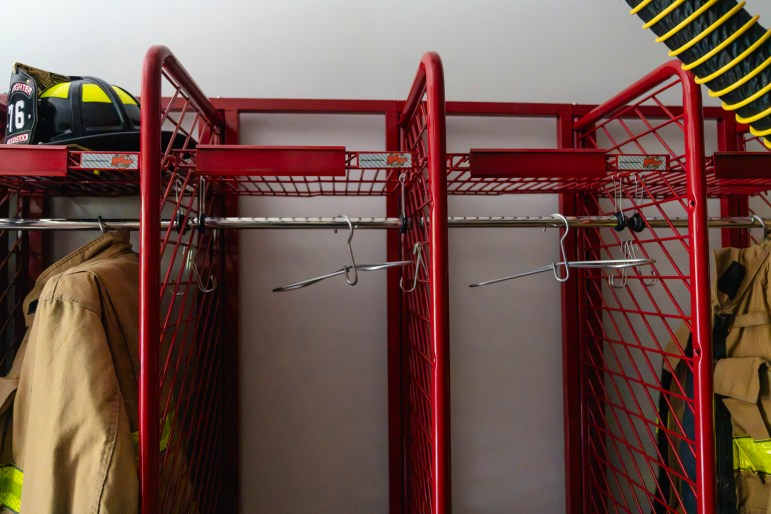
The problem with the volunteer service is the unavailability of people to drive to the station and suit up, according to Elliott.
“It could be a Tuesday at 2 o’clock in the afternoon, and I could get 12 people ready to go right out the door and volunteer, or it could be a Friday at 6 p.m. and I got nobody,” he said.
Jeffrey Morrissette, the state fire administrator, said he saw similar concerns about recruitment and retention through a statewide fire service survey, which concluded in late 2024. A bill passed this year was partially inspired by those survey results, he said, and aims to make public fire protection in Connecticut “more transparent.”
“There’s a lot of fear out there about the legislation that just passed this past session that the state is trying to take over,” Morrissette said. “I don’t think that was anybody’s motivation.”
The law requires fire departments to register with municipal authorities for review with the The National Emergency Response Information System, to develop local fire protection plans identifying emergency response procedures, and to create programs “to incentivize the regionalization of fire protection services and sharing fire protection resources,” among other things.
Morrissette also recognizes that departments in smaller communities have limited capacity to respond to emergencies, especially during the work week, and that people with multiple roles, like Elliott, are crucial.
“Sometimes I wonder what we would do without those people, but sometimes it’s almost to the detriment of their personal lives,” he said.


Commitment
Elliott’s personal life seems to blend with his work, especially when he’s called on weekends and holidays.
“We may have sat down for a meal and had a house full of people, but if there was a call, he would leave,” his mother, Barbara Elliott said, adding that it didn’t matter if it was Thanksgiving dinner or a birthday party.
Her town “would really be hurting” without firefighters like her son to answer those calls. “These people commit a lot of time and effort to helping the community by helping people not only with fires,” she said.
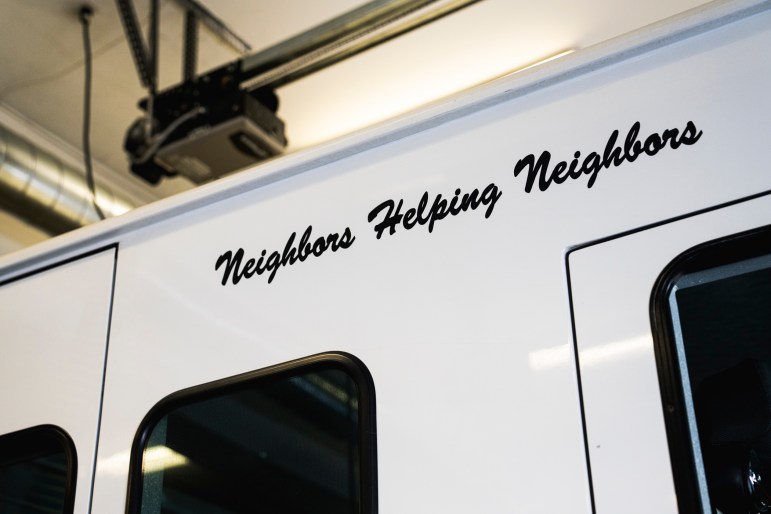


As the volunteer fire service has atrophied, the diversity of calls fire departments respond to have expanded.
“We are the fix-all of emergency services,” Elliott said, referring to firefighters as “professional problem solvers.” Calls often include car accidents, search and rescue, downed power lines from storms, hazmat issues, medical incidents, animals caught in trees and beeping smoke detectors. Beyond that, Elliott’s job also includes aspects of fire prevention.
He joined the fire service in 2000 when he was just 16 at the same station in Woodstock where he volunteers today.
“I was just hooked,” he said, remembering when he watched his older brother respond to a brush fire call.
Culture
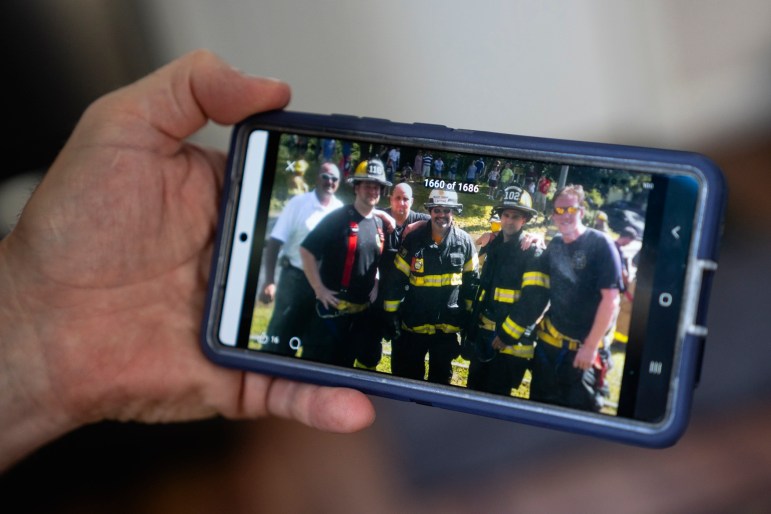
Familial ties like these are central to the fire service community and culture, along with recruitment and retention.
Josh Bottone, the deputy chief of Woodstock Volunteer Fire Association down the road from Bungay and one of Elliott’s mentors, joined the fire service after his neighbor’s house burned down. One of the people who responded to that fire was Elliott’s aunt, a family friend and an EMT. Bottone then joined the fire service along with his two brothers and eventually became a chief in Woodstock.
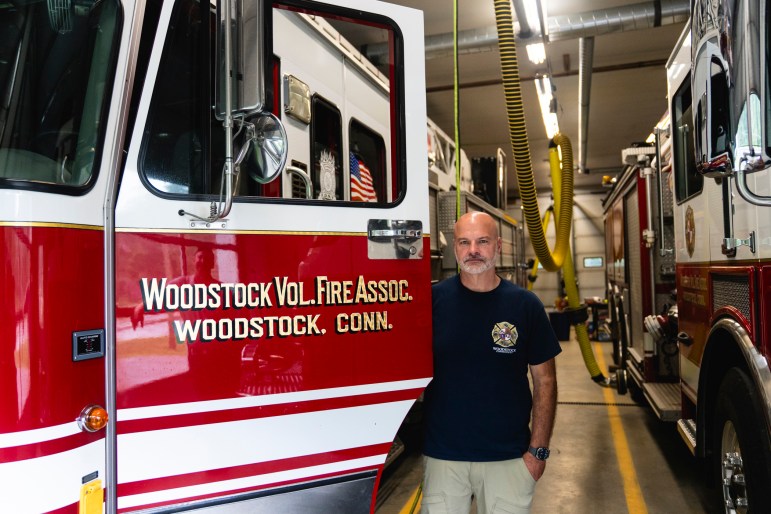
Both Elliott and Bottone attribute their long careers volunteering to their community connections. But Elliott sees that dedication as a rarity, since young people often leave the town for college or work after high school. If teens or young adults join, they often volunteer as a “stepping stone” to career firefighting and other emergency response jobs, he said.
“You invest in the people as much as you can and you hope they stay,” Elliott said. After the volunteer fire department pays for basic certification classes, priced at $1,200, and one set of gear, worth $6,000, it’s costly if firefighters leave.
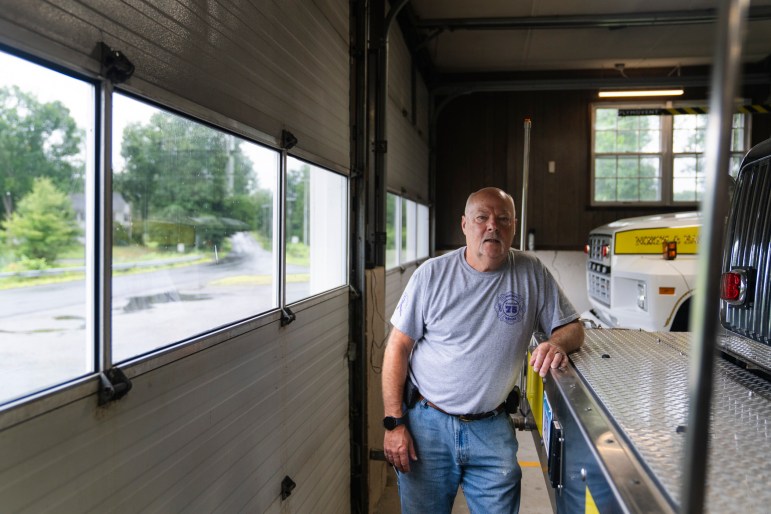
Richard Baron, a captain at Muddy Brook Fire Department — another volunteer department in Woodstock — sees the benefit of supporting new recruits who apply to career firefighting jobs. In that case, they also return to the volunteer departments with more experience.
“The problem is the daytime,” he said, when they’re not available for calls.
Like those career firefighters, Elliott brings valuable expertise to Bungay Fire Brigade. The job “helped me bring more knowledge and skills and training back to this [volunteer] department,” he said.
Establishing a presence in the community is important, but “age is legit the key,” Bottone said. Bottone, 54, says he relies on younger volunteers to go into burning buildings — a physically taxing job. In short, the fire service needs new young recruits, which is reflected in the comptroller’s 2025 report. Firefighters in Connecticut are on average older, compared to firefighters in the rest of the country.
As firefighters age out and leave the fire service, the remaining responders manage contracting departments, but a consistent call volume leads to a higher burnout rate, Elliott said.
“At some point, a system will fail,” he said.

The next morning, after his 24-hour shift in Fairfield, during which he responded to medical calls and a fire at Sacred Heart University, Elliott began the drive home. Nearly two hours later, a quick stop at the farm stand in Woodstock transformed into a catch-up with Mrs. B. — Josh Bottone’s mother and Elliott’s neighbor — among the peaches and nectarines. He stopped for a bagel and cream cheese, washing it down with an iced coffee on the porch next to Finley.
Elliott changed into a Bungay Fire Brigade polo and climbed into his pickup, riding to a meeting for water rescue access at a nearby lake in town.
The day had just begun.