



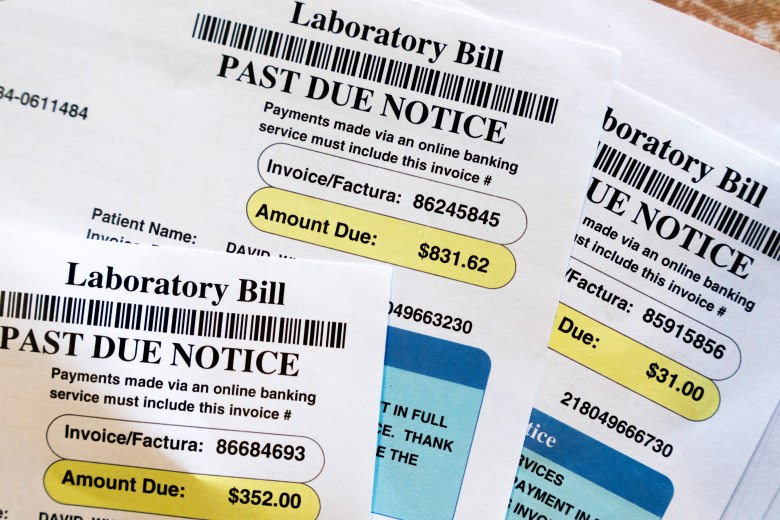
Patients across New England are struggling to afford care because of rising healthcare costs. This is especially true for seniors living on fixed incomes. There are many factors that contribute to healthcare inflation, some of which are beyond the influence of policymakers.
However, addressing the waste hidden within routine billing practices is one meaningful way to bring down costs for everyday New Englanders.
Billing codes are used by providers to bill insurers for healthcare services. These codes are often complex, which makes it easy for duplicative billing to go unnoticed. At scale, this is not just costly for patients, but since providers directly bill Medicare and Medicaid, it also wastes taxpayer money. Now, the Centers for Medicare and Medicaid Services (CMS) is taking action to curtail duplicative billing. We believe this is an important step toward making healthcare more affordable.

To better understand how this works, imagine you go to see the dermatologist to have a skin blemish looked at. During the visit, your provider reviews your medical records with you and evaluates the dark spot on your skin, deciding the mole needs to be removed. Rather than scheduling a separate appointment, your dermatologist tells you she can perform the procedure right in the office during that same visit.
As the patient, you might be surprised to realize that this visit would be billed as two separate services under current billing rules. One billing code would correspond to the evaluation at the beginning of the visit, and another for the procedure performed immediately afterward. This ignores the fact that billing for both at the full rate results in Medicare being charged twice for many of the same underlying costs.
This is what a newly proposed CMS rule would address. If the evaluation and the procedure happen on the same day, CMS would pay the full price of the more expensive service and a reduced rate for the second service. This would account for the shared costs between the two services and stop Medicare from overpaying for these types of visits.
Addressing duplicative billing is critical for New England’s Medicare beneficiaries. A single routine visit can cost more than $235 for the evaluation and management fee. The patient would be responsible for nearly $50 of said fee under the Medicare Part B standard co-insurance. Add in the cost of the actual procedure on top of that, and the visit becomes unaffordable for many seniors.
Recent studies have found that a majority of seniors in the U.S. live on less than $2,000 per month, which means that a medical bill like the one described here would leave a noticeable dent in their monthly budget. Furthermore, research shows that nearly 60% of seniors have skipped an essential medical service or product in the last year due to cost. That is an unacceptable statistic and an important reminder of why reforms are needed.
We encourage CMS to move forward with this proposed rule to help end duplicative billing and bring relief to patients. By taking policy steps like these, we can help turn the tide of rising healthcare costs in New England and across the country.
Dr. Haley Director, PhD, MPH is the Policy Director of Rare New England, a nonprofit organization serving the rare disease community.