


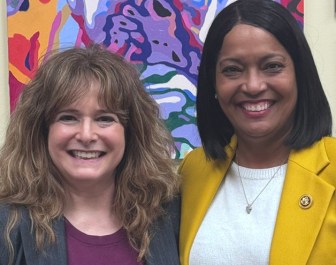
As former teachers from Connecticut, we have helped hundreds of students go on to become productive citizens. While we’ve worked on opposite ends of the school system, one as an elementary school teacher, and another as a high school history teacher, we have many common experiences as teachers.
First and foremost, we’ve learned all the different hats teachers wear in addition to their primary job to help students learn. We serve as informal caretakers, mentors, coaches and more.
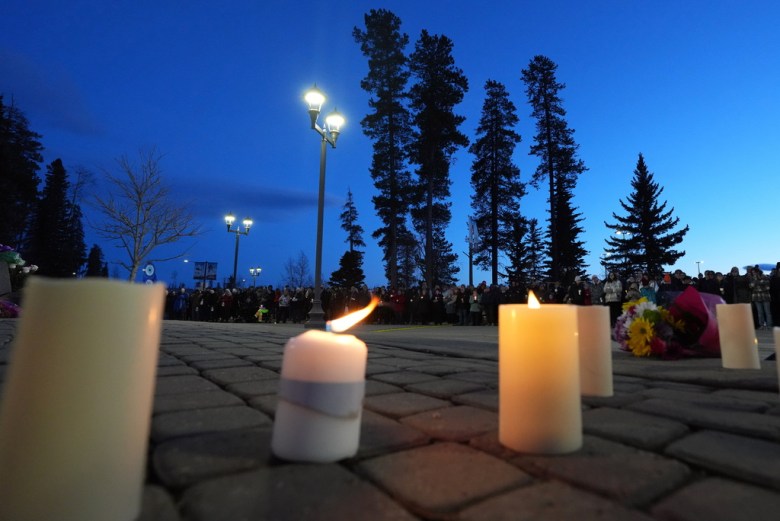
We’re proud of the things our students have gone on to do after leaving our classrooms. Ultimately, students face increased challenges inside and outside of school when navigating the fear and impact of gun violence. We know this especially keenly because we saw how the aftermath of the Sandy Hook tragedy and the everyday gun violence in Connecticut cities changed the lives of so many people forever.
What is even more tragic is how normalized gun violence has become since then. According to a 2024 study by the Trace, an average of 57 shootings happen near schools every day. Unfortunately, we can see the cause clearly. We live in a nation with more guns than people. A study by the U.S. Secret Service found that as many as two-thirds of school shootings happened because a student had access to an unsecured firearm from a friend or relative.
When students have easy access to firearms, the last thing we need is anything that makes our gun violence problem worse. Unfortunately, that is a real risk if we do not have more direct action from both Congress and big tech companies.
CNN reported recently that in hundreds of tests, AI chatbots were helping teens plan to carry out acts of violence and “are actively assisting users by giving them information that could be used in preparing attacks.”
Tragically, this isn’t just a theoretical issue confined to user testing. In February, reports emerged that an AI company did not alert law enforcement regarding an account it banned that belonged to an alleged 18-year-old mass shooter who carried out one of the deadliest mass shootings in Canadian history, an attack at a school that left eight victims dead and dozens wounded.
Meanwhile, in the United States, there’s already at least one lawsuit filed against the maker of ChatGPT after reports show that the Florida State University shooter asked ChatGPT a series of questions that allegedly helped him carry out the April 2025 shooting.

According to local media, Phoenix Ikner asked ChatGPT “how to take the safety off of a shotgun” three minutes before he began firing. The chat bot reportedly “answered, giving a detailed description of how to make the shotgun operable. As a result, two people died, six more were injured. Countless lives were changed.
The big tech companies that produce AI are some of the most valuable in the world, and their employees are some of the most highly compensated in the country. And they are failing us.
In February, OpenAI hired Dylan Scandinaro, a former AI safety researcher at Anthropic, to serve as the company’s new head of preparedness, a role that has broad responsibility for company safety protocols. He earns a salary of more than $550,000 annually plus equity in the company.
These companies have the resources and capacity to do better. It’s time that they be compelled to do so. The Canadian government took an important first step into investigating the role AI platforms played in the shooting there. Congress can and should do the same here.
Lawmakers have shown this kind of accountability is possible on gun violence before.
They have pressed the Secretary of Health and Human Services until he went on the record acknowledging gun violence as a public health crisis, introduced legislation to close the loophole that leaves preschools without the same gun-free protections K-12 schools have, and pushed for a federal Office of Gun Violence Prevention and a public database to track gun violence research.
AI chatbots are simply the newest and most dangerous front in the same fight, and
Congress cannot afford to look away. Until Congress takes real action, our advice to parents if we were still in the classroom would be clear: Don’t allow your children unsupervised use of AI products. The risk is just too great.
Jahanna Hayes was named 2016 National Teacher of the Year and now represents Connecticut’s Fifth Congressional District. Abbey Clements is a survivor teacher of the Sandy Hook School tragedy in 2012, and was an elementary school teacher for 32 years. She is co-founder and executive director of Teachers Unify to End Gun Violence.