

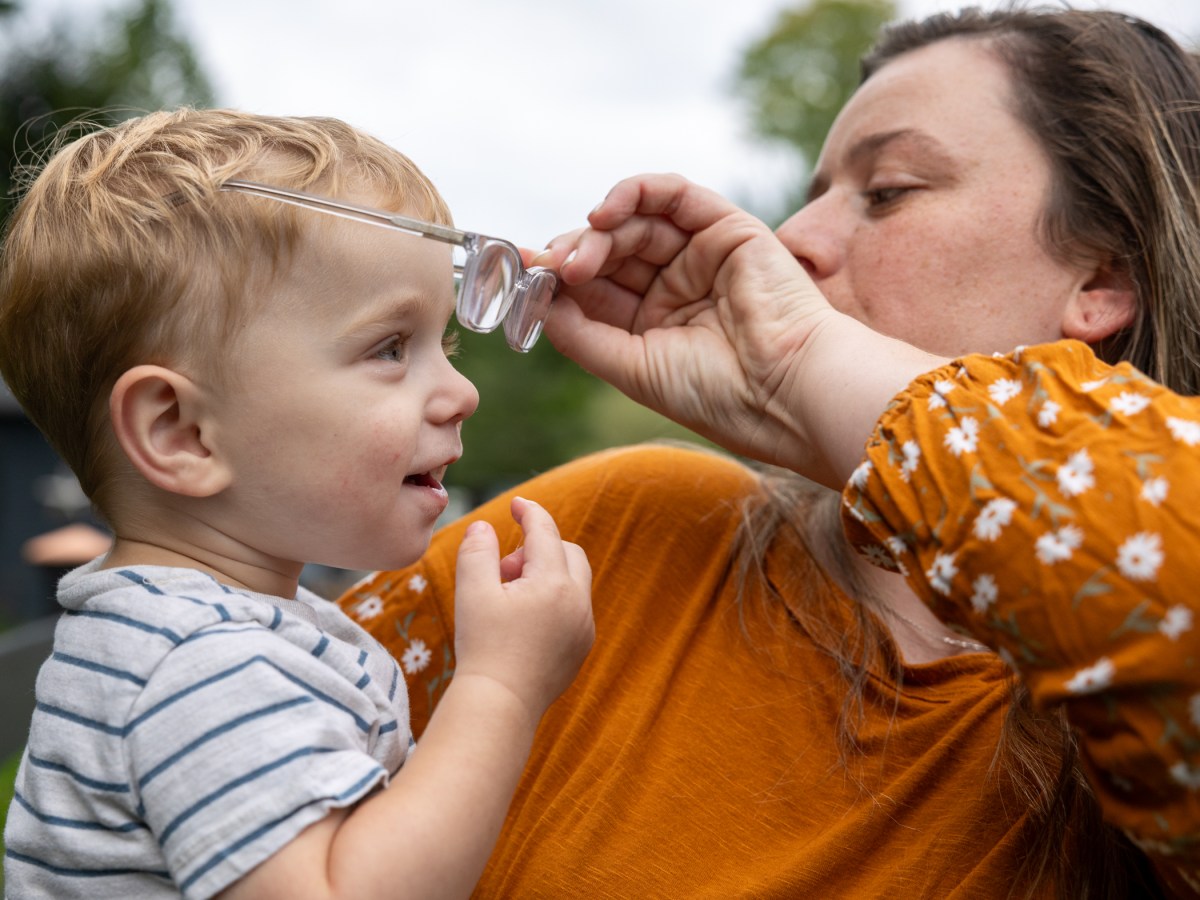


Cassidy Friedl remembers like a vivid dream the day her son Luca was born. She held him tight to her chest, hesitant to let go even when he needed to get weighed. She gazed at him in disbelief, taking in his chubby cheeks, big lips and orange hair that would eventually soften to strawberry blond.
A few months later, Friedl began noticing something else about Luca. One of his eyes would sometimes drift inward. Over time, it became more noticeable. She flagged the issue to Luca’s pediatrician, who recommended he see a pediatric ophthalmologist.
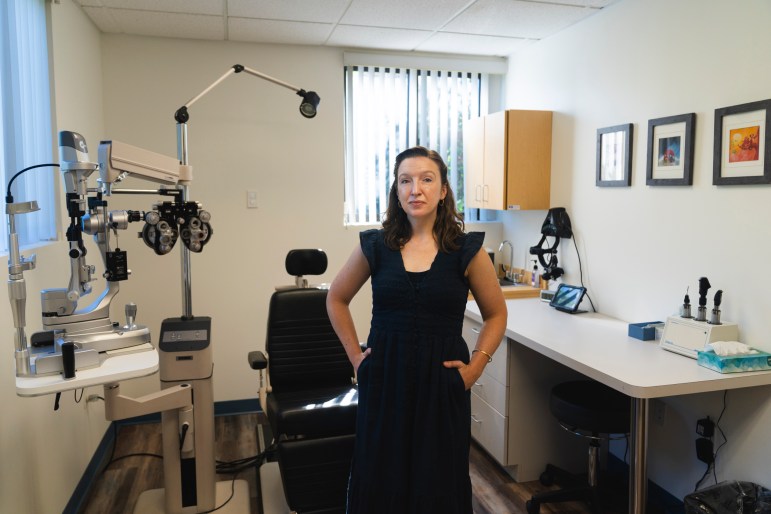
After doing some research, Friedl found Cara DeBenedictis, a pediatric ophthalmologist with great reviews. She called to make an appointment and was told the next one available was nearly nine months later.
Friedl and her son have health coverage through Medicaid, known as HUSKY in Connecticut, the government program that covers people whose incomes fall below certain limits. DeBenedictis’ office only had a limited number of appointments for HUSKY patients.
“It made my heart sink to my stomach,” Friedl said. “Just because of the insurance that I’m on, my child doesn’t get the timely and vision-saving help that he needs.”
Many independent doctors limit the number of Medicaid patients they serve or don’t see them at all because the program pays too little to make treating them financially sustainable, they say.
For years, physicians and legislators have been sounding the alarm that the payments the state makes to specialists — like cardiologists, dermatologists and orthopedists — to treat patients with Medicaid are too low.
The insufficient payments, doctors say, create a financial burden that prevents them from treating more patients with Medicaid and, in turn, limits patients’ access to care. HUSKY covers a quarter of Connecticut residents — and around half of the state’s children — so those barriers have implications for healthcare access statewide.
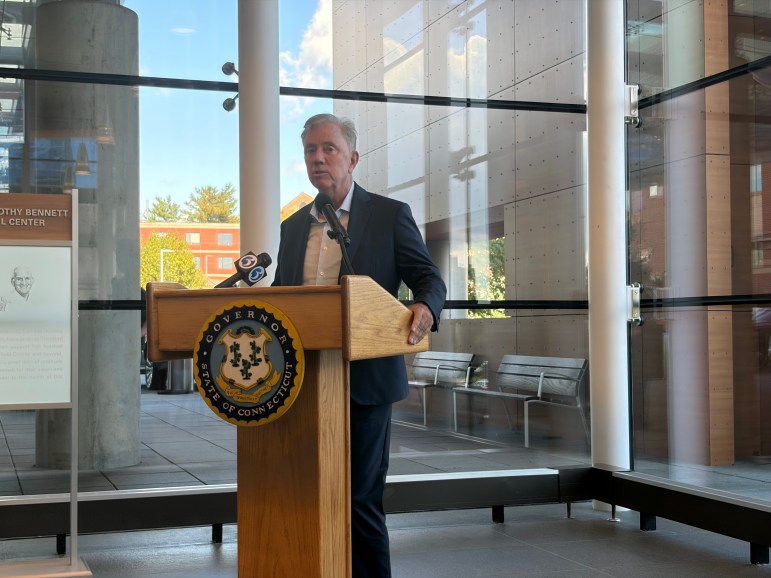
Lawmakers from both parties have long voiced strong support for broadly increasing Medicaid rate increases. But over the last several years, Gov. Ned Lamont has consistently proposed investing less than what many say is necessary to address the problem — and in some years, he’s proposed no additional increases at all.
“Our state legislators are on our side,” DeBenedictis said. “Every year, it stops at the governor’s office.”
Chris Collibee, a spokesperson for Lamont’s budget office, said the governor supports sustainable Medicaid rate increases but also wants to see large corporations “take greater responsibility for providing health benefits to their employees rather than shifting those costs to the taxpayers.”
To accept or not to accept
Medicaid is jointly funded by the federal and state government, with Washington generally matching every dollar Connecticut spends on patient care. States have significant flexibility in deciding which services to cover, who is eligible and how much to pay doctors.
In 2026, Connecticut updated its Medicaid reimbursement rates to equal on average roughly 60% of the 2025 Medicare rates, according to a Christine Stuart, a spokesperson with the Department of Social Services. Medicare is the federal program that primarily covers people 65 and older. Before the 2026 update, Connecticut’s Medicaid rates hadn’t been broadly increased since 2008, and physicians were paid roughly 57.5% of 2007 Medicare rates.
“In no other world would that be tolerated. In no place would someone continue working with no pay raise for 20 years,” said Janine Collinge, a Rocky Hill-based pediatric ophthalmologist.
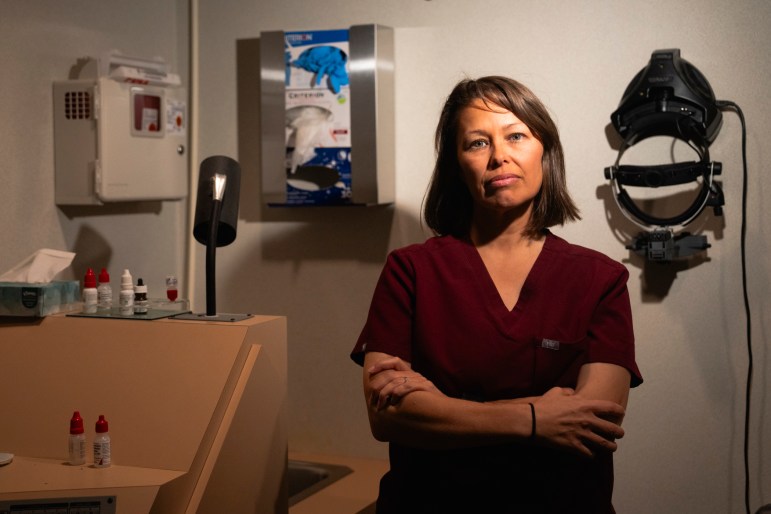
Doctors who work for hospitals or large medical groups must generally follow their employer’s policy on whether or not to accept Medicaid. But independent physicians, like DeBenedictis and Collinge, can decide for themselves. Many say the decision comes down to whether they can afford to treat patients who pay only a fraction of the going rate for services.
Stuart said a review of Medicaid providers found roughly 21 ophthalmology groups enrolled in Medicaid. Stuart did not address questions about whether those providers treat children or are currently accepting new Medicaid patients.
Providers say there are roughly 10 pediatric ophthalmologists in Connecticut, but only five currently accept new patients with Medicaid. DeBenedictis is one, as well as three Yale New Haven Health physicians and one at Connecticut Children’s.
DeBenedictis said she’s not able to take as many Medicaid patients as she’d like. She sees 30 patients daily but can generally accept only one or two new Medicaid patients a day before it becomes financially unsustainable.
“I absolutely cannot see all the ones that need me,” DeBenedictis said. “It’s heartbreaking and devastating.”
She currently has a 10-month wait for patients with Medicaid coverage, compared to a three- or four-month wait for patients with other insurance. But she says her office works hard to triage patient referrals — they find a way to take any patient immediately who has a vision-compromising or life-threatening condition. And they maintain a waitlist that they pull from in case of cancellations.
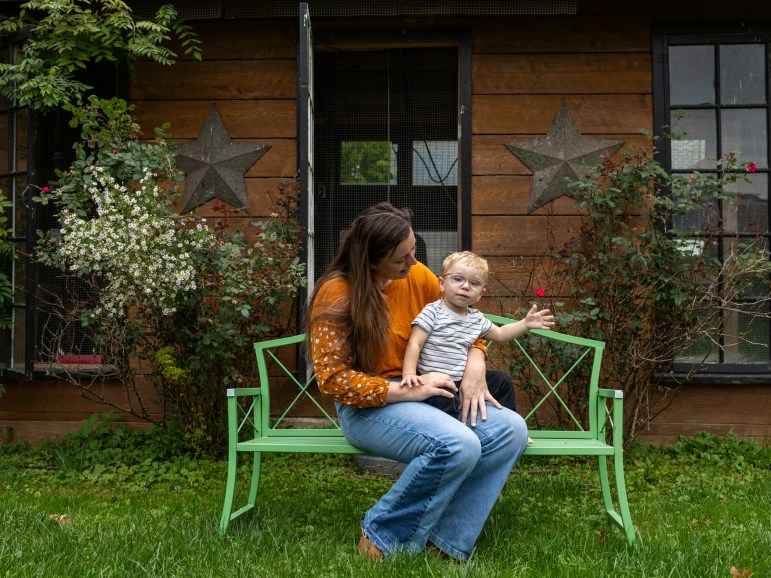
Friedl ultimately benefitted from one of these cancellations. Luca was able to get an appointment in four months instead of nine. DeBenedictis diagnosed Luca with accommodative esotropia and amblyopia — eye crossing and vision loss — and prescribed him glasses to help correct his eye drift.
“It took all the weight off my chest because I was just so concerned that whatever the issue was was just going to continue to get worse,” Friedl said.
Collinge eventually had to go further than limiting the number of Medicaid patients she saw.
When Collinge opened her practice in January 2025, she accepted patients regardless of insurance type. But the business wasn’t breaking even — rising utility costs and investments in electronic health systems, recruiting and employee retention wiped out most of the money that was coming in.
Collinge decided to limit daily Medicaid appointments to help boost revenue. But the wait times for those patients became so long that in January 2026, she decided to stop accepting new Medicaid patients altogether. She said the state reimbursement increases passed in 2026 still aren’t enough to make it financially sustainable for her to accept new Medicaid patients.
Collibee, Lamont’s budget office spokesperson, said the long waits for pediatric ophthalmologists are not just a Connecticut problem. Roughly 90% of counties across the country don’t have a single pediatric ophthalmologist, according to a 2024 study.
“The shortage of pediatric ophthalmologists is a nationwide problem, contributing to long wait times across the country — not an issue unique to Connecticut,” Collibee said. “The wait times and shortages are unrelated to Medicaid reimbursement rates.”
Collinge acknowledged the national shortage but said its consequences don’t hit everyone equally.
“It’s bad for everybody,” Collinge said. “It’s worse for people with Medicaid.”
Broader access effects
HUSKY covers roughly a quarter of Connecticut residents overall but around half of children in the state. In 2024, roughly three-quarters of Connecticut’s Black and Hispanic children had HUSKY coverage, according to DSS enrollment data and population estimates published by the Department of Public Health.
DeBenedictis said she sees the impact of these disparities, particularly in her Waterbury office.
“Children — and especially Black and Hispanic children — they’re being left by the wayside. They are not getting the healthcare they need,” DeBenedictis said. “It’s just unconscionable in Connecticut for that to happen.”
Low Medicaid rates can also exacerbate wait times for privately insured patients, said Martha Howard, a pediatric ophthalmologist at Yale Medicine, which does not restrict patients based on insurance provider. Its three pediatric ophthalmologists absorb many Medicaid patients whose options are limited. Howard said they currently have a nine- to 12-month wait for all children — not just those on Medicaid, though they make exceptions for urgent cases.
“It’s that long because we have the whole pool,” Howard said. “We don’t discriminate by insurance.”
Low Medicaid rates also contribute to rising insurance premiums for people with private coverage, said Sen. Jason Perillo, R-Shelton, ranking member of the Human Services Committee. Hospital executives have often said that low Medicaid rates force them to negotiate higher payments from commercial insurers, resulting in higher premiums on private plans.
“When people ask, ‘Why is my insurance through my employer so expensive,’ part of the answer is because Connecticut’s Medicaid reimbursement rates are so low,” Perillo said.
New pressures
Collinge and DeBenedictis said they have pressed Lamont directly about the rates, with little success. Collinge has approached him at so many fundraising and legislative events that she said he now recognizes her.
“He says, ‘You’re the one with the Medicaid problem,’” Collinge said. “And I’m like, ‘Gov. Lamont, everyone has a Medicaid problem.’”
The Lamont administration acknowledged for years that Medicaid rates needed updating but repeatedly put off broad increases.
“We’re well aware that the rates need to be updated, and we have a plan to do that next year,” said Lamont’s then-budget director Jeffrey Beckham in June 2023, explaining that the state was looking to a planned study to provide direction on how to make those increases.
The first part of the study, released in early 2024, found that Connecticut’s Medicaid program paid less than peer states for specialist physician and behavioral health services. But Lamont’s budget proposal that year included no rate increases. Beckham said officials would wait for the full study before deciding which rates to prioritize.
The second phase of the two-part study, published at the end of 2024, concluded the state would need to spend $150 million more annually to bring the rates up to the benchmarks recommended in the study.
The budget for the current fiscal year includes an additional $50 million for physician reimbursement compared to the budget two years ago. In FY 2026, DSS spent $3.8 billion on Medicaid, according to a report published by the Office of the State Comptroller.
Human Services Committee co-Chair Sen. Matt Lesser, D-Middletown, acknowledged that the state needs to invest more in reimbursing physicians.
“We’re making progress,” Lesser said. “We’re not making it fast enough.”
Lesser’s co-chair, Rep. Jillian Gilchrest, D-West Hartford, was more critical.
“We still haven’t fixed the problem,” Gilchrest said. “It’s Band-Aids on a gaping wound, and we’re going to keep hearing from the providers that they cannot afford to cover this care.”
Last year, the Human Services Committee unanimously passed a proposal to bring all Medicaid rates to 75% of Medicare by 2029, but the bill never made it to the floor for a vote. Lesser said he thinks it’s “likely” the committee will propose meaningful increases again in 2027.
Collibee did not directly address whether Lamont would support additional rate increases next year but said the agency is “preparing budget options for the governor’s consideration as he develops his budget proposal, which will be released in February.”
But another push for rate increases next year would come amid growing pressures on Medicaid. It has faced large cost overruns in recent years, while federal cuts are putting additional pressure on social service programs.
Friedl said the state’s failure to invest more into Medicaid payments feels like a decision to prioritize the state’s finances over people’s quality of life.
“Healthcare should not be a luxury,” she said.