



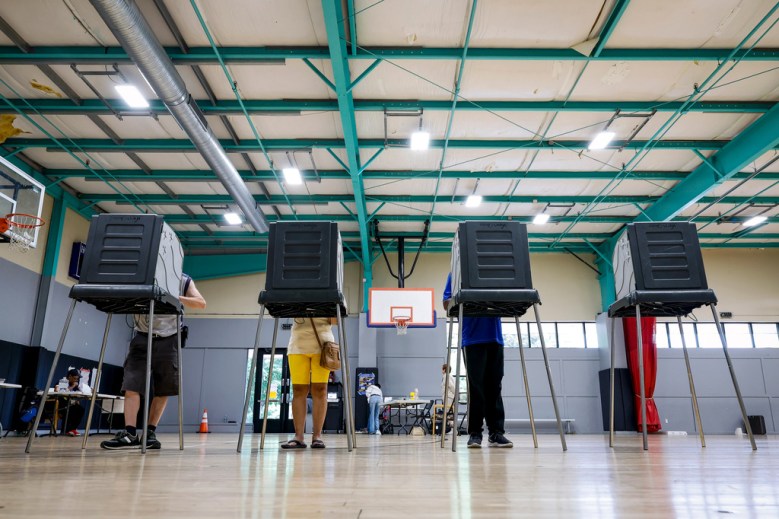
Lately, when I talk with Connecticut residents about the upcoming election, they tell me they’re afraid.
Sometimes, they can tell me exactly what they’re afraid of: federal immigration agents showing up at polling places, protesters interfering with voting, their personal information being seized, or even the federal government attempting to stop the election altogether.

Other times, people can’t quite put their finger on what’s worrying them. They just know they’re scared.
I understand. For years now, we’ve heard repeated claims about stolen elections, widespread voter fraud, and ineligible people casting ballots. We’ve seen alarming headlines and social media posts predicting everything that could go wrong. Some concerns deserve serious attention. Others are based on speculation or misinformation. But when all of it gets mixed together, it can leave people wondering what to believe and worrying about what might happen next.
But here’s what concerns me most: That fear could accomplish the very thing people are afraid of, which is keeping them from exercising their right to vote.
And that’s why I want Connecticut voters to understand something.
It’s our job to worry about the what-ifs. It’s our job to prepare for them. It’s our job to take the steps necessary to protect voters, election workers, and our elections.
And when I say “our,” I don’t just mean the Secretary of the State’s Office. I mean the Attorney General’s Office, the Connecticut Department of Emergency Services and Public Protection, local election officials in all 169 towns, law enforcement, and the many other state and local agencies and people who have responsibilities for keeping our elections safe, secure, and accessible.
We take those responsibilities seriously. We plan, we prepare, we work together, and we have procedures in place to respond when something doesn’t go as expected.
Our job is to think through what could go wrong before it happens. And most of that work happens long before anyone walks into a polling place.
Earlier this month, election offices in several states received suspicious letters, some containing powder. Federal authorities told us a letter addressed to our office had been intercepted. But before we knew about that letter, we’d already reminded local officials how to handle suspicious mail safely.
We’ve also helped towns prepare for 2026 election law changes, including to help law enforcement understand a new state law establishing restrictions within 250 feet of polling places and other designated election sites. The goal is to protect voters and election workers while making sure officers can still respond to emergencies and perform their lawful duties.
I wish I could promise that nothing unexpected will happen between now and when the polls close at 8 p.m. on Election Day, November 3. But what I can tell you is that we’ve spent months working with state, local, and federal partners to be ready if something we hope never happens does occur.
This is the kind of work most voters never see. And none of it begins the week before an election. It happens year-round, and it involves people from different agencies, political parties, and communities working together.
That’s our job. Your job is to vote.
In the 2018 midterm election, about 65% of Connecticut’s registered voters cast a ballot. In 2022, that figure fell to about 58%.
What will voter turnout look like in 2026?
I hope it will show that Connecticut residents understand what’s at stake; that they realize that the people we elect make decisions about our nation, our state, our towns, the services we rely on, and how public money is spent.
Eligible Connecticut voters have three ways to cast their ballots. They can do it in person during Early Voting through November 1, in person on Election Day November 3, or by absentee ballot.
Find our 2026 Voter Guide in English or Spanish at MyVote.CT.gov. It contains everything you need to know about voting in Connecticut, from how to find your polling place, to the candidates on your local ballot, to the rules about who can legally handle and return someone else’s absentee ballot.
We’re doing our job, Connecticut.
Now it’s time to do yours.
Stephanie Thomas is Connecticut’s Secretary of the State.