



Connecticut Republicans didn’t just lose an election Tuesday. We suffered a political slaughter the likes of which we have never seen.
While a national Democratic wave contributed to the outcome, the magnitude of our defeat demands more than excuses. It demands an honest reckoning.
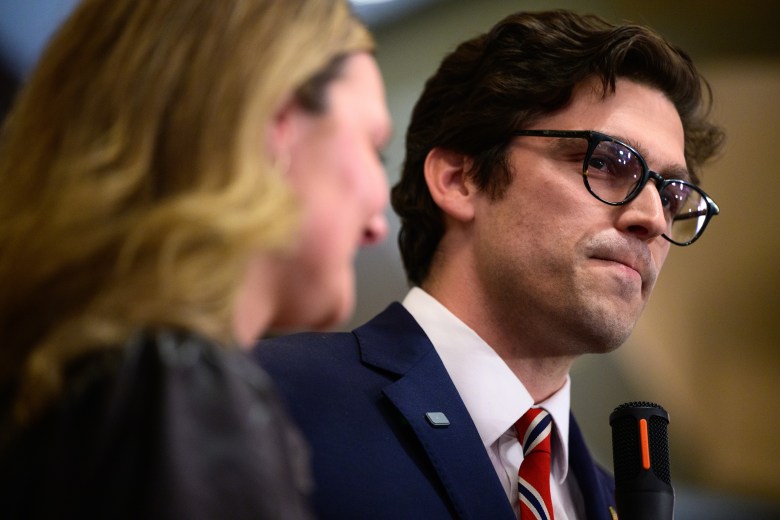
First, Ryan Fazio deserves our gratitude and respect. When others declined to step forward, Ryan accepted the enormous challenge of running for governor in an unfavorable political environment. He worked tirelessly, traveled the state, and made a serious case for fiscal responsibility and economic opportunity. He knew the odds and answered the call anyway. His courage, commitment, and extraordinary work ethic deserve admiration.
But honoring Ryan’s effort cannot substitute for examining why Republicans lost so decisively.
Perhaps the greatest frustration is the disconnect between voters’ concerns and their choices at the ballot box. Connecticut residents repeatedly identified taxes, the cost of living, and exorbitant utility bills among their most pressing problems. Yet those concerns did not translate into accountability for the party that has controlled the governorship and both legislative chambers since 2011.
Donald Trump didn’t create Connecticut’s public benefits charge on electric bills. State policymakers did. Trump didn’t design Connecticut’s tax structure or determine Hartford’s spending priorities. Connecticut’s elected leaders did. Trump didn’t enact the state laws that have stripped control of zoning from local communities. Gov. Ned Lamont and Democratic legislators did.
Donald Trump certainly didn’t create Connecticut’s longstanding and shameful achievement gap in our public schools. That problem predates his presidency by decades and remains unresolved after 16 years of Democratic control in Hartford. And now, with proposals for regionalized school districts back on the table, I fear Hartford may seek to strip communities of local control over their schools as well.
At some point, Lamont and Democratic legislative majorities must be held accountable for the problems they have failed to solve. Certainly, national economic forces matter. But opposition to Donald Trump appears to have overwhelmed almost everything else. For many voters, national political passions superseded an examination of Connecticut’s governing record.
Yet Republicans cannot simply blame Trump or the electorate. If voters were convinced we offered a credible alternative, more would have supported us.
That is our failure to address.
The Republican Party needs rebuilding from the bottom up. It starts with our Republican Town Committees and the members representing each district on the Republican State Central Committee. Many have served faithfully for years, even decades, and deserve appreciation. But 20 years in the same position should not be mistaken for 20 years of progress.
Republicans in every district must examine who represents them on State Central. Are they recruiting new people, bringing fresh ideas, expanding our reach, and building a party capable of winning? Or have these positions become comfortable seats occupied by the same familiar faces election after election?
There is another fundamental problem that Republicans must confront: the tremendous disconnect between our Republican elected officials, our Republican Town Committees, and the Republican State Central Committee. I witnessed this firsthand when I ran for governor eight years ago. Too often, these groups operate in separate silos rather than functioning as parts of a unified political organization. Elected officials, party leaders, and grassroots activists should be working toward common objectives, communicating regularly, and supporting one another. If we cannot get on the same page within our own party, how can we possibly expect to prosecute a successful statewide campaign in an increasingly difficult political environment?
And then there is the destructive culture of infighting that has plagued Connecticut Republicans for far too long. Democrats certainly have their own personality conflicts, ideological divisions, and internal disagreements. But when an election approaches, they generally find a way to put those differences aside and unite around the common objective of winning.
Connecticut Republicans, by contrast, too often form a circular firing squad, spending more time attacking fellow Republicans than challenging the opposing party. Personal grievances, factional rivalries, and old political scores become more important than the larger mission. This mindset has to be expurgated from the Connecticut Republican Party once and for all. Healthy debate and honest disagreement make a political party stronger. Personal vendettas and political score-settling only make it weaker. We will never build a credible governing alternative until we learn that winning elections requires discipline, mutual respect, and a willingness to put the party’s broader interests ahead of individual egos.
We need new blood, new energy, and a new generation willing to do the hard work of rebuilding. Town committees must become engines of candidate recruitment, fundraising, and community engagement. District Republicans must take responsibility for choosing State Central representatives committed to growing the party rather than preserving the status quo.
There may be one silver lining in this otherwise disastrous election. With overwhelming legislative majorities, Connecticut Democrats, particularly their progressive wing, may interpret the results as permission to pursue a more ambitious agenda. I suspect progressives like Josh Elliott will view this election as a mandate to push their agenda further left. Governor Lamont strikes me as a genuinely nice man. But being a nice man and having the political will to stand up to the most ideological members of your own party are two different things. Whether he will exercise that restraint remains an open question.
Republicans should prepare for renewed debates over taxes on investment income and high earners, costly energy mandates, government spending, and further erosion of local decision-making authority. These are potential battles, not inevitable outcomes. We must challenge proposals on their merits and offer practical alternatives.
The political landscape will eventually change. Donald Trump will not be a presidential candidate in 2028. Although his influence will persist, Democrats cannot assume that opposition to him will indefinitely overshadow scrutiny of their own governing record.
But Republicans cannot simply wait for Democrats to overreach.
We must rebuild a coalition that includes independents and the pragmatic, fiscally responsible Democrats once represented by Joe Lieberman. These voters want affordable electricity, reasonable taxes, safe communities, good schools, and competent government. Our message must be grounded in common sense and kitchen-table economics, not national grievances or ideological purity tests. We must demonstrate that Republicans can govern better, not merely complain louder.
Ryan Fazio did his part. Now the rest of us must do ours.
No one is entitled to a seat on State Central. No one is entitled to lead simply because they’ve always been there. And no Republican should confuse loyalty to the party with loyalty to the people who currently occupy its positions.
The time for excuses is over. The time for new blood is now. If we aren’t willing to clean house and make meaningful changes within our own party, we have no business asking Connecticut voters to trust us to lead the state.
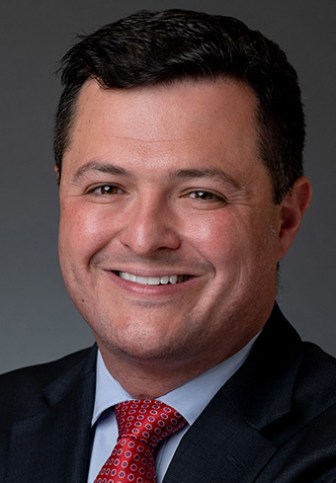
Timothy M. Herbst was the First Selectman of Trumbull from 2009-2017 and ran for Governor of Connecticut in 2018.