



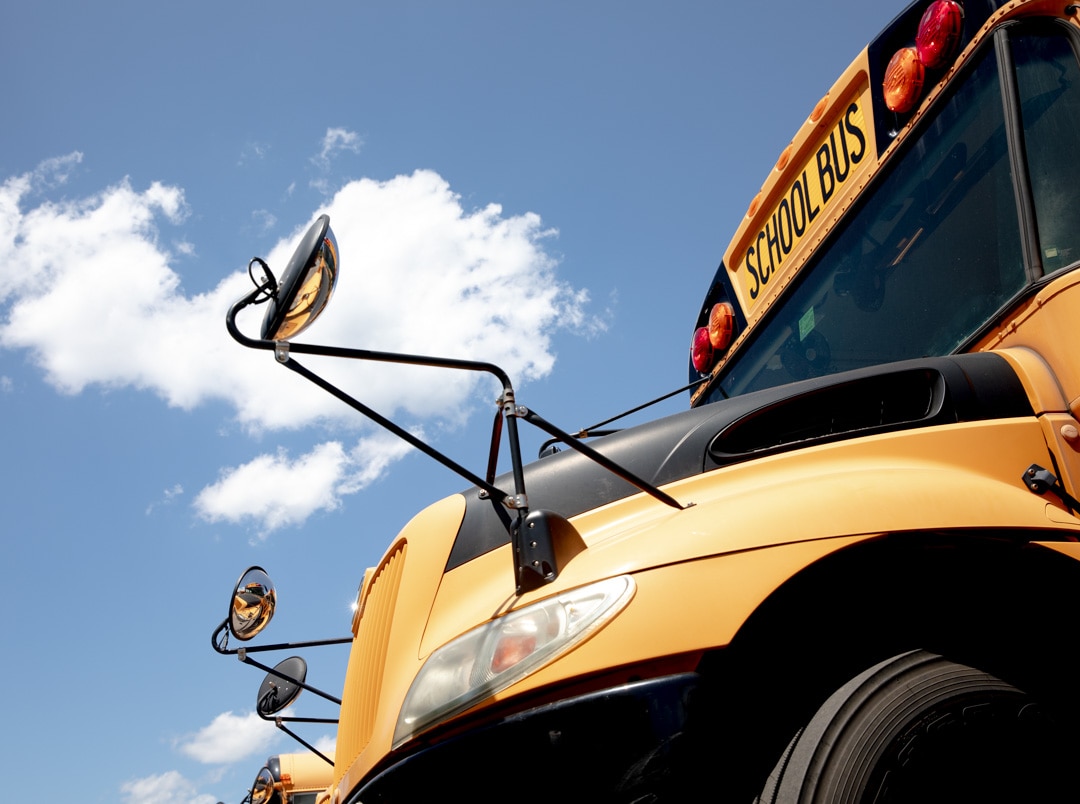
We’re a little over a month into the 2022-2023 school year, and in many towns that means the return of the seemingly-endless line of SUVs and buses at drop-off and pick-up.
Connecticut — with its low crime, high-ranking schools and initiatives like the child tax credit — is already “family friendly” by American standards, but I think all of those metrics miss a key point. School drop-off lines are a symptom of our broken transportation and land-use systems, and a more family-friendly Connecticut should include streets that are safe enough for kids to navigate independently.
In far too many towns, parents do not feel comfortable with their children moving around on their own. Research from the Energy Department shows that nearly 60% of car trips are under six miles, and many of those are students getting to school or going to activities each day. According to the Safe Routes to School Organization, in 1969, 48% of children walked or bicycled to school, but by 2009 that number was down to only 13%. These statistics represent an incredible loss for society.

Kids who can walk or bike to school are healthier and more independent, a concept the Dutch refer to as “the freedom to roam.” Contrast that with what sociologists call the “backseat generation,” something Chris and Melissa Bruntlett highlighted in their book Curbing Traffic: The Human Case for Fewer Cars in Our Lives.
To reverse these trends, we’ll need to do a lot. We’ll need street designs that prioritize human beings, not car speed. We’ll need better land-use, including eliminating large minimum lot sizes and parking mandates. We’ll need to curb (or ban) the ever-growing, extraordinarily dangerous SUVs and trucks dominating our roads. And, most importantly, we’ll need to build streets that are safe for humans, including wide sidewalks, separated and protected bike lanes, and woonerf-style traffic-calming measures.
Fortunately, there is a growing awareness of the problem, thanks in large part to advocates. On October 8, the Mirror ran an article with the headline Pedestrian deaths in Connecticut are rising. What’s happening?, pointing out that “In Connecticut, the number of pedestrians struck and killed by cars has more than doubled over the past 10 years.”
Hugh Bailey followed with an opinion piece advocating for pedestrian safety, and in the Hartford region, people like Kerri Ana Provost are calling out towns and relentlessly demanding safer streets. Naturally, safe streets are not just an issue for children — everyone of every age deserves them, and cities like New Haven are leading the way on these issues. But if we build streets safe enough for children, our streets will inevitably be safe enough for everyone.
None of this is technologically challenging, and we simply do not have to accept the current state-of-affairs. For many people, the modern vision of a “good childhood” is living in a single family home with a large, private backyard while being shuttled to and from activities in massive, fortified SUVs. What a lonely, dependent existence. Instead, I’d like to suggest a new measure for child and family-friendly — can kids safely walk and bike to school? Can they independently visit a friend or go to the park? If not, perhaps your town isn’t so child-friendly, after all.
Experience shows us that we cannot shame, cajole, or convince people to drive safely, because we know that drivers travel as fast as the road design allows them. Our state DOT knows this, too, and we should demand they act on that knowledge.
Every time I see a sign in my town that says “drive like your kids live here,” I want to change it to “design like your kids live here.” Our built environment isn’t handed down on high, and we don’t have to accept the status quo of fast cars and roads that are too dangerous for walking and biking.
Thomas Broderick lives in Trumbull.