The Committee on Children is considering a bill that would support some teens who are aging out of the Department of Children and Families system by ensuring that petitions filed on behalf of children who are alleging abuse and neglect can be considered by a judge regardless of whether that child turns 18 before a decision on the case has been made.
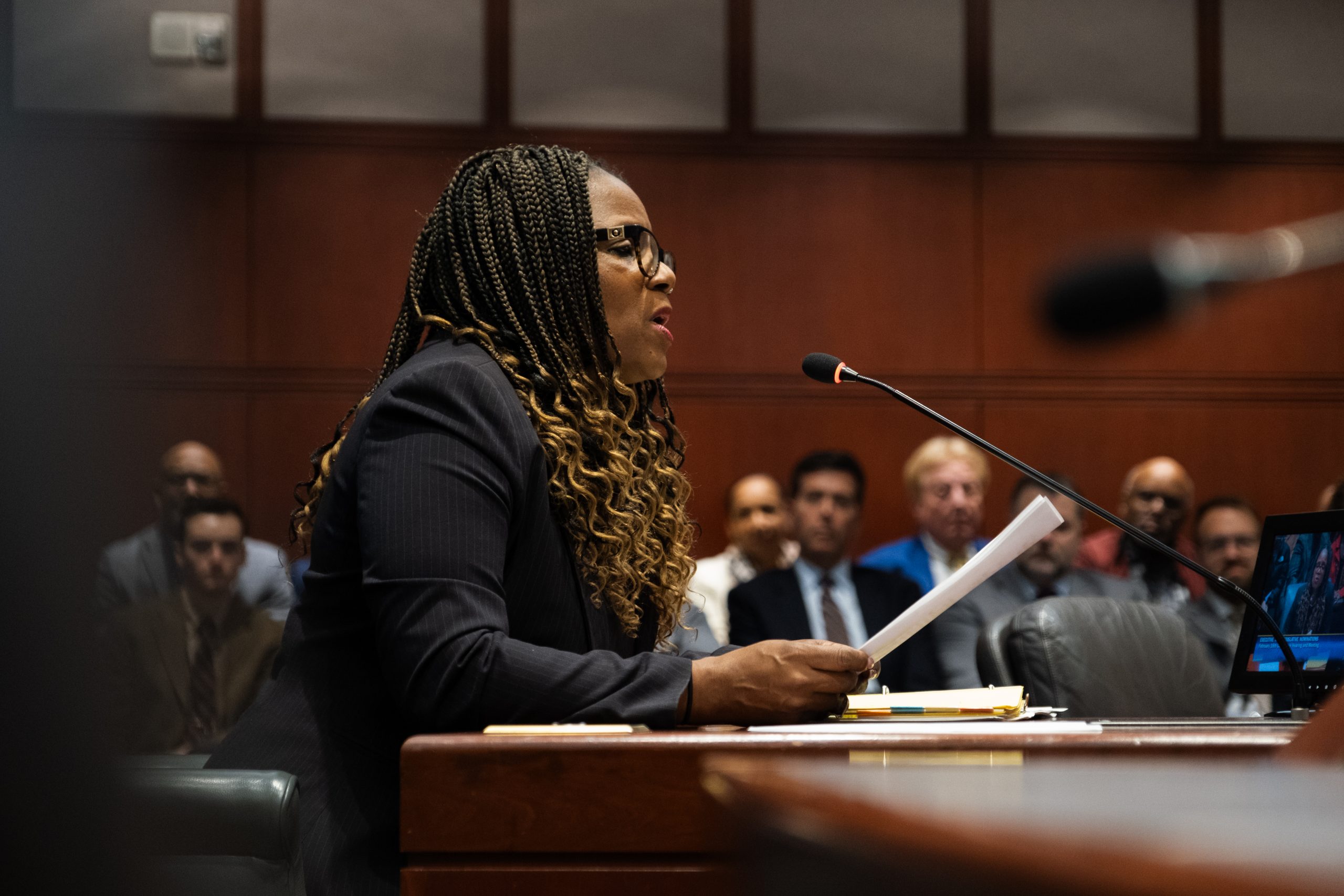
Christina Ghio, the state’s acting child advocate, spoke in support of Senate Bill 1215, “An Act Concerning Certain Abused Children and Youths,” on Wednesday. Ghio said that the change in law would ensure that such abused and neglected children are able to benefit from the support of DCF at a particularly vulnerable moment in their lives.
In her written testimony, Ghio provided a real world example of a child who is 17 1/2 years old, is currently being advocated for by her office, has made multiple suicide attempts, has an IQ too high to make her eligible for support from the Department of Developmental Services, but functions “at the level of a child in second or third grade.” According to Ghio, the family has been reported on 18 times over 14 years, with five family assessment reviews and 13 investigations. “Reports have centered around emotional abuse, physical abuse, lack of follow through regarding mental health treatment, failure to follow safety plans, and not visiting the child during lengthy stays in the emergency room,” she wrote in her testimony. “She is currently in the hospital. It is not safe for her to go home.”
But according to the Office of the Child Advocate, even if neglect petitions were to be immediately filed, a case like this example may not be resolved in court before the girl’s 18th birthday, leaving her ineligible for support services from DCF.
Ghio wrote that the girl is likely to become homeless and is at a high risk for suicide. A 2024 report from the OCA found that overdose is the leading cause of death for people in this age group (18- to 21-year-olds) followed by suicide and homicide.
Former Child Advocate Sarah Eagan, who is now executive director of the Center for Children’s Advocacy, also testified in support of the proposed bill.
“It’s very important to understand that there is not a lot of other help for at-risk, abused, neglected 17-year-olds who turn 18,” Eagan said. “There is in reality, I think as many of us know, no other state agency that is gonna swoop in when the youth turns 18 to provide shelter, safety, case management or anything that youth may need, not only to be safe but just to survive.”
Eagan also pointed out that these young people do not simply “disappear” if they are not being helped by DCF, and may end up interfacing with other state systems, including the hospital system and the Department of Correction.
At Thursday’s meeting of the Committee on Children, DCF Commissioner Jodi Hill-Lilly warned that the change in law could create “a substantial resource problem for the department.”
“It’s exceptionally difficult to find foster families or group homes for older children,” Hill-Lilly said. “If this bill were to pass, the system would be increasingly more challenged by having to identify placements for adults not already in DCF custody.”
Ghio said she does not anticipate a large influx of cases, given that the process is bureaucratic and complex, and the ultimate decision is made by a judge. Ghio noted that a change in law would not impact the maximum age at which a petition can be filed — such petitions would still need to be filed before a person turns 18.