


When 20-year-old Kassiani Nicolakis describes her special education transition program at The Foundation School in Milford, her voice is full of excitement.
“They let me be who I am,” she says.
The school educates students with special needs and offers a tailored program that prepares 18-to 22-year-olds for life outside the classroom, however that may look. For Nicolakis, it was a welcome change from her high school in Woodbridge, where she said she didn’t feel listened to and always felt like she was being compared to other students.
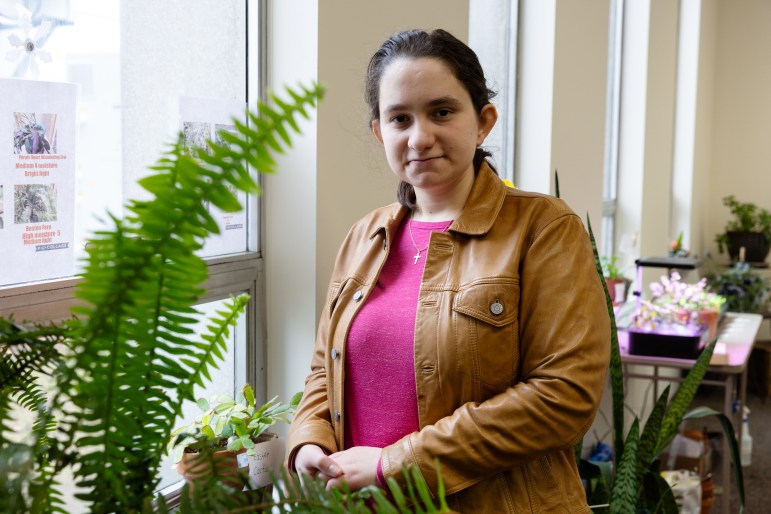
But legislation proposed this year would shorten the time students like Nicolakis spend in transitional education programs, which currently last through the end of the school year during which students turn 22. Instead of finishing out that school year, H.B. 7076 proposes ending transition services as of a student’s 22nd birthday.
The bill met with immediate backlash from parents, students and advocates — deepening, for some, an ongoing frustration with districts over what they believe special education services should look like for students in Connecticut’s public schools.
Transitional education programs provide real-world skills, customized for young adults with special needs in order to help them take the next steps into adulthood. But school district leaders say those services can get expensive — hundreds of thousands of dollars a year, in some cases. That’s particularly challenging at a time when state funding is accounting for a smaller share of local school districts’ budgets.
“We have the best interests of students in mind, but our funding dilemma is really dire right now,” said Fran Rabinowitz, executive director of the Connecticut Association of Public School Superintendents. Rabinowitz characterized the proposal as a way for districts to take some control of special education costs.
Connecticut spends around $2.8 billion annually in state dollars on special education. The majority of funding comes from local coffers.
For months, superintendents and other advocates have been calling on state lawmakers to ease their funding burdens related to special education. That includes a proposal to fully fund the Excess Cost Grant — the state’s reimbursement model to districts — for high special education costs.
Many district leaders also want the state to add a weight to the Education Cost Sharing formula for schools that enroll higher numbers of students in special education programs — similar to the way the state funds districts with large populations of multilingual learners and students from low-income households.
Lawmakers have begun to consider changes to the ECS formula in Senate Bill 1511, which would not only increase the “foundation” amount for every child, but also proposes the 50% weight addition for special education. The bill underwent a public hearing Wednesday with broad support from students and municipality leaders.
The state is providing about $221 million in Excess Cost Grants to districts this fiscal year, and earlier this month lawmakers passed emergency legislation to boost special education aid by $40 million for the current fiscal year. That bill was signed into law March 5.
But that’s still about $50 million less than local schools need by 2025-26 for special education, according to Rabinowitz’s estimates.
“I think that keeping [some special education students] until age 22 is … going above and beyond,” Rabinowitz said. “And certainly, if we had an unending pool of money — if funding weren’t an issue — I don’t think you would hear us complaining. But the funding is an issue.”
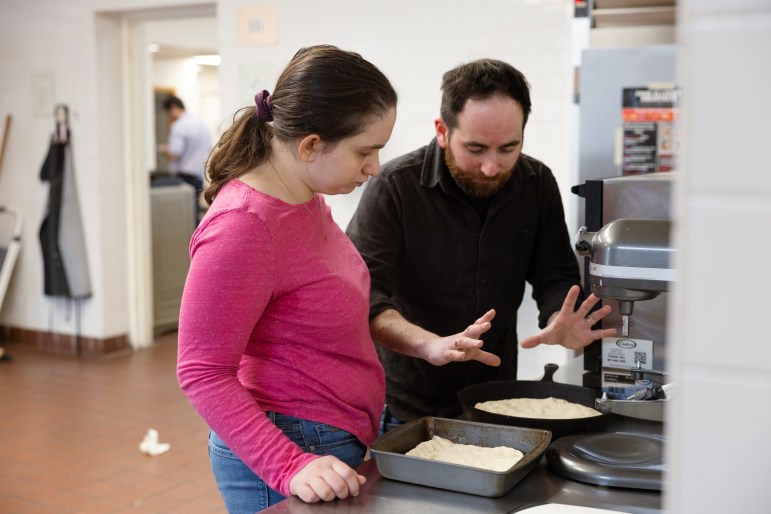
Clio Nicolakis, Kassiani’s mother, learned of H.B. 7076 — the bill shortening the duration of transition services — just two days before a March 3 public hearing before the Education Committee.
“This bill sort of snuck up on us all of a sudden,” Clio Nicolakis said. “My heart sank because we worked so hard to get our daughter in a place where she felt comfortable, where she feels that she can grow, and that we feel that they can help her grow her skills. … So when I read that, I just felt like, ‘Why is this yet another challenge being thrown in our face?’”
Her daughter, who is autistic, has developed friendships with other students and school staff, and she has benefitted from their support. Kassiani has also flourished in art class, drawing plants using pencils, pens and watercolors. The school staff have made note of Kassiani’s skill in technology and design, which they’ve recommended as career paths to consider when she leaves the education system at the end of the 2026-27 school year.
Kassiani said the future after school is something she’s still nervous to navigate.
Clio Nicolakis said she hesitated about telling her daughter of the proposed change to her academic plans. When she did, Kassiani got upset. And Clio urged her to testify to the committee — which she did.
The Nicolakis family’s testimonies were among almost 100 other letters of opposition to the bill.
“I am still learning how to manage my emotions and my stamina so that I can try some different internships, hopefully next year and the year after. I want to be able to go on internships without support but I need more time to be ready. Now I’m just going to be worrying about my 22nd birthday instead,” Kassiani Nicolakis wrote in testimony submitted to the Education Committee.
“Special needs kids get cheated out of a lot of things because they are differently abled. Just because you want to save money, it doesn’t make it right,” she wrote. “Put yourself in their shoes and think about how it makes them feel!”
‘It’s coming at a cost’
At the bill’s public hearing, superintendents from across the state described their financial woes.
In Putnam, two years of transitional services cost the district $570,000, according to Superintendent Steve Rioux.
“This substantial cost is difficult to absorb within our local education budget and places additional strain on already limited resources,” he said. “The unintended consequences of this mandate mean that districts are forced to make difficult trade-offs —potentially reducing funding for other essential educational services, impacting class sizes and limiting opportunities for all students.”
Wilton Superintendent Kevin Smith said the district’s transition program costs about $51,500 annually, and he urged lawmakers to limit services even further — ending the year a student turns 21, rather than on their 22nd birthday.
Education Committee Co-Chair Jennifer Leeper noted that the proposal in H.B. 7076 would simply reset requirements back to where they were before 2023, when the law was expanded to allow students to finish out the year they turn 22. That change has caused her home district of Fairfield to spend an additional $600,000, she said.
“There’s a whole additional year than what they used to have to provide and it’s coming at a cost. We’re hearing from our districts that they’re struggling,” Leeper said. “We don’t want to deny services to the most vulnerable kids, but it’s [also] thinking about what we are obligated to provide under [the Individuals with Disabilities Education Act] and what’s reasonable to ask our district’s to spend.”
But the funding-centered conversations have exacerbated a feeling many parents already had while navigating special education: that their children are just seen as a price tag.
“It’s all about the money, that’s all it comes down to,” Clio Nicolakis said.
“Just because they think it’s right doesn’t mean it’s fair to any other special needs kids in Connecticut,” Kassiani Nicolakis added.
‘Most families don’t have a Plan B’
The bill has also raised equity concerns among special education advocates.
Most students with disabilities graduate with their peers. Only the students with the most severe disabilities continue on in transition programs, which are tailored to their skillset and organized through annual Planning and Placement Team meetings.
As of October 1 of last year, there were 144 special education students in Connecticut public schools who were 22 years old, according to data from the state Department of Education.
For some students, a transition program might include instruction in how to use public transportation, job training and other soft skills. Other students may work with a certified behavior analyst to mitigate behaviors that impede their progress in a work setting.
While transition programs look different based on student need, so does life after school. One young adult could exit the system and work part-time at a local business, while another might qualify for services under the Department of Developmental Services. A small number students are placed in full-time residential educational programs if their family has the financial means.
But for many, life after school is full of waitlists and navigating the end of education services.
DDS services are only available to individuals whose IQ are below a certain level. About 95% of those services are provided through the private sector, spokesperson Kevin Bronson said, adding that day and residential support programs are facing severe staffing shortages.
“If there’s not staff, you can’t open a program,” Bronson said. “There’s a lack of direct care workers, a nursing shortage, etc. It’s not just DDS, it’s the health and human services sector.”
And that’s only part of the problem, according to Andy Feinstein, a longtime special education attorney and legislative chair for the advocacy group Special Education Equity for Kids of Connecticut.
While there are waivers for Autism and traumatic brain injuries that qualify young adults for services through the Department of Social Services, there are long waitlists too, Feinstein said.
“For other kids with other disabilities, there’s nothing,” Feinstein continued. “It’s incredible that we just drop them into society after this, without any regard for what happens to them.”
Christina Ghio, Connecticut’s Child Advocate, said there are big differences between special education and adult services. “Special education is individually designed instruction to help the person learn the skills that they need right now to transition into adulthood. They’re actively teaching new skills,” Ghio said. “That is not what you get from an adult agency.”
For young adults with disabilities who don’t qualify for state-funded adult services, that may mean a parent has to quit working, Ghio said. “This is where the inequity comes in. Some families can absorb that because they have the financial means to do so, but there are families who cannot absorb that. And when you have a child with very significant needs who is home all day, you need someone to be with that child.”
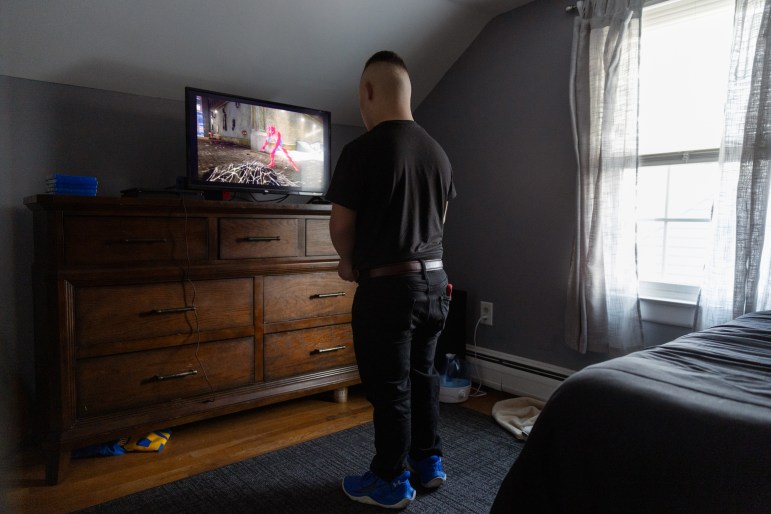
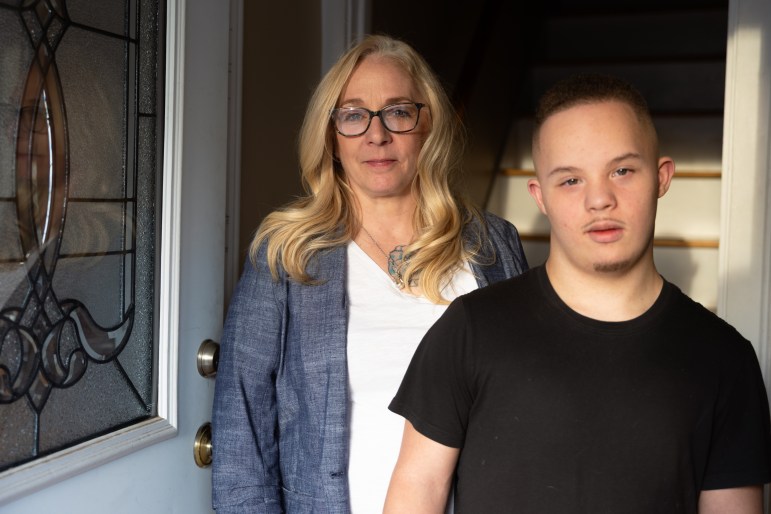
Lisa Perry, a Vernon mother whose 17-year old son has Down syndrome, said despite the fact her son has a few more years of education services available, she doesn’t know “what his future is really going to look like by the time he’s 21 or 22.”
Perry described Connecticut’s special education system as “a mess.”
“It’s not fully funded. It’s probably never going to be fully funded. Districts don’t take it serious, and then you add the federal confusion and chaos that’s going on around it,” Perry said. “It’s a horrible time to make a major change like this.” If the proposal were to become law, Perry said, it’s “definitely going to affect my planning.”
As things stand now, she hopes her son, Trey, can work part-time at a nearby barber shop. She also has a flexible job close to home and her son can join her there, if needed. If that doesn’t work, she has the support of other family members.
“I have a plan B. I’m lucky. Most families don’t have a plan B,” Perry said.

Perry also observed that the change could make existing disparities worse. “This is going to affect a large proportion of Black and Brown families and families of lower socioeconomic means,” she said. “It’s just another example of something the state’s doing, in a very arbitrary way, and it is going to affect the very people that they should be protecting.”
Regardless of differences about the merits of the bill, one thing parents, special education advocates and districts can agree on is the need for Connecticut to provide services for students with disabilities — after high school and in the transition to adulthood and the working world.
“The state may save school districts money and that particular line item in the budget might see a little surplus, but you’re only going to be moving it to somewhere else in the budget,” Perry said.
“We need to look into the lack of adult services for students who have disabilities,” Rabinowitz agreed. “We don’t want any of our students or young adults to go without services. We’re just asking that the proper agencies step up to provide the services, because whether they’re 22 or 23 is immaterial, really. What needs to happen is seamless services for these students.”
The bill will be taken up for a vote in the Education Committee by March 31.
