



Lawmakers and advocates are divided on whether to allow the governor and legislature to weigh in on how hundreds of millions of dollars in opioid legal settlements are used.
Gov. Ned Lamont proposed using tens of millions of those dollars to fund social services, but in its proposed budget released last week, the Appropriations Committee said this money should come from the General Fund. Even so, some Democratic leaders say they would be open to Lamont having a role in how the settlement funds are used, a major reversal that would require changing state law.
Just a few years ago, Lamont backed a law that created the Connecticut Opioid Settlement Advisory Committee (OSAC) to designate how more than $600 million in opioid funds that are expected to come to the state over an 18-year period should be spent. The law was intended to prevent lawmakers and future governors from dipping into the money to fill budget gaps like they historically did with the tobacco settlements of the 1990s.
[RELATED: Lamont wants to dip into opioid settlement to fund social services]
Lamont’s proposed budget would require changing that law so the money could be used for things like cold weather emergency response and mobile crisis care, services that were previously funded by fees, taxes and federal funds. But in the Appropriations Committee’s proposed budget for fiscal years 2026 and 2027, legislators specified that the Opioid Settlement Fund is separate, and “expenditures must be approved by the Committee and used in accordance with the controlling judgment, consent decree, or settlement.”
Lawmakers recommended continuing these services but said that the money should come from the General Fund. In some cases, they also recommended less money for services.
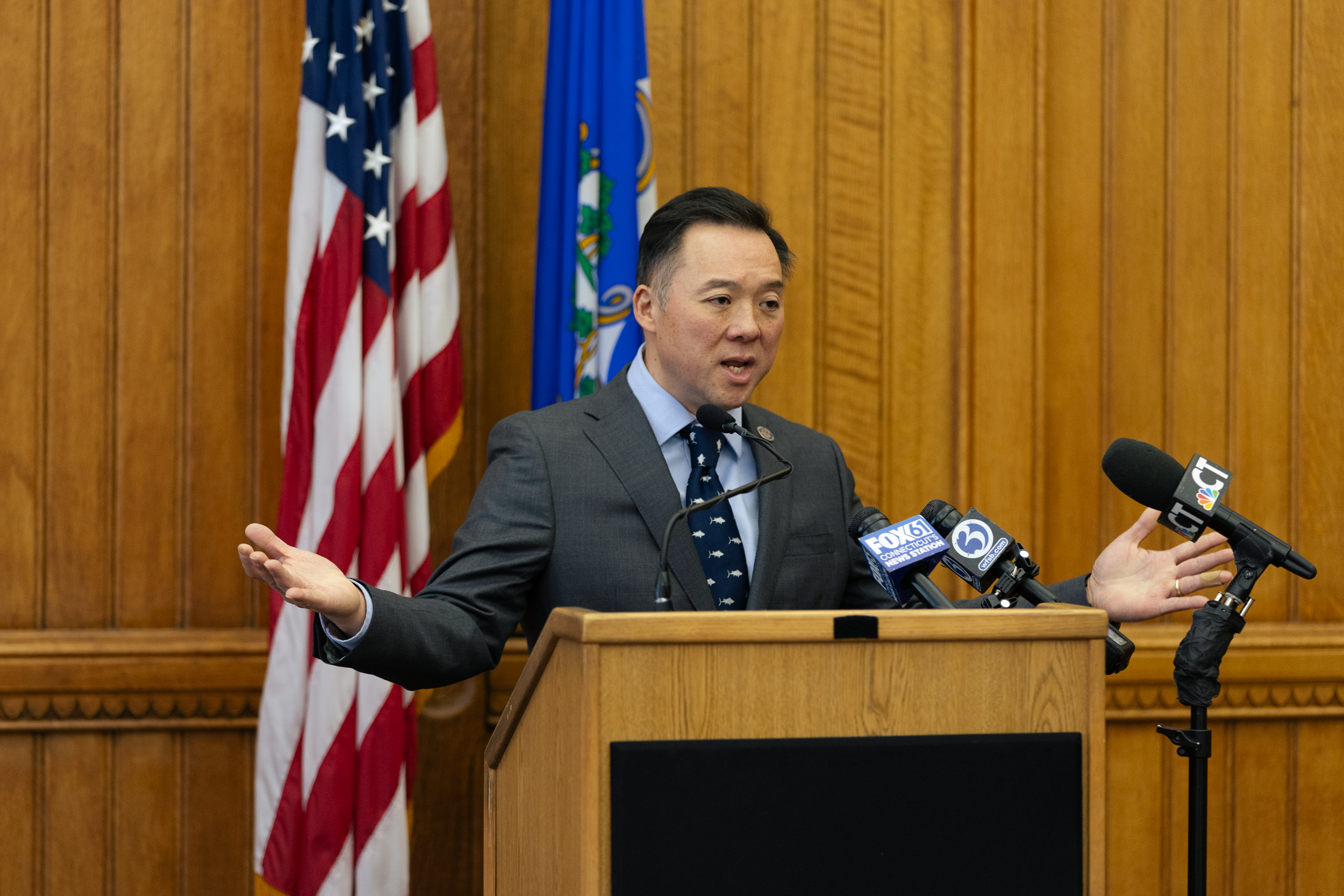
In a statement through a spokesperson, Attorney General William Tong said he appreciates that the funds have been restored.
“We look forward to continuing discussions about how to fund the state’s priorities consistent with the settlement language and Connecticut’s opioid settlement statute, which requires opioid funding proposals to go through an application process,” the statement reads.
John Lally, a member of OSAC who lost his son to opioid use, said he was “really surprised” when he learned that Lamont had proposed using settlement funds.
“It goes against what he agreed to in the beginning,” Lally said.
Lally has spent many hours over the past two years on the committee. While he said it would be frustrating to see that time go to waste, “the bigger issue is what we owe the people of Connecticut who struggle with addiction and their families.” By going through the careful process that OSAC has set up, Lally believes, the funds will be spent “in a way that will honor them and the ones we’ve lost, like my son, in the best way we can.”
After Lally learned of Lamont’s proposal, he and other members of OSAC have been calling lawmakers for their support to ensure the funds would not be diverted.
“We’re willing to fight for what we believe is right,” he said.
But not everyone on OSAC seems to agree that the process is going well, or that Lamont should be kept out of decision-making.
Sen. Cathy Osten, D-Sprague, co-chairwoman of the Appropriations Committee and a member of OSAC, said that she doesn’t believe that the line items Lamont singled out to be funded by OSF were the right choice for how the money should be used, but she would be open to the governor and lawmakers weighing in on how that money is spent in the future if it’s carefully focused on opioid addiction and treatment.
“What we have going on right now is an overthought process (on OSAC), and I am well OK with thinking about things, but I think there has to be action along with thinking about things,” Osten said.
Advocates have expressed frustration with the slow pace of OSAC’s decision-making and confusion over how recommendations for using the funds are being considered, especially considering the stakes of the opioid crisis. But in recent months, the group has picked up the pace: as of mid-April, the fund had received more than $158 million, of which about $93 million has already been allocated, according to Chris McClure, the chief of staff at the state Department of Mental Health and Addiction Services.
Sen. Saud Anwar, D-South Windsor, co-chair of the Public Health Committee and a member of OSAC, said that the committee should be in charge of making decisions about how the funds are used but agreed with Osten that there may be a middle ground that includes the committee while also allowing elected officials to have a say.
“I think honoring the process is still worthwhile,” he said.
CT Mirror reporters Andrew Brown and Keith M. Phaneuf contributed to this report.