



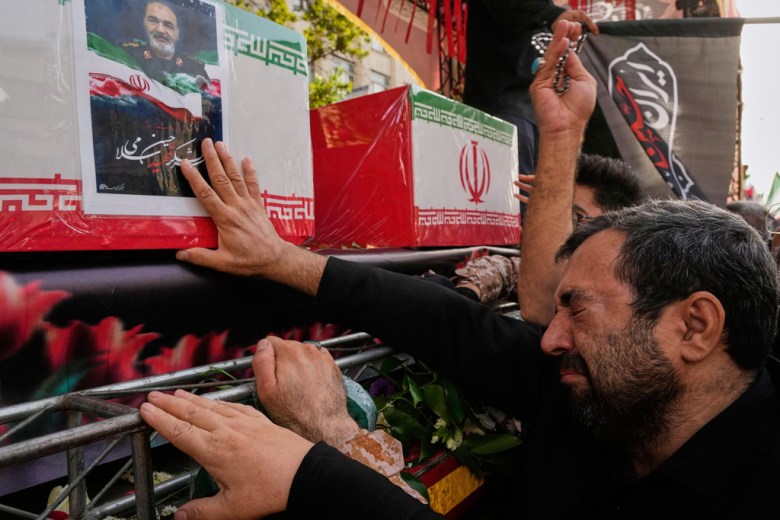
The bombs have stopped—for now. After two weeks of missiles, threats, and the terrifying drumbeat of war, a ceasefire has arrived. Tel Aviv exhales. Washington strategizes. Tehran recalculates.
But in Iran, the silence feels different. It isn’t peace. It’s a pause. And in that pause, another battle rages —quieter, older, far more consequential. Because Iran’s most dangerous war isn’t with Israel or the United States. It’s between the people and the regime that has ruled them through fear, cruelty, and lies for over four decades.
Every time Tehran fires missiles abroad, it’s also tightening the noose at home. While international cameras track explosions over airbases, Iran’s gallows work overtime. Protesters disappear. Students vanish. Women are dragged into courtrooms for removing a scarf. This regime thrives on crisis. It builds legitimacy on chaos. But that strategy is fraying. The Iranian people are done being afraid.
The movement inside Iran today is not a flash in the pan. It is not a hashtag moment. It is a generation that has risen, again and again, from the bloodied pavements of 1988 massacre of 30,000 political prisoners, from labor strikes, from underground classrooms and shuttered newspapers.
This is a citizenry refusing to kneel. They are not asking the world to save them. They are demanding that we stop strengthening the boot that crushes them.
Why does Tehran escalate abroad? Because it is desperate at home. This isn’t strength. It’s survival mode. And the regime knows its greatest threat doesn’t come from warplanes or sanctions —it comes from Iranians who no longer buy the lie.
In Tehran’s prisons sit poets, teachers, students, workers. They have no missiles. But they are more dangerous to the regime than any foreign power —because they carry a vision — a vision of a secular, democratic Iran. One without executions. One where women are free, where religion is a choice, not a weapon, and where leadership is earned, not inherited through violence.
That vision is not vague. It has a framework. It has a leader. It has a name: the National Council of Resistance of Iran (NCRI). Led by Maryam Rajavi, the NCRI offers more than protest —it offers policy. Her 10-point plan lays out a future secular democratic republic built on rule of law, gender equality, religious liberty, and peace.
It is not abstract. It is not exiled into irrelevance. It is organized, global, and growing. Inside Iran, it inspires courage. Abroad, it is gaining bipartisan support —from the U.S. House Resolution 166 to lawmakers in over 40 countries who know appeasement has failed.
This ceasefire will tempt many leaders to breathe easy, to return to familiar calculations: sanctions relief, backchannel deals, polite diplomacy with a government that kills children for chanting slogans. But history will not be kind to that strategy. If the world fails to act now, it risks turning this pause into a permission slip—for more executions, more repression, more lies.
So what can be done? First, designate the Islamic Revolutionary Guard Corps (IRGC) as a terrorist organization across Europe. They are the regime’s mafia, both in Iran and abroad. Pretending they are a legitimate military force is a diplomatic fantasy.
Second, freeze the assets of regime elites and their families. There is no moral logic in letting torturers send their children to London prep schools while they hang teenagers in Mashhad.
Third, expose and dismantle the regime’s propaganda and influence networks in Western capitals. These aren’t think tanks—they are front groups that shield tyranny.
Finally, engage the alternative. The Iranian resistance has done the hard part: they’ve survived, organized, and laid out a democratic path forward. What they need now is recognition and solidarity —not weapons, not war. Just the truth, spoken clearly.
Regimes like Iran’s rely on one illusion: that they are eternal. But they are not. They are loud, cruel, and brittle. And they fall —when the world stops looking away.
The Iranian people are already doing the hard work of history. The question is whether the rest of us will pretend this ceasefire is peace —or finally recognize that real peace only begins when dictatorships end.
Let us not mistake this moment for stability. Let us not waste the silence. Let us help turn this pause into a pivot—toward freedom, toward justice, toward an Iran reborn.
Jila Andalib of Storrs in a member of the Organization of Iranian American Communities – CT