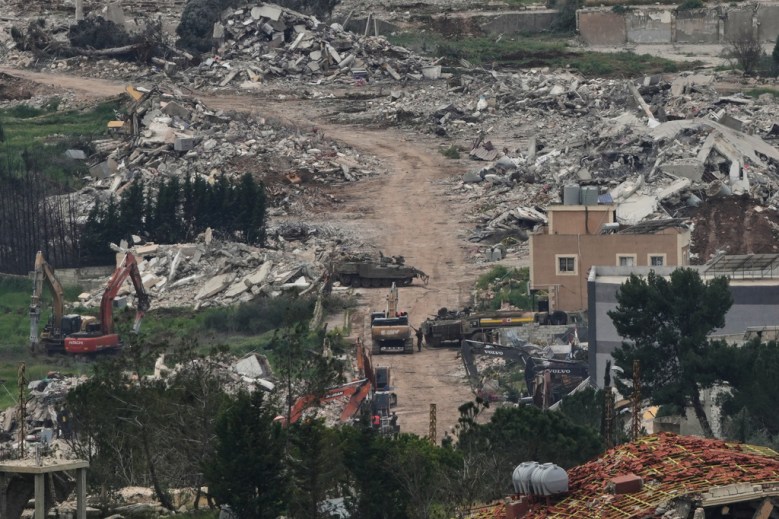
The U.S.-Israeli war against Iran, and now Lebanon, has caused extensive death and destruction throughout the Middle East, with far-reaching human, economic and geopolitical implications. The current partial ceasefire has decreased bombardment of Iran, but Israel’s invasion of Southern Lebanon goes on.
For years, our government has claimed that Iran poses a threat to the region. It is important to understand the real reasons for U.S. involvement in the war, and to take action to end it.
Impacts of the war:
Deaths — Nearly 4,000 people have been killed across the Middle East since the U.S. and Israel attacked Iran on February 28, including at least 3,400 in Iran, and 1,200 in Lebanon. The first day’s dead in Iran included over 150 elementary school children.
Humanitarian costs — Over three million Iranians and one million Lebanese have been displaced from their homes. Israel’s re-closing of borders to Gaza prevents entry of humanitarian aid and exit of people needing medical aid.
Global economy
- Closing off the Strait of Hormuz, a critical energy shipping route, has increased energy and food prices worldwide.
- The U.S. spent roughly $11.3 billion for the Iran war’s first week, and the Pentagon has requested $200 billion.
- Israel estimates damage to their economy from the war at $3 billion per week.
Geopolitical consequences
- Nearly every country in West Asia has sustained damage from missile hits, drone strikes or shrapnel.
- U.S. allies in the Persian Gulf have complained that the U.S. and Israel did not prepare them for the risk of being targeted by Iran.
- Several European countries have refused to support the U.S. and Israel in this war, including Spain, France and Germany.
What did (and did not) drive this “war of choice?”
Three excuses for war were not true drivers of U.S. entry into the war.
First, although Israel fears Iran, Iran has never attacked Israel first or used as much force as Israel’s attacks on Iran. Further, while Iran gives money to Hamas, Hezbollah, and the Houthis, these groups work for their own purposes, not as proxies for Iran.
- Hamas (which has several funding sources) is part of a long history of Palestinian resistance against Israel.
- Hezbollah was founded in 1982 to resist Israel’s invasion and occupation of Lebanon, an invasion which was repeated in 2024 and in March 2026.
- The Houthis have explained that their attacks on Israeli-linked ships are to pressure Israel to end its war on Gaza.
A second false excuse for U.S. involvement in the war is that Iran is developing nuclear weapons. International nuclear watchdogs, negotiators of the 2015 Iran deal, and the U.S. Defense Intelligence Agency’s 2025 assessment all refute this claim. Further, Trump ended an existing nuclear agreement with Iran in 2018.
Third, while it is true that democracy and human rights are being trampled in Iran, given the administration’s strong support of other anti-democratic governments that commit severe human rights abuses, and given the U.S.’s record of overthrowing Iran’s previous democratic regime, it is not plausible that this concern is relevant to the Trump administration.
What did cause the war?
Two major factors drove our entry into the U.S.-Israeli War on Iran.
First is what Business Insider describes as President Trump’s long-running “smash and grab idea to corner the global energy supply.” Trump first proposed invading Iran for oil in 1987. On January 3, 2026, Trump ordered an invasion of Venezuela, saying, “We’re going to be taking out a tremendous amount of wealth out of the ground.”
Second is the long-term influence of highly aggressive and far-reaching pro-Israel lobbying on U.S. foreign policy in the Middle East, including multiple recent visits from Israeli Prime Minister, Benjamin Netanyahu. Netanyahu has called this war a dream come true, and Trump has said he would decide when to end the current war in consultation with Netanyahu.
Take action
In sum, this war, which has killed thousands of people and profoundly damaged the global economy, was not undertaken for any of the reasons given by U.S. officials, but is an attempt to control Iran’s oil reserves and to empower Israel’s desire to attack its neighbors.
To oppose this immoral, destructive war of choice, ask your legislators to impose an arms embargo on Israel until they withdraw from Lebanon and adhere to the ceasefire with Iran.
Alice Leibowitz writes on behalf of the Northeast Connecticut Gaza Peace Group.