



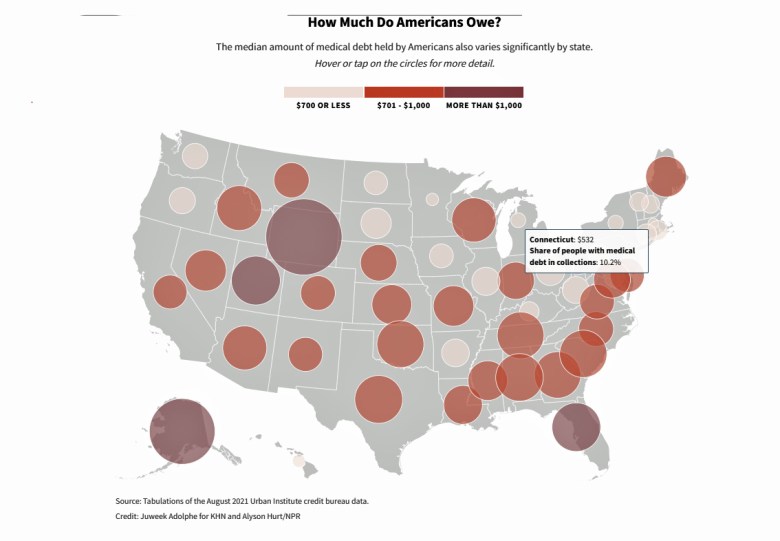
The CT Mirror ran a story on April 17 under this headline: “In CT, doctors now sue patients most over medical bills, surpassing hospitals.” It said this, in part:
Lawsuits by doctors and other non-hospital providers now dominate health care collections in Connecticut … The lawsuits are typically over bills of less than $3,000, but the impact on patients can be devastating … Lawsuits can lead to garnished wages, liens on homes, and hundreds of dollars of added debt from interest and court fees. They also pile additional financial strains on struggling families, prevent patients from getting needed care, and sap trust in medical providers.

There’s an underlying and disarmingly presumptuous implication there that breaks down like this:
- Doctors and other non-hospital providers shouldn’t sue for nonpayment.
- The lawsuits are typically over bills of less than $3,000.
- The impact on patients can be devastating.
- Lawsuits by doctors and other non-hospital providers pile additional financial strains on struggling families.
- Lawsuits by doctors and other non-hospital providers prevent patients from getting needed care.
- Lawsuits by doctors and other non-hospital providers sap trust in medical providers.
From that implication, we might infer this:
- Doctors and other non-hospital providers should be happy about not getting paid.
- The lawsuits are typically over bills of less than $3,000. So what if they are?
- The impact on doctors and other non-hospital providers who don’t get paid for their services doesn’t count.
- In medical settings, doctors and other non-hospital providers are the equivalent of Candy Stripers. So, there are no financial strains on them.
- Not paying doctors and other non-hospital providers prevent patients from getting needed care.
- Not paying doctors and other non-hospital providers saps trust in patients.
Why? Reneging on a financial obligation used to be called welching which, given its violation of trust and its inherent deceit, is the equivalent of stealing.
What if we:
- Stopped handing out pay increases at taxpayer expense, so people could pay their bills, healthcare and otherwise.
- Lowered taxes, so people could pay their bills, healthcare and otherwise.
- Got utility costs under control, so people could pay their bills, healthcare and otherwise.
- Let taxpayers keep their money instead of giving it to illegal aliens for their routine healthcare, so people could pay their bills, healthcare and otherwise.
- Worried less about nickels for nips and nickel-and-dime bottle redemptions, so people could pay their bills, healthcare and otherwise.
- Stopped increasing Connecticut’s unfunded pension liabilities by using taxpayer money to give state employees annual pay increases, so people could pay their bills, healthcare and otherwise.
- Stopped throwing people, taxpayer money, and blame at their self-created problems like DCF and increase discipline so people could pay their bills, healthcare and otherwise.
If we got better at connecting dots, life might get easier for all of us, patients and doctors included.
Mark O’Brien lives in Middletown.