Gov. Ned Lamont’s slate of four new nominees to serve on the Public Utilities Regulatory Authority cleared an initial legislative hurdle on Thursday after facing hours of questioning on what they could do to address the state’s high cost of electricity.
The nominees included Thomas Wiehl of Madison, who is serving as interim chair, as well as former state Rep. Holly Cheeseman of East Lyme, energy policy professor Janice Beecher of New Britain and investor Everett Smith of Greenwich.
Along with Vice Chair David Arconti, a member of PURA since 2024, they make up a board that has undergone a near-total overhaul since the resignation of the state’s former top utilities regulator, Marissa Gillett, last October. The new members have been serving in interim roles while they await confirmation by lawmakers.
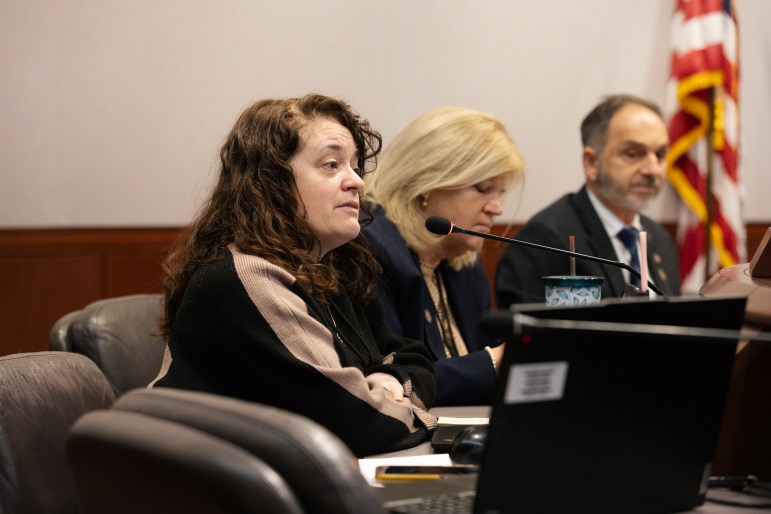
Each of the nominees appeared before the legislature’s Executive and Legislative Nominations Committee on Thursday to face questions from lawmakers that largely focused on issues of affordability, infrastructure constraints and the need to develop a more constructive working environment at an agency that has been at the center of criticism from both utilities and their customers.
“Unfortunately, we’re seeing PURA on the front page of papers and in the news a lot,” said Senate Majority Leader Bob Duff, D-Norwalk. “We’re hoping it can go back to page 7.”
Wiehl previously served as an attorney for the Office of Consumer Counsel, an agency that advocates on behalf of utility customers before PURA. The agencies are located on separate floors of the same state office building in New Britain.
When asked by lawmakers to describe the culture of the agency he inherited, Wiehl said that there was “undeniably tension” he and his fellow commissioners have been working to resolve over the last several months.
Part of their strategy, he said, has been to continuously seek the input of fellow commissioners and staff. Left unsaid was that his predecessor, Gillett, had been accused of wielding a top-down approach at the agency.
“I certainly don’t have a solution to affordability,” Wiehl said. “But I think the solution’s got to involve collaboration across the across the spectrum. I think it’s got to involve partnering with the legislature, the executive branch, the Office of Consumer Counsel, working with the utilities, working with finding improvements to the way that we’re procuring energy, considering policy directions at the highest level for what we can do in the region. I think all of these are things that need to be on the table.”
On the subject of affordability, Wiehl and his fellow nominees pledged to be skeptical of requests made by utility companies to recover costs from their customers, while also abiding by laws guaranteeing those companies a sufficient return on their investments.
“Our role is to keep the lights on, but not hand out candy,” Cheeseman said. “It is a delicate balancing act, because we are so reliant on these services.”
Members of both parties broadly praised the slate of nominees for the diversity in their experience and knowledge of issues facing the state’s water, gas, electric and communications utilities. Following the hearing, the committee voted to advance all four nominees along to the House and Senate.
The only votes against the slate came from state Rep. Tammy Nuccio, R-Tolland, and Rep. Tony Scott, R-Monroe. Nuccio stated that her opposition was due to not having had enough time to vet the nominees.
If confirmed by both chambers of the legislature, it will be the first time since the authority was expanded to five members in 2019 that it will have a full complement.
In an emailed statement Thursday afternoon, Angela Baccaro, a spokesperson for United Illuminating, congratulated the new leaders of PURA. “As we continue working together with our regulator to deliver high quality service for Connecticut customers, we look forward to a renewed culture of transparency, stability, and predictability,” Baccaro said.
A spokesperson for Eversource declined to comment.
Gillett’s departure from PURA came amid a series of lawsuits from Eversource and United Illuminating, the state’s two largest utilities, alleging that she violated administrative procedures and skirted public records laws to cover up an anti-utility bias. Several of those claims were later upheld by judicial rulings against the agency.
Gillett’s supporters, however, cast her as a champion of ratepayers and have accused PURA of taking a more lenient approach toward the utilities since her departure.
Just a few days before this week’s confirmation hearing, PURA voted to allow United Illuminated to collect an addition $2 million in revenues from its customers, including more than $413,000 for executive compensation as long as the company meets certain performance goals. The decision also removed penalties related to UI’s delayed cleanup of the former English Station power plant in New Haven.
The decision — which was based on UI’s request for reconsideration of the company’s $66 million rate increase in October — was roundly denounced by several elected officials.
“We’ve had it,” Attorney General William Tong said at a press conference Wednesday. “The people of this state cannot and will not afford it… we need the Public Utilities Regulatory Authority to stand up and say, like us, ‘enough, enough, we’re done.'”
On Friday, PURA is expected to release a new draft decision on the proposed sale of the Aquarion Water Company to the South Central Connecticut Regional Water Authority in a deal worth $2.4 billion. Most of the current board previously voted to block the sale in November, only to have that decision overturned by a state judge who ordered regulators to reconsider the sale on narrower grounds.