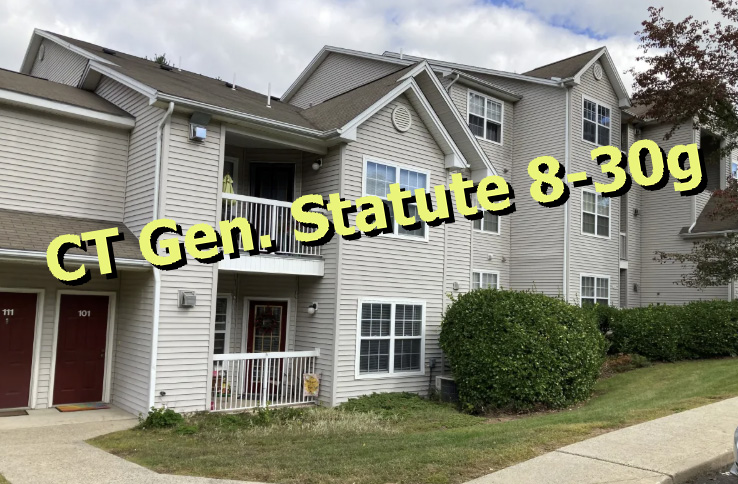
For many Connecticut families, choosing where to live is really about choosing a school system. I know this firsthand. My wife and I chose our town largely because of its schools and our hope that our children would have educational opportunities we believed they would not have had in our previous community. We were fortunate to find a home we could afford, but many families are not. They remain priced out of the housing market in most towns, and, as a result, out of most school systems.
That experience reflects a broader reality. Connecticut is one of the most economically unequal states in the country, and those disparities are sharply drawn between municipalities. Where families can afford to live strongly shapes where their children go to school. Without access to housing, school choice is largely theoretical to many families. The true entryway to a high quality school is the local zoning office.
In 1989, 18 schoolchildren from the Hartford area filed a lawsuit against the State of Connecticut. They alleged violations of their constitutional right to an adequate education, arguing that the state consistently invested fewer resources in schools serving majority Black and Latino communities than in schools serving predominantly white communities. The lead plaintiff was Hartford fourth grader Milo Sheff.
That same year, Gov. William O’Neill’s Blue Ribbon Commission on Housing released its final report with recommendations to address the housing affordability crisis. One recommendation later became law as Section 8-30g.
Housing unaffordability near educational opportunity is the result of deliberate land‑use choices: regulatory barriers designed to exclude more affordable housing options. Large minimum lot sizes, bans on multi‑family housing, discretionary permitting processes, and protracted hearings all drive up housing costs, even in towns that may publicly support diversity and inclusion.
This is one important reason the longstanding Affordable Housing Land Use Appeals Act, commonly known as 8‑30g, is so impactful.
Section 8-30g applies when towns have failed to provide even a modest amount of affordable housing. In those towns, 8-30g limits the municipality’s ability to deny affordable housing developments unless it can prove that doing so is necessary to protect public health or safety. It acts a backstop when exclusion has become the norm.
When communities consistently fail to allow any meaningful amount of affordable housing, the consequences extend far beyond real estate. They affect our access to education, employment, and economic mobility. Section 8‑30g remains one of Connecticut’s most effective tools for countering exclusionary zoning, reducing concentrated poverty, and expanding access to high‑quality schools for our children. Weakening it would deepen inequality.
Since 1989, 8‑30g has served as our primary tool against exclusionary zoning, local land‑use rules that have come to be accepted as “normal”. Exclusionary zoning quietly but effectively shuts out working families, teachers, nurses, young adults, and others from communities with high‑quality schools. 8-30g protects some of the very things suburban voters say they care deeply about: opportunity, fairness, and long‑term community strength.
Yet, somehow, Connecticut’s continuing housing segregation is often blamed on a law created to reduce it. Section 8-30g has no more failed to integrate our towns than the Sheff remedies failed to integrate our schools. Neither was meant to solve the problem on its own. Both operate within a system that still favors exclusion through local control.
We must continue to pursue complementary reforms like those included in H.B. 8002, passed in last fall’s special legislative session: smarter zoning, better planning, infrastructure investment, transit-oriented communities, and housing types that fit suburban contexts. But until those reforms are fully in place and producing results (i.e., creating new homes), 8‑30g remains an essential safeguard, a reminder that opportunity should not be gated by ZIP code, or the size of your yard.
Without 8-30g, Connecticut would have fewer affordable homes in high‑performing school districts, a greater concentration of poverty, increased racial and economic segregation, and further entrenchment of educational inequality.
Connecticut’s suburbs pride themselves on being places where families can settle, children can thrive, and hard work is rewarded. 8‑30g helps ensure those values remain real, not just rhetorical.
Access to strong schools depends on access to housing. True access to housing means supporting policies, like 8-30g, that give families real choices about where they can live.
Sean Ghio is the policy director of Partnership for Strong Communities.