



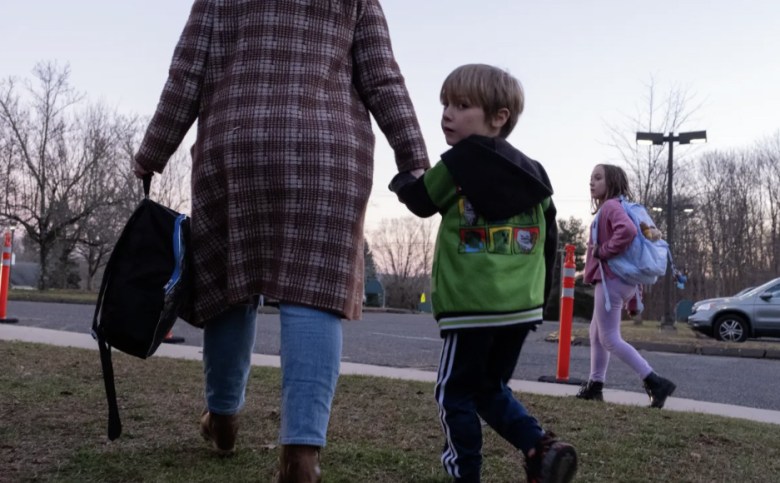
As another school year begins, parents across our community are busy checking supply lists, buying backpacks, adjusting sleep schedules, and preparing children for the excitement and sometimes the anxiety that comes with returning to school.
While these routines matter, there is another question that deserves equal attention: Is my child emotionally ready for the school year ahead?

The need to pay attention to our children’s emotional well-being has never been greater. Across Connecticut, families are experiencing a growing youth mental health crisis. Mental health-related visits to emergency departments and urgent crisis centers consistently increase as children return to school each fall, when academic, social, and emotional pressures converge.
The numbers are sobering. Nationally, nearly one in five children has been diagnosed with a mental, emotional, or behavioral health condition, with anxiety and depression among the most common concerns. And so many struggle silently.
Yet behind every statistic is a child—a son or daughter, a student, a teammate, or a friend who needs someone to notice, to listen, and to believe in them.
For many children, the return to school is filled with anticipation and opportunity. For others, it can bring uncertainty, loneliness, fear, academic pressure, social challenges, or the resurfacing of emotional struggles that may have gone unnoticed during the summer months.
Children experience the world differently than adults. They do not always have the language to tell us they are anxious, depressed, overwhelmed, or afraid. Instead, they communicate through changes in behavior, mood, relationships, and even physical symptoms.
As both a therapist and the President and CEO of the Child & Family Guidance Center, I have learned one truth that guides everything we do:
Every child deserves a champion — someone who believes in them. Someone who sees their strengths before their struggles. Someone who advocates for them when they cannot advocate for themselves.
Most often, that champion is a parent, grandparent, caregiver, or trusted adult. No one knows your child better than you.
Schools play an essential role in educating our children, but a child’s deepest sense of identity, belonging, and unconditional love begins at home. Values are nurtured within families. Confidence is built through relationships. Emotional security grows from knowing there is someone who will always be in your corner.
That does not mean parents have all the answers. In fact, one of the greatest strengths a parent can have is the willingness to ask questions and seek support.
What should parents watch for?
As children return to school, pay attention to changes that seem unusual for your child, particularly if they continue for several weeks.
These may include:
- Persistent sadness or irritability.
- Increased anxiety about school or separating from caregivers.
- Withdrawal from friends or family.
- Changes in sleeping or eating habits.
- Frequent headaches or stomachaches without a medical explanation.
- A sudden decline in grades or motivation.
- Loss of interest in activities they once enjoyed.
- Difficulty concentrating.
- Increased anger or emotional outbursts.
- Talking about feeling hopeless, worthless, or that they do not belong.
None of these signs automatically mean a child has a mental health disorder. They are signals that your child may need additional attention, understanding, and support.
What about friendships?
One of the greatest sources of both joy and stress during childhood and adolescence is peer relationships.
Parents should pay attention to whether their child has friends they enjoy spending time with, whether they are increasingly isolated, whether they are experiencing bullying, or whether social media is affecting their confidence and emotional well-being.
Ask questions that invite conversation rather than interrogation. Instead of asking: “How was school?” Try asking: “Who made you smile today?” “Who did you sit with at lunch?” “What was the best part of your day?” “Was there anything today that felt difficult?”
Small conversations every day often reveal much more than one serious conversation after a problem develops.
Partner with your child’s teachers
Teachers spend many hours with our children and often notice changes parents cannot see. Likewise, parents understand their child’s personality, history, and behavior in ways teachers cannot.
The strongest support for a child comes when families and schools work together not as critics of one another, but as partners. If something feels different, trust your instincts. Reach out early. You do not need certainty before asking for help.
Parenting without becoming overbearing.
Many parents worry about striking the right balance. We all want to protect our children.
Yet children also need opportunities to solve problems, make mistakes, develop resilience, and build confidence. Healthy parenting is not about removing every obstacle.
It is about remaining emotionally available while allowing children to develop independence.
- Listen more than you lecture.
- Be curious before becoming critical.
- Correct behavior without diminishing the child.
- Celebrate effort as much as achievement.
- Let your child know that your love is never dependent upon grades, athletic performance, or perfection.
Children who know they are loved without conditions are better equipped to navigate life’s inevitable challenges.
You are not alone.
Connecticut has responded by expanding children’s behavioral health resources, including Urgent Crisis Centers designed to help families receive immediate care before a crisis requires hospitalization. But no system can replace the role of caring adults. Parents, teachers, coaches, relatives, neighbors, and communities remain the first line of support for our children.
Perhaps this is the most important message I can offer. If your child is struggling, you have not failed. Children face enormous pressures today—academic expectations, social media, loneliness, family stress, world events, and the ordinary challenges of growing up.
Many families experience moments when they need additional support. Seeking help is not a sign of weakness. It is an act of love.
At the Child & Family Guidance Center, we have the privilege of walking alongside families every day. We do not simply treat symptoms. We partner with parents, caregivers, schools, and communities to better understand each child as a whole person with unique strengths, dreams, and possibilities. Every day we see that when children receive support early and when families are equipped with the tools they need young lives can change dramatically. After 35 years of working with children and families I know a few things to be true:
- Every child deserves to feel safe.
- Every child deserves to be heard.
- Every child deserves hope.
- And every child deserves a champion.
As this new school year begins, may each of us commit to being that champion for the children in our lives.
Together, we can ensure that every child has the opportunity not only to succeed in school but to thrive in life. Isn’t this all you ever wanted for your child?
Gisselle Acevedo is President and CEO of the Child & Family Guidance Center.