



New Haven is near and dear to my heart. It will always be home. It’s where I was living when COVID-19 struck and where I did my graduate studies, eventually earning my MBA.
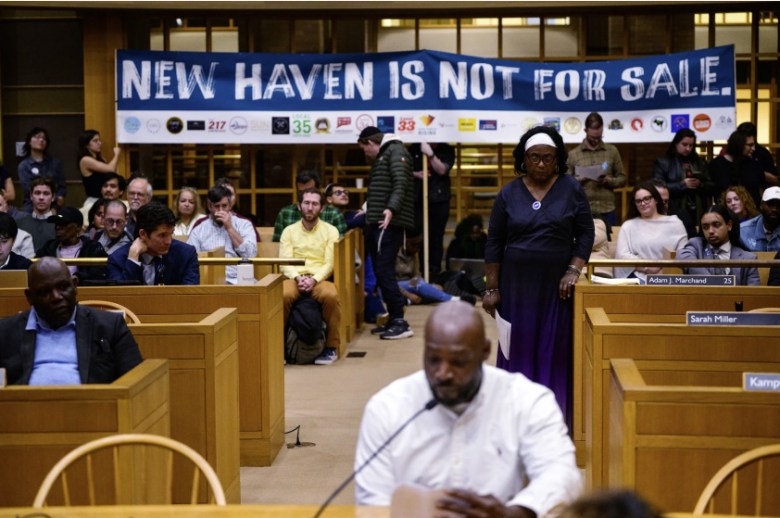
On October 6, Alders Leland Moore, Frank Douglass, and Mandy Martinelli proposed a ban on short-term rentals in New Haven, and residents are going to pay the price.

I understand the frustration driving this. The cost of living is simply out of control, with housing costs a chief driver. The Board of Alders would be right to crack down on any corporate hoarding of the housing supply, but are short-term rentals a root cause or a convenient distraction as we avoid tackling the true issues?
The hotel union backing the ban relies solely on a pandemic-era study from Irvine, CA. It found a 3% drop in transacted rent and unchanged asking rent. But it draws conclusions using data from late 2019 through March 2021 when UC-Irvine went virtual and eviction moratoriums were in place.
They ignore economist Alexander Marsella’s 2026 study of nearby New York City finding zero measurable drop in market rents. Median rents in Irvine remain unaffordable and median rents in NYC have risen to record highs of $5,000/month.
Opportunities to improve the ordinance
As written, the ban would also punish the very people it claims to protect: everyday New Haven renters, students in particular.
It prohibits all residents who haven’t spent over a year at a particular address in New Haven from qualifying as “eligible residents;” practically eliminating students from short-term subletting. Owners maintain the right to rent out rooms, but most tenants lose the ability to sublet their full apartment short-term because the ban defines home-sharing as limited to “bedrooms in a dwelling unit.”
This ordinance is blazing its way from proposal to law in six weeks, all while ignoring best practices seen across the many municipalities that have incorporated common-sense measures that protect the subletting rights of renters.
I urge our leaders to pause and do the analysis required to understand the ban’s impact, taking students and renters into account. With six hours of diverse public testimony, it’s hard to believe that there’s nothing worth further consideration.
Offsetting costs and recouping rent
I don’t come to this issue unbiased. New Haven is also special to me because it’s where I launched my first startup, Reeku, tackling housing affordability.
As a student, I was managing my housing costs by living with several roommates, but I realized I still was leaving rent on the table. Every time I was out of town, I was paying rent for an empty apartment; and as I added up my time away during summer, winter, spring and fall break, I knew there had to be a better way.
It turns out that by short-term subletting while away, a renter can recoup 20–50% of their annual rent. Today Reeku has helped renters in many cities like Boston and SF ease their high rental burden, turn a liability into an asset, and recoup hundreds of thousands in rent.
Across the country, apartment buildings are explicitly allowing tenants to sublet short-term to increase both flexibility and affordability. By recognizing this class of homesharing, New Haven would be defining a novel best practice, one that builds on the city’s momentum.
Maintaining New Haven’s momentum
New Haven is quickly becoming Connecticut’s leading travel hub and is further establishing itself as a premiere destination. No other Connecticut city has a commuter rail to New York City plus a quickly growing public airport. Just marking its five-year anniversary, Avelo Airlines has expanded, bringing direct flights into Tweed-New Haven Airport from 28 cities across the country.
Yet just as the city becomes more accessible, this ban will make it far more expensive to visit. We are poised to increase nightly hotel rates for our limited 1,800 hotel rooms that already struggle to handle peak times like graduation season. Post regulation, hotel prices across New York City skyrocketed, with rooms now costing an eye-watering $500 a night.
Protect renters’ ability to sublet
There is a better way forward. The city’s regulations should explicitly protect primary residents and allow them to sublet short-term on occasion.
We can and should ban out-of-town investors from operating commercial hotels in residential neighborhoods. But we must protect the rights of New Haven renters, especially students, to legally sublet the apartments they actually live in.
We can craft thoughtful legislation that provides visibility and guardrails for short-term rentals without stripping renters of a key way to offset rising housing costs; the very thing this ban attempts to address.
Alikiah Barclay is a founder of Reeku, a property technology platform that partners with landlords to ensure tenants can safely and legally host their primary residences, recouping rent.