


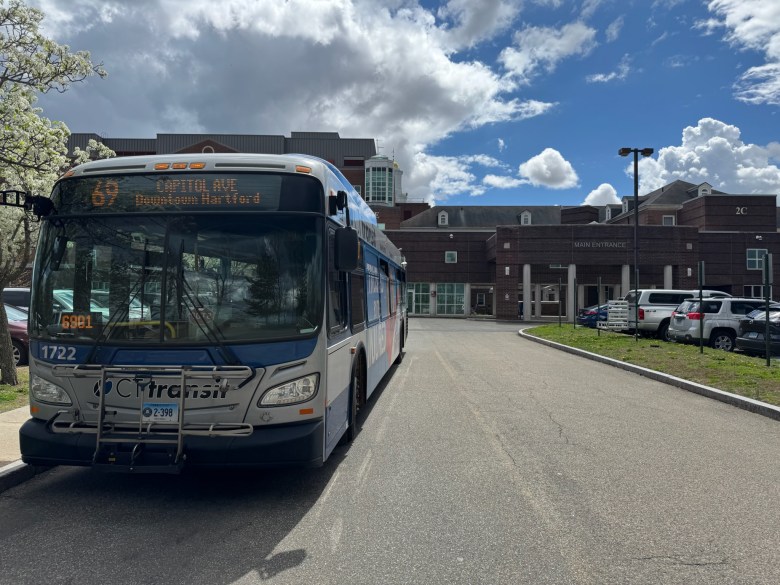
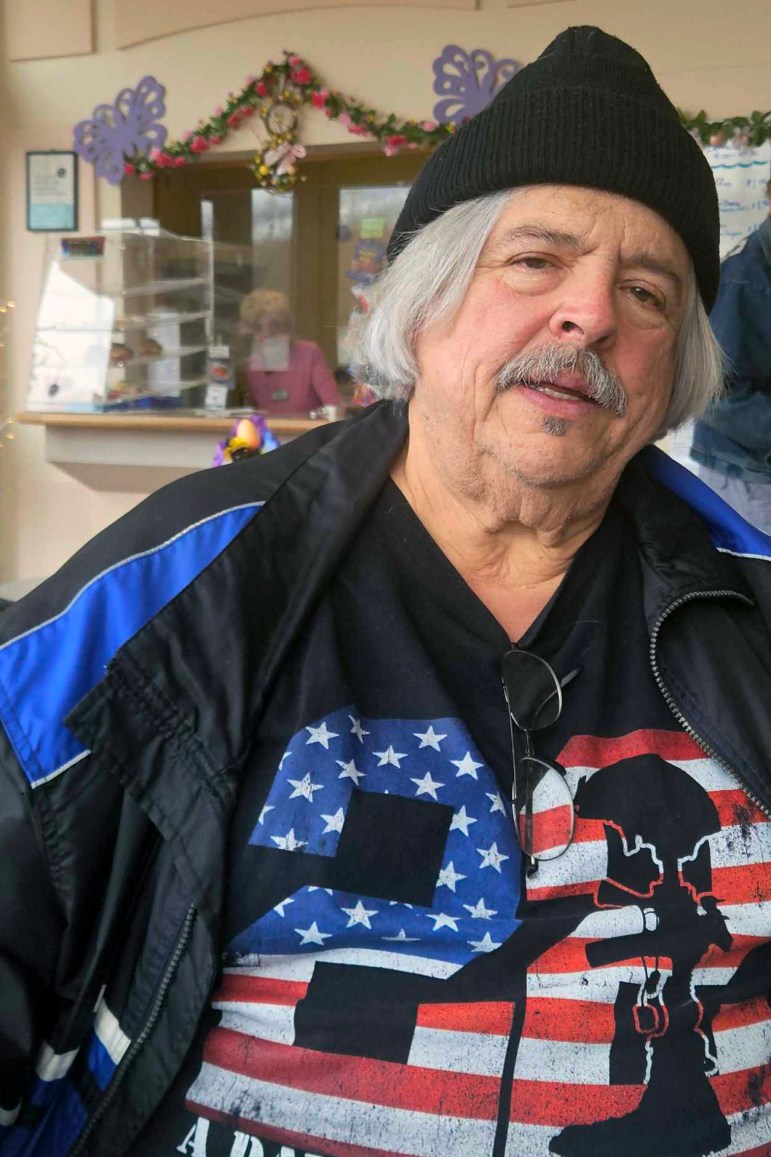
Robert Lyke, a sailor who served in the Vietnam War, lives in East Windsor but sees his doctors at the Veterans Affairs medical center in Newington. It’s not always easy to get there, he said, especially since there aren’t any public bus stops close to his home.
Lyke said more East Windsor bus service — as well as cheaper fares — would be “very helpful.”
Veterans like himself, Lyke said, can’t take full advantage of the benefits available to them through the VA and other providers because they have no way to get there.
They’ve been urging Connecticut leaders to make transit more accessible to people who served in the military. Lyke said it’s important that “veterans get treated with the things they earned putting their lives on the line.”
The state legislature passed a bill last year that was supposed to make half-priced transit fares available to veterans and K-12 students. But lawmakers failed to include funding to pay for the program in the biennial budget they approved last legislative session.
Transportation Committee co-Chair Sen. Christine Cohen, D-Branford, called it “a significant oversight on the legislature’s part” during a public hearing on the issue last month.
The governor and the legislature have sought to correct that error. In this year’s budget proposals from both Gov. Ned Lamont and the General Assembly’s Appropriations Committee, the Department of Transportation would receive $2.5 million to cover half-priced fares for veterans and K-12 students — as approved last year.
Both proposals also took a step further, including $1 million for the Department of Veterans Affairs to provide free bus transit for veterans. If that goes into effect as expected later this year, Connecticut could become the first state to make free bus passes available to veterans for use anywhere in the state. (Most discounted fare programs are at the county or town level, or transit agency-specific. Some also require veterans to have a qualifying disability to be eligible.)
“Our veterans have provided so much to every person in our country, and this is another way we can show how much we appreciate and value their service,” Lamont said in a February press release announcing his proposal. “Connecticut has a strong network of bus services statewide, and enabling our veterans to use them at no cost is something we should enact.”
“It has my full support,” House Speaker Matt Ritter, D-Hartford, said. He said he “couldn’t imagine” the General Assembly voting against it.
The needs of CT veterans
There are about 152,000 veterans living in Connecticut. Many of them lack access to transportation.
Brian DaConto, a veteran and retired employment specialist with the Connecticut Department of Labor, said many struggling veterans would benefit from free bus rides — to get transportation to work, to job interviews or to services like food pantries and medical appointments.
According to the U.S. Department of Veterans Affairs, 1.8 million appointments at the Veterans Health Administration are canceled each year because of transportation issues, costing nearly $4.4 billion. Transportation is the largest barrier to health care access for veterans, according to the VA.
Though medical appointments and work are priorities, accessible transportation can also provide veterans with much-needed social interaction. It can get them to sports events, recreational activities, flower gardens and social gatherings — things that can also greatly improve a veteran’s mental health.
Accessible transportation also makes it safer to get around for some veterans. Vito Riccio, a Vietnam veteran from Somers, said it can be dangerous to drive in rainy or snowy weather.
“Many of us have medical or physical disabilities,” he said. “So if it’s raining, for example, it’s hard for us to see the lines in the road.”
DaConto said people who served deserve more help once they return home. “We send kids over, and they come back broke and we kick them to the curb,” he said.
DaConto has taken that message to the state General Assembly, where he has been advocating for free or reduced bus fares for veterans for 11 years. He’s repeatedly told lawmakers, on the Veterans Affairs and Transportation committees, that the lack of transportation is a significant barrier to employment for many veterans. DaConto estimates that roughly 1,000 veterans in the state are in need of free fares.
He and other advocates thought the problem was addressed after lawmakers passed the half-price fares legislation last year. But the bill was passed as standalone legislation and was never incorporated into the budget, which meant the program wasn’t funded.
As it became clear the reduced fares weren’t going to be available to veterans and students, many residents raised concerns with Lamont’s office.
“Gov. Lamont heard from veterans who said the cost of public transit was standing between them and their doctors, jobs and other basic necessities,” said Cathryn Vaulman, spokesperson for the governor, in an emailed statement on Tuesday.
“Addressing this affordability issue and ensuring veterans can access these critical services was a priority for the governor this session,” Vaulman said. “Free bus passes are a concrete, commonsense way to show gratitude to our veterans, who have sacrificed so much for our country, and the governor hopes the legislature will support this effort.”
DaConto said homeless veterans, especially, need free access to transportation. In many cases, it’s literally a lifeline. DaConto said homeless shelters often send residents out of the facility from 8 a.m. to 4 p.m. In cold weather, some in this situation resort to riding buses to stay warm.
The 2024 Point-In-Time (PIT) count — the U.S. Department of Housing and Urban Development’s annual count of people experiencing homelessness on one January night — found 174 sheltered or unsheltered homeless veterans living in Connecticut.
Veterans have long been overrepresented in the U.S. homeless population. They are at greater risk of homelessness than the general population for a number of reasons according to research from the U.S. Department of Veterans Affairs, including substance abuse, mental health problems like post-traumatic stress disorder and economic instability. Veterans often struggle to apply their military skills to civilian life and jobs, making it difficult for them to find employment.
When he worked for the Department of Labor, DaConto said his office offered mock interviews and other training and resources to help veterans find employment, but he said the office was located four miles away from the nearest homeless shelter, so many veterans could not take advantage of the tools.
“By establishing a program to provide free bus passes to veterans, this bill removes a real and practical barrier to mobility, independence, and access to the services and opportunities our veterans have earned,” West Haven Mayor Dorinda Borer wrote in testimony supporting this year’s legislation. West Haven has one of the state’s largest disabled veteran populations in the state, according to the Office of Legislative Research.
“For many veterans —particularly those on fixed incomes or managing service-related disabilities — reliable, affordable transportation isn’t a convenience, it’s a lifeline,” Borer wrote.
Working out the details
Connecticut DOT is already “laying the groundwork” for the discounted veterans fares to be implemented on July 1 should it pass, according to DOT spokesperson Eva Zymaris. The agency will soon start accepting applications for the passes.
It is up to the VA to determine eligibility and distribution for the free fares. They are still working out the logistics for that.
“We intend to make the process as simple as we can while being good stewards of the funds entrusted to us,” wrote John Carragher, the deputy commissioner of the VA, in an emailed statement on Friday. If passed by the legislature, the free fare passes would also go into effect on July 1.

The free passes for veterans would be available for use on CTtransit, CTfastrak, and the various transit districts throughout the state, according to Zymaris.
DaConto believes IDs are the easiest way to get veterans their discounts, as they need the IDs to work anyway. All veterans would have to do is show an ID with a veteran designation, which they can get by applying through the VA. According to the Connecticut Office of Fiscal Analysis fewer than 15,000 veterans have an ID with a veteran’s designation.
Sen. Cohen also mentioned the ID as a good option. She suggested some sort of verification process when ordering a bus pass online as well.
Whatever the process, those testifying in support of the free fares warned against too many administrative hurdles in the process, which would make it hard for veterans to take advantage.
DaConto isn’t picky about what type of fee — reduced or free — the legislature passes. Free fares would be great, he said, but in the end, anything helps. DaConto said 50% off is the difference between a veteran having to collect 10 cans instead of 20 to cash in to cover bus fare. Small things like this can give veterans “a ray of hope,” he said. DaConto said it’s what they deserve.
Lyke agreed. “We need to be doing more for veterans in this state,” Lyke said. He hopes that this transportation legislation acts as a “springboard” to push forward more programs to help veterans in the future.
