



“Come boss, come boss!” yells Lars Demander, as he leans over a gate, slinging slices of tasty bread to his cows — ‘boss’ being his family’s nickname for the animals.
“It’s what we’ve always called the cows,” Demander said. “It might have been my grandfather, it might have been my great-grandfather but that’s the way it’s always been.”
Demander is the eighth generation to run Clover Nook Farm in Bethany, Conn. Over time, farming has become an increasingly hard way to make a living, in part due to the rising cost of oil and natural gas, which farmers need for everything from heating greenhouses to filling tractors.
But a few years ago, Demander invested in heat pumps and solar panels, bringing his monthly energy bill close to $0.
“Energy costs only go one direction, so might as well eliminate it now,” he said. “It’s only going to cost more a year from now.”
Across New England, farmers like Demander are finding that switching to renewable energy isn’t just a nice thing to have, it’s becoming a necessary part of their economic survival.
With the conflict in Iran dragging on, gas prices are still painfully high. Farmers need fuel and fertilizer to get their crops in the ground. Finding alternatives is a way farmers can both help the climate and save money.
Business people first
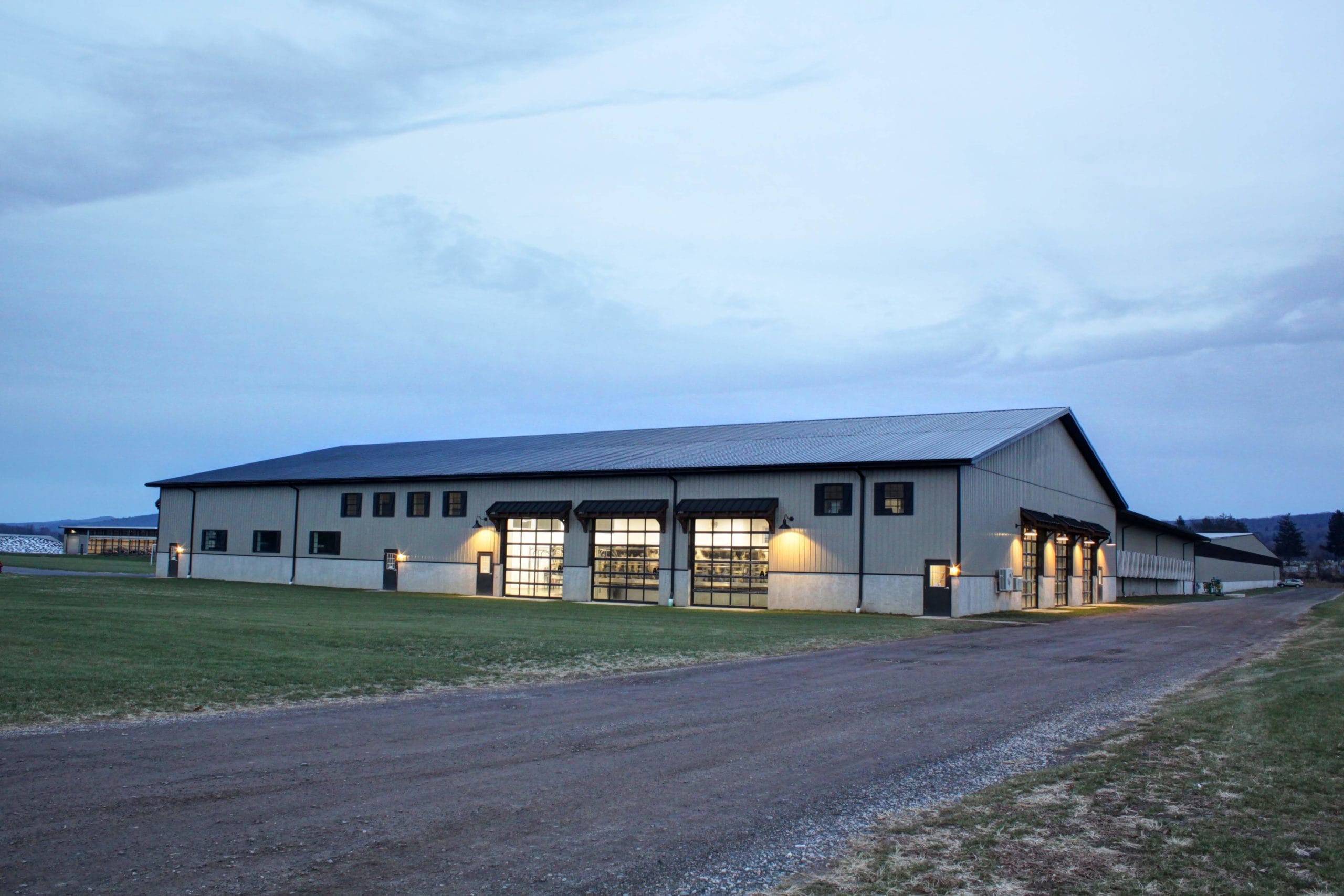
Seth Bahler runs Oakridge Dairy in Ellington, Conn. About 10 years ago, he had 750 solar panels installed on his barn, producing 250kw of power for the farm.
“It produces energy for this barn and several of the barns up front,” he said.
The panels help lower the farm’s electric bill by $8,000 to 10,000 a month. Bahler said he’s looking to add more solar panels to offset the farm’s entire electric load. In the summertime, when the fans are running to keep the cows cool, his monthly electric bill can be as high as $100,000.
“It’s really hard with energy costs as high as they are,” Bahler said. “We don’t have a ton of extra money for anything.”
Saving on energy costs help farmers manage other costs, many of which are also rising, like labor, land, equipment and recovery after big storms.
“Farms are business people first and I think people kind of forget that,” said Amanda Fargo-Johnson, the Agricultural Programs Director for Connecticut Resource Conservation and Development, a group that helps farmers apply for renewable energy grants.
“They need to be financially stable or they’re not going to stay in business,” Fargo-Johnson said.
And farmers, like Baylee Drown in Lyme, Conn., say they can’t just raise the price of their food to cover the cost of rising energy.
“When I started, I could get $5 a pound for heirloom tomatoes,” Drown said. “13 years later, I raised the price to $6 a pound, which is a 20% increase, and people complained.”
It’s part of the reason why Drown is also working on getting solar panels at their farm. But they recently ran into an issue. The federal grant program known as REAP (Rural Energy for America Program), which would have given Drown $30,000 towards their solar panels, was recently halted by the Trump administration.
“I feel like a promise that the government made to farmers has been broken,” Drown said.
Drown is still going to get the solar panels installed — they already put down the deposit for them — but it’s going to cost them more money without the grant, which means it will take longer before they see meaningful savings.
“It’s not going to help as much as I hoped it would with farm viability,” Drown said.
But there is another way Drown is working to lower their energy use and save money: improving their soil.
More productive and more resilient
Drown digs through a pile of compost so hot, there’s steam coming off of it.
“It feels like a cross between science and witchcraft. I love compost,” Drown says with a laugh.
Efforts like adding compost, farming without a till and planting cover crops reduces the need for fertilizer, some of which is made with fossil fuels. It also requires less machinery, which means less need for gas.
These practices are being implemented on farms across New England, and they are also a climate change solution. They keep more carbon and nitrogen in the soil and they make the soil stronger and more resilient to extreme weather. That also helps farmers financially.
“Those soils are more productive in hard times, in experiencing drought and experiencing flooding. Those soils produce more food,” Drown said.
More food produced means more to sell, and farmers have more stable businesses to weather the challenges.
This story was first published April 20, 2026 by Connecticut Public.