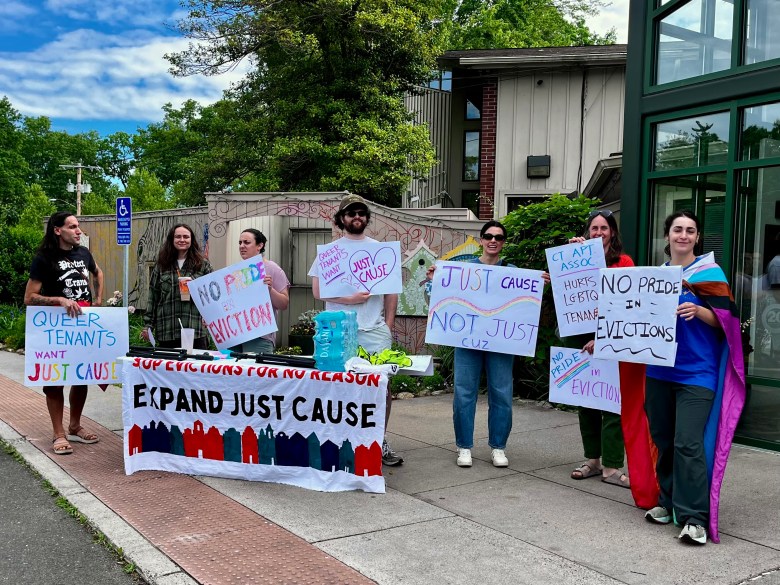
A brunch hosted Thursday by Connecticut landlords that was billed as a chance to strengthen housing opportunities for LGBTQ+ residents instead turned into a flashpoint in a larger debate about eviction reform.
As members of the Connecticut Apartment Association arrived at the brunch they were greeted by tenants and advocates for the queer community, all delivering a very pointed message: The landlords were hypocrites because they just recently opposed an eviction reform measure that would have protected LGBTQ+ residents.
During the 2026 legislative session which ended in early May, lawmakers considered a bill that would have largely ended what are known as no-fault or lapse-of-time evictions. Evictions of this type are typically issued at the end of a lease term and have often been used to force out residents en masse when a new landlord purchases a property.
The bill, which has been considered for the past few sessions, faced stiff opposition from landlords and died without a vote in the House or Senate.
Renters and housing advocates say no-fault evictions are used to cover up discriminatory actions because these filings don’t require the landlord to list a reason for the eviction.
“We want to really emphasize this contradiction,” said Fable Burley, a lead organizer with Trans Haven. “You can’t just say you’re LGBTQ inclusive while you’re actively fighting bills and legislation that would help us.”
The Connecticut Apartment Association poured time and money into its opposition of the eviction reform bill, testifying publicly and funding communication campaigns against the measure. Members said it would make it harder to evict problem tenants who do things like bother neighbors or smoke indoors.
In a written statement Thursday, the apartment association said it was focused on supporting policies that increase housing supply, and that any discrimination based on LGBTQ+ status should be reported to the Connecticut Commission on Human Rights and Opportunities “and we can help with that.”
“We respect the people and opinions of those who disagree with positions we take at the Capitol,” the statement said. “This is part of our democracy, based on civil discourse and the right to disagree, and we will continue the work we do every day for the individuals and families who live in our apartment communities.”
Protesters outside the event in Hartford said they were there to educate CTAA members about the bill and draw attention to what members of the LGBTQ+ community need. Burley said the queer community faces homelessness and housing insecurity at high rates. Trans Haven spends a lot of time helping people find housing, Burley said, and it’s frustrating when they find housing only to face a no-fault eviction soon after.
“While they’re saying they’re LGBTQ friendly, their activities are really harming the LGBTQ community,” said Luke Melonakos, vice president of the Connecticut Tenants Union. The tenants union has been the leading group pushing for eviction reform over the past few years.
Melonakos said they want to keep eviction reform in the spotlight to prepare for another advocacy push next session.
Sarah White, an attorney with the Connecticut Fair Housing Center, said the number of calls to her organization about discrimination have increased in recent years. Many of those calls relate to no-fault evictions, and the discrimination is often difficult to prove, she said.
“It’s absolutely a Connecticut problem. We’ve gotten many complaints about gender identity discrimination, discrimination based on sexuality,” White said.