


The economic reality facing Connecticut’s most vulnerable households isn’t reflected in topline numbers about the state’s recent economic successes, New Haven-based policy research and child advocacy group Connecticut Voices for Children said in a new report Monday.
In its annual State of Working Connecticut, CT Voices for Children found that low- and middle-income Connecticut families are experiencing the fallout from recent cuts to federal services, rising prices and higher unemployment most directly. These households are particularly vulnerable to these more recent economic woes, researchers said, because of longer-term statewide trends like tepid growth in jobs and GDP.
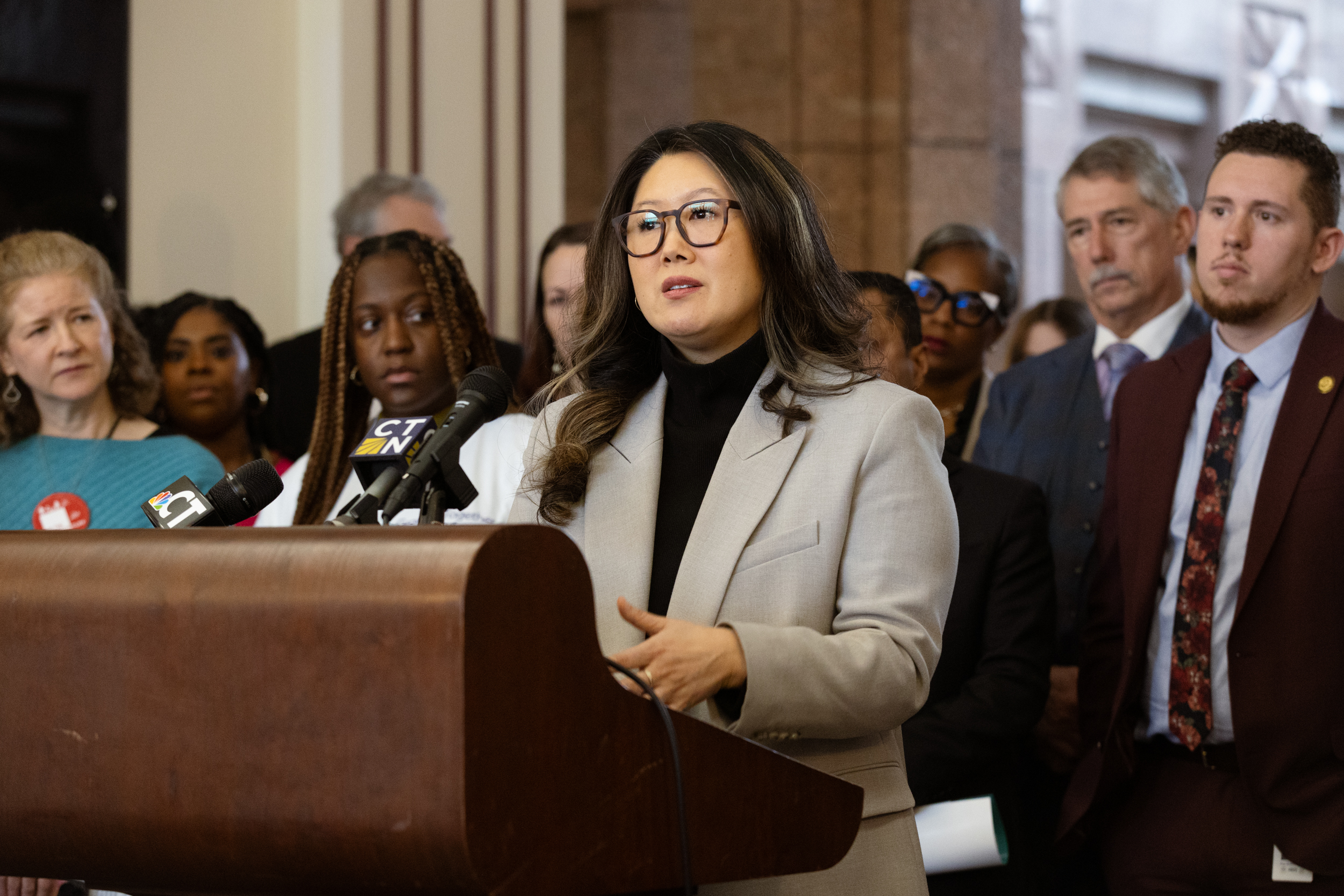
“Slow growth has harmed the state’s workers and households in two ways: by limiting the growth of their earnings from work and overall income, and by weakening the state’s fiscal capacity to provide support, especially for low and middle-income households,” Patrick O’Brien, CT Voices for Children’s research and policy director, told reporters on Monday.
The report comes as Connecticut faces a muddled economic picture. Statewide GDP growth in the early part of this year was higher than many states’ but lower than the national rate.
Meanwhile, the number of jobs is growing but the unemployment rate is rising; in the first half of this year, Connecticut’s 5.2% unemployment rate was tied for the highest in the country.
O’Brien said Connecticut’s relatively high unemployment rate “is an immediate major threat to workers’ earnings, especially for low- and middle-income households who tend to have less in savings to offset the loss of earnings.”
The report also noted that unemployment issues are not being felt evenly in the state. There are racial, gender and age disparities between different groups of workers when it comes to employment, with groups like Black workers and younger workers facing unemployment rates much higher than the statewide figure.
Higher unemployment also raises concerns ahead of federal changes that will require some residents to work 80 hours a month to maintain public benefits in programs like SNAP and Medicaid.
“More workers must meet those requirements, just as jobs are becoming harder to find,” O’Brien said.
Economic foundations
Long-term trends in economic and workforce growth is key to understanding Connecticut’s current vulnerabilities, CT Voices for Children researchers said.
From 1990 to 2025, the state experienced the slowest job growth rate in the nation. Over the same period, the number of people in Connecticut’s workforce grew at a similarly sluggish pace. But if the state had kept pace with national labor force growth trends over that 35-year period, it would have close to 553,000 more workers, CT Voices for Children estimated.
That many more workers could have significantly boosted state revenue and economic output.
In recent years, inflation has taken a toll on many working families whose incomes don’t stretch as far when prices rise.
CT Voices for Children noted that lower income households in particular felt the brunt of price increases because they had less spending ability to start with. Some of the highest price increases have been on essentials like food and housing.
Those higher prices in turn reduce the power of the state’s comparatively high wages, limiting what is affordable for many households, the report stated.
A familiar set of solutions
CT Voices for Children offered a slate of solutions to provide stability to Connecticut families. Many are goals the organization has outlined for years, including policy reforms that ensure affordable housing and child care; reduce income inequality; increase unemployment insurance coverage; and prevent automatic tax increases by indexing the state’s personal income tax to inflation.
The organization also called for state leaders to protect public services by offering state level programs that can fill the gap created by federal cuts.
The Connecticut Business and Industry Association’s Foundation for Economic Growth and Opportunity weighed in on the report in an interview,suggesting that if broader economic growth is the goal, solutions will also need to include policies that help the state’s employers and business owners.
CBIA Foundation director Dustin Nord said the CT Voices for Children report, while overlapping with some CBIA findings and offering a helpful breakdown of the state’s current conditions for workers, “does not explain why Connecticut is worse than the region or worse than the country.”
Because of this, Nord said he was unsure the report’s prescriptions would truly address the issues plaguing the state’s economy. For example, while Nord agreed wages are an important issue in the state, he said the CBIA Foundation views the topic differently than how it was discussed by CT Voices for Children.
“It seems clear that the biggest reason we can see better wages and obviously better working and living conditions for lower wage workers is when we have a really robust economy…I think that says less about the laws that we enact in terms of like creating higher wages specifically, and more about the laws we enact that limit the growth of the economy,” he said.
To Emily Byrne, executive director of CT Voices for Children, the most critical investments the state can make are in its people. The report serves “as a reminder that our economy isn’t the stock market,” Byrne said Monday.
“Disinvesting in people will only exacerbate the longstanding problems that the state faces,” she added. “And with emerging economic challenges that deeply impact workers and households, now is the time to double down on Connecticut’s residents.”
