Washington – The next, and possibly final, massive federal stimulus bill may send another $1,200 check to most Americans and give cash-strapped states like Connecticut more money – although that infusion likely won’t be as much as the states want.
The bill is likely to also extend federal unemployment benefits for a while longer and may give front-line workers some long-sought hazard pay.
Unlike the U.S. House-passed $3.5 trillion HEROES Act that has been ignored by the Senate, this new stimulus bill will be crafted by the White House and Republican and Democratic congressional leaders following the formula used to pass earlier stimulus legislation that has poured over $3 trillion into the U.S. economy to keep it from collapsing during the pandemic.
But, unlike previous stimulus bills that were quickly approved by Congress on a bipartisan basis, the next relief bill will be the result of tough partisan negotiations.
While both parties recognize the nation needs more help from Washington D.C. — especially since the coronavirus has regained its strength across much of the country — there are partisan differences on how generous that help should be and who should receive it.
Extending federal unemployment benefits
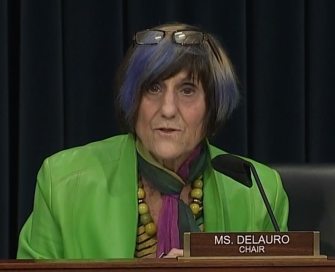
For Rep. Rosa DeLauro, D-3rd District, a senior member of the House Appropriations Committee, negotiations must begin with the unemployment benefit in the HEROES Act, which she helped draft in part.
“Why wouldn’t we? Everybody here gets a paycheck,” DeLauro said last week, sweeping her arms toward the U.S. House chamber.
DeLauro, and many fellow Democrats, insist federal unemployment benefits of $600 a week should be extended at least through January. They are now scheduled to end on July 25.
The White House has pushed back on and extension of benefits, saying, like Connecticut Gov. Ned Lamont, that it would be a disincentive to work.
But congressional Republicans have signaled they might back a smaller benefit of $200 or less a week. The White House is also considering reducing unemployment payments to $250 or $300 a week during the second half of the year.
Senate Minority Leader Charles Schumer, D-N.Y., has countered with a plan that would keep the $600 boost until a state’s three-month average total unemployment rate falls below 11%. The benefit amount would reduce by $100 for every percentage point decrease in the state’s unemployment rate, until the rate falls below 6%.
Connecticut’s current unemployment rate is 9.4%.
Republicans are also pushing for a “back-to-work” bonus in the amount of $450- a-week for a few months or a $1,200 one-time payment, as an incentive to get people back to work.
Another stimulus check and a new hazard pay program
While they resist the idea of extending federal unemployment benefits, the White House and congressional Republicans are open to sending another round of stimulus checks to most Americans.
Treasury Secretary Steven Mnuchin said last week that he would “seriously consider” a new round of direct payments in his talks with congressional leaders.
In the HEROES Act, Democrats proposed sending a $1,200 check to Americans whose adjusted gross income is less than $75,000 according to 2018 or 2019 federal tax returns – whichever was most recently processed by the Internal Revenue Service.
Those who earned between $75,000 and $99,000 would receive a smaller check and those who earned more than $99,000 nothing at all. Stimulus payments for dependents would increase from the $500 per child allocated in the first stimulus bill to $1,200 per child. Unlike the first round of stimulus checks, college students who are dependents of their parents would qualify for a payment as would non-citizens who file tax returns with an individual taxpayer identification number instead of a Social Security number.
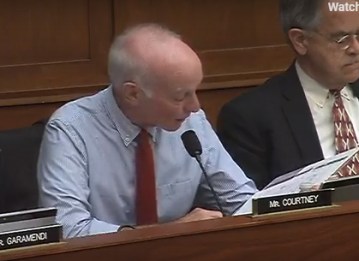
“There’s going to be some kind of economic impact statement,” said Rep. Joe Courtney, D-2nd District. “Trump really wants it.”
While President Donald Trump is open to another round of stimulus checks, congressional Republicans may insist they be targeted to lower-income individuals, or limited to “essential workers” and those who have lost their jobs in the pandemic.
The HEROES Act also proposed $200 billion in hazard pay funding for essential workers. That $13-an- hour pay raise would be paid retroactively back to January 27 with essential workers receiving a lump-sum payment at the start of the program for all hours worked back to January. After this, hazard pay would be included in regular payroll checks.
Congressional Republicans have not resisted the idea of hazard pay, but may insist it not be retroactive or as generous.
States want more federal help
In the HEROES Act, House Democrats pressed for nearly $1 trillion in help to state and local governments, hit hard with COVID-19-related costs and plunging tax revenues.
While congressional Republicans are balking at the amount of state and local aid Democrats have proposed, the next stimulus bill is expected to include some new help. The question is what kind of strings will be attached to that aid.
Rep. John Larson, D-1st District, said the surge of the virus in “red” states governed by Republicans will provide an impetus for state and local government aid, as well as other stimulus payments.
“There are 23 Republican senators up for re-election this year,” Larson said. “That’s incentivizing.”
States received $150 billion in help through the Coronavirus Relief Fund, but those funds have been limited to reimbursing state and local governments for the direct costs of the pandemic. Those governments are also facing dramatic shortfalls in revenues, forcing layoffs of employees.
For instance $3 million has been cut from the Greenwich school budget and up to 50 teachers may lose their jobs in that town. Shelton schools are cutting 22 positions and there are pending layoffs in Redding and Norwalk, too.
Rep. Jim Himes, D-4th District, who represents those towns in Congress, said state and municipal relief “must be at the top of the list” in a new stimulus bill.

“They are getting hammered,” he said of the fiscal impact of COVID-19 on Connecticut towns.
Meanwhile, Courtney, who represents the opposite end of the state, said towns in his district, including Stonington and Norwich, are facing coronavirus-induced layoffs, too. Those towns need more help to keep teachers, transit workers, police officers and fire fighters on the job, the congressman said.
Connecticut has received an allocation of nearly $1.4 billion from the Coronavirus Relief Fund established by the CARES Act in April, and since then has spent a little over half of that money. The state’s greatest expenditures were $250 million for testing, $100 million for personal protective equipment and supplies and $125 million in relief to the state’s nursing homes.
Connecticut’s towns, which are also eligible for direct help from the Federal Emergency Management Agency, received $75 million from the Lamont administration to cover direct COVID-19-related expenses.
Courtney and other members of Connecticut’s congressional delegation say state and local governments not only need more federal dollars, but the flexibility to spend those dollars to cover budget shortfalls.
“It’s got to be clearly stated that it’s for revenue depletion,” Courtney said.
Courtney is confident a deal can be reached on state and local aid, especially since the U.S. Chamber of Commerce, Federal Reserve Chief Jerome Powell and GOP governors have come out in favor of that funding.
“All that external pressure is going to force [Senate Majority Leader Mitch] McConnell’s hand,” he said.
While Trump has opened the door to some state aid, the president has indicated he doesn’t want the measures to turn into a rescue for states with pre-existing financial pressures, such as pension shortfalls.
“I don’t think the Republicans want to be in a position where they bail out states that are, that have been, mismanaged over a long period of time,” Trump said.
Liability protections
McConnell insists the next stimulus bill include liability protections for businesses, health-care providers and schools that fear lawsuits from students, employees and customers as they reopen.
“The focus will be kids, jobs, and health care,” McConnell said of the next stimulus bill. “Any bill that passes the Senate will have liability protections in it… It’s not just for businesses. It’s liability protections for everyone.”
Texas Republican Sen. John Cornyn, who was tasked by McConnell to draft the liability language, has said he would allow employers to choose which government coronavirus safety guidelines to follow in order to be shielded from lawsuits if their customers or workers contract the virus.
But House Speaker Nancy Pelosi, D-Calif. and Schumer have said they won’t agree to a lawsuit immunity provision for employers that is crafted too broadly. They want the Trump administration to instead issue detailed COVID-19 guidance to employers on how to safely protect their workers.
Democrats could, however, be willing to accept narrow liability protections for schools, hospitals and businesses that follow strict safety protocols in return for GOP support for new aid to state and local governments.
The window for Congress to approve a new stimulus bill is narrow. Congress will return to work on the week of July 18, but is scheduled to take another month off in August.