


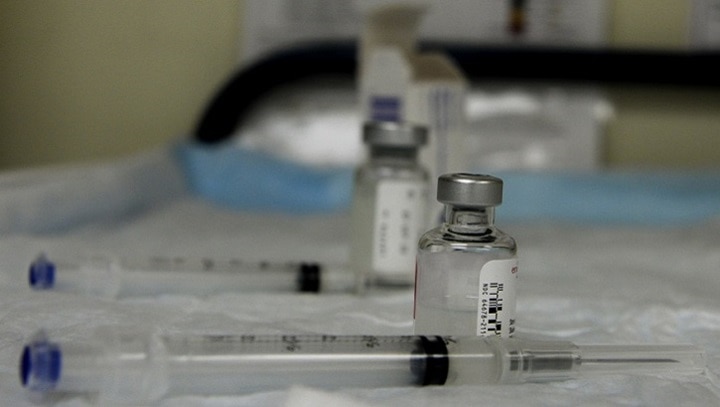
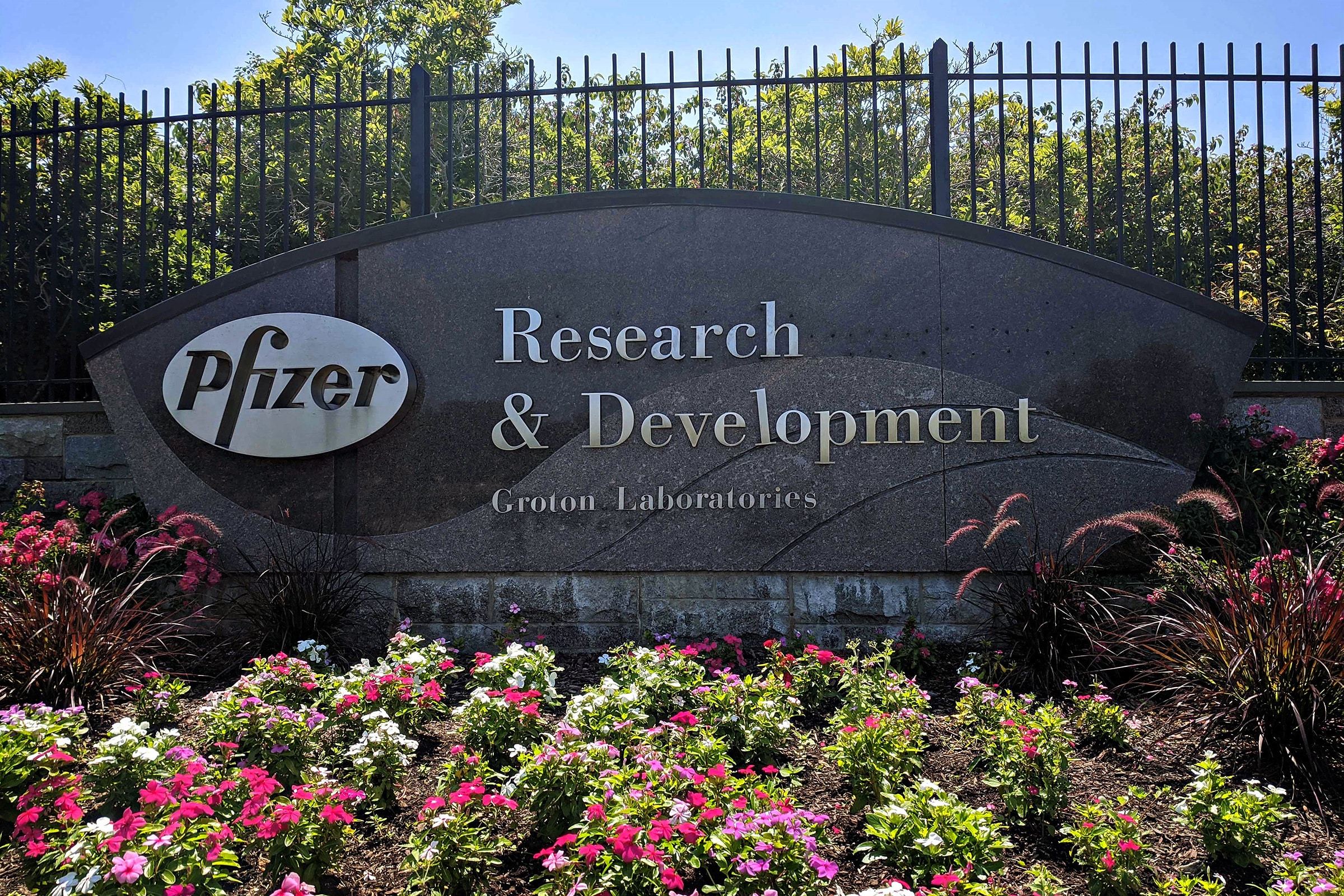
The Trump administration announced on Wednesday a $1.95 billion contract with pharmaceutical giant Pfizer, which has a location in Connecticut, and its German partner BioNTech to buy 100 million doses of a COVID-19 vaccine.
Pfizer and BioNTech began human trials in early May. If the vaccine is found to be safe and successful, the companies say they could manufacture the first 100 million doses by the end of the year.
A larger study of safety and efficacy is expected to begin this month. Pfizer said it could seek some form of regulatory approval as early as October.
“This is warp speed,” Gov. Ned Lamont said Wednesday from Pfizer’s research and development site in Groton. “It’s remarkable what they’ve been able to do.”
“We still, along the way, have to make sure we’re following all the protocols that make Connecticut one of the best in the country in terms of a low infection rate,” he said. “But it gives us hope that science is going to lead the way past this, as it has in so many other cases.”
Under the deal, the federal government will pay $1.95 billion for the first 100 million doses, with the option of ordering 500 million more. Americans would receive the immunization for free.
Pfizer announced this week that the first of four experimental vaccines it is testing showed encouraging results.

The company is developing the immunization based on genetic material known as messenger RNA, which carries the instructions for cells to make proteins. By injecting a specially tailored messenger RNA, the vaccine could tell cells how to make the spike protein of the coronavirus without making a person sick.
Pfizer officials said Wednesday that the vaccine, if successful, would likely be administered in two doses.
“The first clinical trials have been a single dose, and three weeks later the patient comes back and gets a second dose,” said John Burkhardt, senior vice president of drug safety research and development in Groton. “The data that we have so far illustrate a really robust host immune response to that paradigm.
“So it’s looking like that’s where you would start, with two doses. We’ll have to see how this could be studied in larger populations and whether that’s exactly right.”
The U.S. government will get the doses and make the payment after the drug makers receive regulatory approval.
Nearly two dozen potential COVID-19 vaccines are in different stages of testing. Moderna, a Massachusetts biotech company, received $483 million from the U.S. government for its vaccine development and is also using messenger RNA technology.
Two other vaccine developers – Oxford University and CanSino Biologics – reported promising early results this week.
