


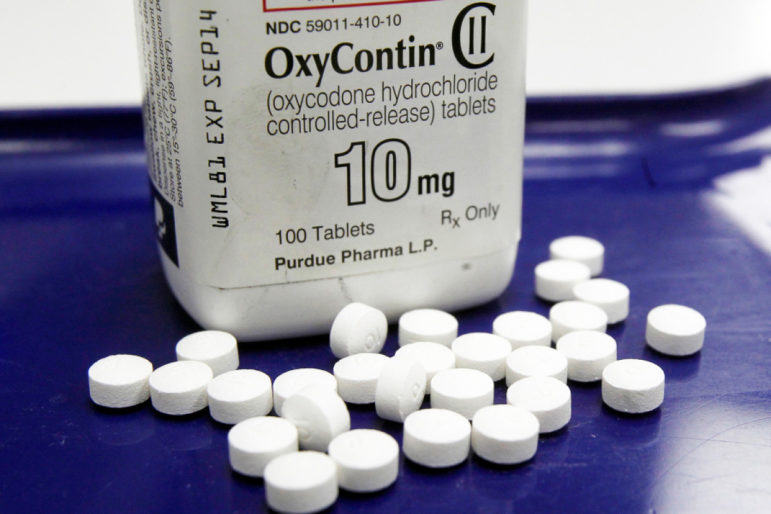
In a deal swiftly slammed Wednesday by Connecticut Attorney General William Tong, Stamford-based Purdue Pharma has agreed to plead guilty to three federal criminal charges related to its production and marketing of Oxycontin in an $8.3 billion settlement with the Justice Department.
“The abuse and diversion of prescription opioids has contributed to a national tragedy of addiction and deaths, in addition to those caused by illicit street opioids,” said U.S. Deputy Attorney General Jeffrey A. Rosen. “With criminal guilty pleas, a federal settlement of more than $8 billion, and the dissolution of a company and repurposing its assets entirely for the public’s benefit, the resolution in today’s announcement re-affirms that the Department of Justice will not relent in its multi-pronged efforts to combat the opioids crisis.”
Tong, however, called the deal between Purdue Pharma and the Justice Department “unacceptable.”
“This settlement provides a mere mirage of justice for the victims of Purdue’s callous misconduct,” Tong said. “The federal government had the power here to put the Sacklers in jail, and they didn’t. Instead, they took fines and penalties that Purdue likely will never fully pay. ”
Purdue Pharma is in bankruptcy, and the settlement could be paid in pennies on the dollar, behind the claims of other creditors.
“Every dollar paid here is one dollar less for states like Connecticut trying to maximize money from Purdue and the Sacklers to abate the opioid epidemic,” Tong said. “The timing of this agreement mere weeks before the election raises serious questions about whether DOJ political leadership was negotiating in the best interest of the American public.”
Steve Miller, Purdue’s board chairman, said in a statement Wednesday that the company “deeply regrets and accepts responsibility” for the misconduct outlined in the agreement with the DOJ.
“Importantly, the overwhelming majority of these settlement funds will be directed to state, local and tribal governments to address the opioid crisis,” he said, adding: “The settlement agreement will pave the way for Purdue to submit a plan of reorganization to the bankruptcy court that will transfer all of Purdue’s assets to a public benefit company and ultimately deliver more than $10 billion in value to claimants and communities.”
The state will continue to press its civil lawsuit against Purdue Pharma in state court. That case was halted by Purdue’s filing for bankruptcy last year.
Connecticut sued Purdue in December 2018, alleging that the company’s aggressive marketing of Oxycontin contributed greatly to the nation’s opioid epidemic and to addictions and deaths in the state.
Last year, Tong filed an expanded, amended lawsuit against Purdue, members of the Sackler family, former members of Purdue’s board of directors and corporate executives, alleging they they had fraudulently transferred of hundreds of millions of dollars from Purdue Pharma to the Sacklers to evade liability and accountability. Dozens of other state attorneys general have also sued the Sacklers.
According to the Justice Department, Purdue Pharma agreed to plead guilty to violating federal requirements to monitor promotion and sales of Oxycontin and of making false claims to Medicare and Medicaid.
The company, which manufactured millions of OxyContin pills during the height of the opioid pandemic, was accused of marketing and offering kickbacks to doctors in violation of a federal statute.
At a press conference on Wednesday, Vermont U.S. Attorney Christina Nolan said Purdue’s marketing department was effectively “in the exam room with their thumb on the scale” when doctors were making decisions about their patient’s health.
Rosen said the Sackler family, which owns Purdue Pharma, had agreed to a $225 million civil settlement.
“It is important to know that this resolution does not preclude future criminal or civil penalties against Purdue Pharma’s executives or employees,” Rosen said
The agreement with the Justice Department includes a criminal fine of more than $3.5 billion and $2 billion in criminal forfeiture, plus a civil settlement of $2.8 billion, in addition to the $225 million the Sacklers agreed to pay.
The agreement also requires the dissolution of Purdue Pharma and requires the Sacklers to relinquish all ownership or control of the company that would succeed it. That new company would be operated as a trust “for the benefit of the American public,” Rosen said.
Tong rejected the idea that Purdue could be refashioned into a company that worked for the public’s good.
“Preserving Purdue’s ability to continue selling opioids as a public benefit corporation is simply unacceptable,” he said.
