


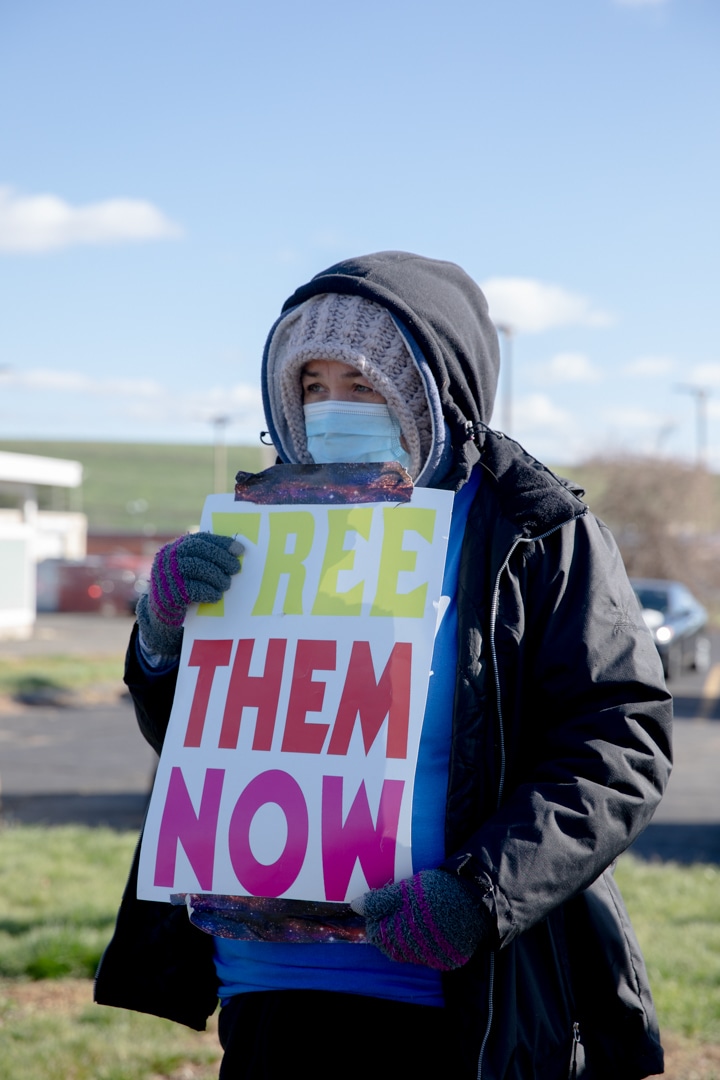

As COVID-19 drags on and advocates continue to pressure state officials to release people from prisons and jails, the Board of Pardons and Paroles has a tool that, in the words of the U.S. Supreme Court, gives them “unfettered discretion” to commute a person’s sentence and shorten the length of time they spend behind bars.
But that power has proved to be paralyzing. The BOPP has not issued a commutation since 2019 and is in the process of revising its policy. They are not currently accepting applications.
The statute that lays out the board’s commutation power is both vague and expansive, said Richard Sparaco, the BOPP’s executive director. The ambiguity makes it difficult to determine who is eligible for commutation.
“You’ve got to be careful wielding that amount of power, because the role of the board is not to just let everybody out of prison,” said Sparaco. “That’s what we’re re-visiting right now: What is the purpose of commutations?”
To jump-start the commutation process, advocates are eyeing the same person they’ve been calling on for months to reduce the prison population: Gov. Ned Lamont.
Three options
The governor could announce — at one of his COVID-19 press conferences, for example — that restarting the commutations process is a part of his pandemic response plan, said Melvin Medina, public policy and advocacy director for the ACLU of Connecticut, which has twice sued the state over its handling of COVID-19 in correctional facilities.
Or Lamont could simply issue an executive order.
Or, “the third option is the governor could hold a meeting with the Board of Pardons and Parole, clearly state his intentions, that he wants the BOPP to do everything in their power to save lives to reduce the population within Department of Correction facilities, and [then] make an announcement via press release,” Medina said.
There is precedent for the third option. In September 2007, two months after two parolees broke into a home and murdered three members of the Petit family in Cheshire, then-Gov. M. Jodi Rell shut down an avenue of release for incarcerated people serving prison time for violent crimes.
“Parole ground to a halt,” said Michael P. Lawlor, an associate professor of criminal justice at the University of New Haven who at the time was the co-chair of the Judiciary Committee. “She just called the chairman of the board and said, ‘Don’t parole anybody.’”
Eight years later, a different governor, Dannel P. Malloy, exerted gubernatorial influence on the Board of Pardons and Paroles. Malloy met with the board to discuss “Second Chance Society” legislation he had signed into law that year, in 2015. The measure expedited the parole process for people locked up for certain offenses.
Lawlor, Malloy’s undersecretary of criminal justice policy and planning, had been in the room for that conversation. He explained that his old boss had used that meeting to articulate the goals, and what his expectations were, of the new law.
“It’s giving them a level of comfort that they might not otherwise have had,” Lawlor said of Malloy’s comments to the board, “so they can make decisions they might not have made in the past.”
In each case, the governor had been executing soft power. Rell and Malloy couldn’t outright order the BOPP to stop paroling certain people or expedite hearings for others. But as the officials who appointed members to the board, they could fire them and appoint new board members more amenable to their requests.
In each circumstance, the governor affected the board’s work in facilitating the successful reentry of suitable incarcerated people back into their communities through pardons, paroles and commutations.
Can Lamont give ‘political cover’ to the parole board?
Advocates say the pandemic creates an opportunity for Lamont to exercise his influence on the board’s business — and it gives people in favor of increasing prison releases another state agency on which to focus their attention.
“Even though this governor is very lackadaisical when it comes to criminal justice abolition and reform, we need to push him to do the right thing, and we need him to push the Board of Pardons and Paroles to do the right thing.” said Tiheba Bain, co-founder of Women Against Mass Incarceration.
As of Nov. 27, there were 78 incarcerated people who have the virus and are showing symptoms; 159 inmates were asymptomatic. More than 120 prison staff were recovering from the virus.
“The board is an independent decision-making body,” Sparaco said. “I don’t envision, and I don’t think it’s the role of the governor to intervene and tell the board what to do.”
They’re not getting the political cover to do what is bold, but necessary.”
But because its members serve at the pleasure of the governor, the board is, at least in part, a political body subject to public sentiment. In other words, it could be pressured by members of the public clamoring for prison and jail releases to protect incarcerated people from COVID-19.
Lamont has not supported large-scale releases from correctional facilities to mitigate the spread of the virus. The incarcerated population has hit a record low during the pandemic, but that is mostly due to a huge reduction in people going in the front door, not a mass exodus from the back. There are around 3,150 fewer people behind bars today than on March 1.
Medina said the BOPP has wide discretion to substantially lower the prison population and put inmates under state supervision in the community, or shorten their prison sentences. But, Medina said, they haven’t gotten those marching orders from the governor.
“It’s not an issue of ability, it’s an issue of will,” Medina said. “They’re not getting the political cover to do what is bold, but necessary, to release people from prisons and jails, to send the message we did not sentence people to die in prison, and that this moment requires a different response, a compassionate response.”
In a statement, Max Reiss, Lamont’s communication director, said criminal justice officials have kept infection rates low in correctional facilities by safely limiting intakes while continuing prison releases.
“The Department of Correction and Board of Pardons and Paroles make informed decisions every day to balance public safety and public health. Gov. Lamont has selected leaders for these agencies because they have the specialized background, knowledge and experience to make these safe and smart decisions,” Reiss said. “Especially since the onset of the pandemic, these agencies’ efforts have helped both avoid unnecessary use of corrections and prepare people for successful return to the community with supervision and access to programs and treatment.”
Reiss credited the criminal justice specialists’ work with preserving space in prisons and jails to mitigate the risk of COVID-19, protecting both corrections staff and members of the incarcerated population who remain locked up.
“The DOC’s latest mass testing results show a favorable trend, and the department knows it must remain vigilant and take all the necessary precautions,” said Reiss.
Commutations
In many states, commutation power is vested in the governor. Unlike pardons, commutations do not erase a criminal conviction. They reduce a person’s prison sentence.
Commutations could prove vital when another COVID-19 outbreak sweeps through correctional facilities, Medina said. Unlike compassionate and medical paroles, the BOPP has wide latitude in determining who can be granted a commutation.
“It is one of the most powerful discretionary relief tools the state of Connecticut has,” he said.
The U.S. Supreme Court affirmed that Connecticut’s commutation statute grants the board “unfettered discretion in its exercise of its [commutation] power,” the judges ruled in a 1981 decision.
The board hasn’t granted a commutation since 2019. Between 2015 and 2019, they granted five.
What the board is trying to do, Sparaco explained, “is set forth some clear criteria so individuals who are currently incarcerated can understand and then apply for, based on that new criteria.”
The BOPP could create classes within the incarcerated population that are eligible for commutation, suggested Miriam Gohara, a clinical associate professor at Yale Law School. For instance, they could say people with less than five years on their sentence and who have certain health conditions are eligible to have their sentences commuted.
“They could either do it on a case-by-case basis, or they can decide they’re just going to consider categories,” said Gohara.
Sparaco said creating broad categories of inmates eligible for commutation is trickier than simply, say, commuting the sentences of the approximately 450 people who are locked up and older than age 60.
“If somebody who’s been incarcerated for an extended period of time and is over age 60, generally you’re in there for a violent offense,” he said. “If you’re going release somebody to the community, you want them to no longer be a risk to the community.”
Medical and compassionate parole
Much of the board’s time during the pandemic has been spent transitioning its hearings to virtual meetings and coming up with a new policy for pardons that will be up and running at the beginning of next year. In addition, they eliminated the backlog for pardon hearings created by COVID-19 court closures.
They’ve also approved more than 1,000 releases and discharges since March. The chairman of the board has granted more people transfer parole — when an individual is transferred to a halfway house, mental health facility or private residence if they have been granted parole and are within 18 months of a release date set by the BOPP — during the pandemic, roughly 2.5 times more than they granted between March and October 2019.
There’s also been a modest uptick in the board’s granting of medical and compassionate paroles. Both are extremely narrow statutes. To qualify for compassionate parole, inmates must have served half their sentence and be so physically or mentally debilitated because of their age or medical condition that they are physically incapable of presenting a danger to society. Medical parole is a similar form of release, except the disease must be terminal and there is no requirement on time served.
“The board reacted in a way it was allowed to given its statutory authority,” Sparaco said, explaining that there are no statutes in place governing the board that were crafted with a pandemic in mind.
Sparaco said he reviewed almost 300 cases for compassionate parole during the pandemic. Only a handful were ultimately sent to the board for consideration.
“There were cases we would want to take to the board, but they did not meet the eligibility criteria,” Sparaco said. “Absent the eligibility criteria, we had to reject them.”
Here, too, is where Lamont can step in, said Medina. Thanks to his sweeping emergency powers during the pandemic, he could remove the requirement that incarcerated people serve half their sentence to be eligible for compassionate parole.
If the governor does not act, Medina said, it’s up to lawmakers to “send a clear message that incarcerated lives matter, and we need to take whatever bold, exceptional steps we need to ensure we’re saving lives.”
The legislature’s role
If there were statutory changes to be implemented, Sparaco said, that duty would fall to the legislature, not the governor.
“The board would always appreciate guidance as provided by the statutes,” he said. “If they want to modify or change commutations in any way, shape or form, they still have to come up with meaningful parameters that would be acceptable by their constituents.”
Altering the commutations statute could present a host of thorny questions for officials to grapple with. Crime victims, for example, are told that individuals would remain incarcerated for a certain period of time before they were eligible for parole or released from prison, Sparaco said.
“Commutations are not meant to alleviate prison overcrowding,” he said.
Sparaco said he could see value in lawmakers tweaking statutory limitations for medical and compassionate parole, or creating an elder parole, as other states have, that grants the BOPP discretion to consider supervised release for older incarnated people who have been locked up for a certain period of time.
The BOPP is already on the minds of the Judiciary Committee’s Democratic co-chairs.
“A lot of this comes down to the Board of Pardons and Paroles, what authority they have and whether they’re executing it in the most expeditious manner they can in the pandemic,” said Rep. Steven Stafstrom, D-Bridgeport. He said the committee is considering bills to expand the narrow compassionate and medical parole statutes currently on the books.
But the legislative branch’s efforts are, by nature, delayed. Writing, debating and passing a bill takes time, said Sen. Gary Winfield, D-New Haven and Judiciary Committee co-chair.
“Everything the legislature does is much slower than what the governor can do.”
