



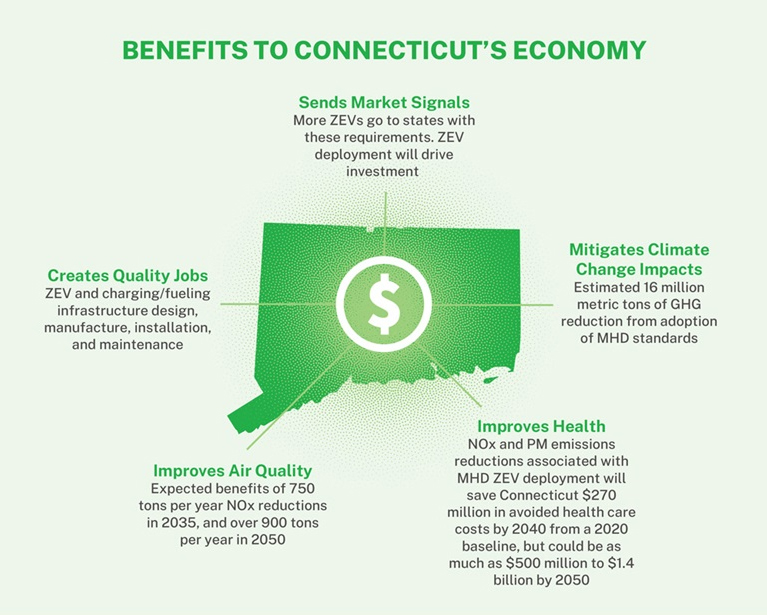
Amid the manufactured controversy about regulations that would keep Connecticut a leader on pollution standards for cars and trucks, one fact continues to be overlooked: adopting these standards would benefit all Connecticut residents, no matter what they choose to drive.
The Advanced Clean Cars II (ACCII) and Advanced Clean Trucks (ACT) standards build on existing requirements already adopted in Connecticut for auto manufacturers to deliver more new zero and low-emission vehicles (including battery electric vehicles, plug-in hybrid gas/electric vehicles, and hydrogen fuel cell vehicles) to Connecticut. The regulations don’t require anyone to purchase an EV or prohibit anyone from driving or purchasing vehicles with a gas or diesel powertrain. In fact, stronger standards will make those vehicles cleaner and more efficient too.
[Will CT ban new gas car sales? Here’s what to know]
The choice between default federal standards or new state-level clean vehicle standards is not a choice between continued reliance on gas and diesel vehicles or increased EV usage. While EVs currently represent a minority of vehicles on the road, the auto industry is already moving to transition from conventional vehicles to EVs. The EV market is experiencing 50%+ year-over-year growth, and many auto manufacturers are planning to fully phase out production of conventional vehicles by 2030 or 2035. Complying with either federal or stronger state-level standards will mean more EVs in dealership showrooms and on the road.
You might ask, if the market is moving towards EVs, and federal vehicle standards anticipate an increasing number of EVs, why should Connecticut adopt stronger state-level standards? Here’s what the critics won’t tell you: the new standards include consumer-friendly measures — absent from federal standards — that will help make EVs more affordable, and are the only way to guarantee clean vehicles are available for purchase in Connecticut.
The proposed regulations provide incentives for manufacturers to deliver low-cost EVs to participating jurisdictions. By reducing the cost of vehicles and providing vehicles to community mobility programs, manufacturers get some flexibility regarding the overall number of vehicles they have to deliver to comply with the standards.
This lower cost does not come at the expense of quality, as ACCII also requires manufacturers to provide consumers with enhanced warranty provisions for all the vehicles they deliver. These include minimum range durability requirements, enhanced battery warranties, service information disclosure to independent repair shops (more consumer choice!), and battery labeling for recyclability and repurposing.
The true choice between federal and stronger state-level standards is whether, as the market transitions to EVs, Connecticut customers will first benefit from access to low-cost electric vehicles and strong consumer protections or whether those benefits will only be available to our neighbors in New York, New Jersey, Vermont, Massachusetts, and Rhode Island.
These are just a few of the growing number of states across the country that have already adopted (or are in the process of adopting) more stringent and protective vehicle standards. Together, these ‘stronger-than-federal’ clean vehicle states already represent approximately 40 percent of the auto market, sending a strong signal that will mean even more momentum for electric vehicle design and production.
The Connecticut legislature has already spoken on this issue by directing the Department of Energy and Environmental Protection (DEEP) to adopt regulations to implement these standards. In fact, Connecticut has successfully been implementing stronger-than-federal clean car standards (yes, including EV requirements) for more than 30 years.
Last year, the Legislative Regulation Review Committee’s failure to fulfill their statutory mandate by approving DEEP’s proposed standards forced them to be sent back to the General Assembly to re-reaffirm this longstanding legislative commitment. This political gamesmanship accomplished nothing more than wasting taxpayer dollars and delaying implementation from 2027 to 2028, depriving Connecticut residents of at least one year of consumer and clean air benefits.
Now is the time for Connecticut’s state representatives and senators to prioritize the health of their constituents by introducing and passing legislation that puts these new clean vehicle standards into law. Doing so will provide continuity with existing standards and ensure that Connecticut’s residents enjoy the benefits of strong consumer protections, improved air quality, and better health.
Charles Rothenberger of Mystic is a Climate and Energy Attorney at Save the Sound.