




Imagine if the government of the state of Connecticut had a cash assistance program which had different eligibility standards for men and women. Imagine if it had a child care program with different benefits for people of one religion over another. And imagine if it had a basic health insurance program with different income limits based on whether you are Black or white.
Hard to, isn’t it, especially considering that the state of Connecticut is all about diversity, equity and inclusivity, right? That’s because these scenarios all offend our sensibilities. They also are all probably illegal, because our state constitution prohibits the government from “den[ying] the equal protection of the law … because of religion, race, color, ancestry, national origin, sex or physical or mental disability.”
Now imagine that we discriminated in each of these ways, but finally outlawed them —and imagine further that we then changed our mind the next year and decided that we wanted to reinstate the same clearly discriminatory rules.
Seems far-fetched? Well, think again: right now, Gov. Ned Lamont proposes the third offensive scenario above, but replacing “disabled or able-bodied” for “Black or white” —that is, he is proposing to reinstate discriminatory eligibility standards for health insurance coverage under the Medicaid/HUSKY program based entirely on whether people are disabled (or elderly) or non-disabled, with disabled folks getting second class treatment with a much lower income limit.
Let’s unpack it:
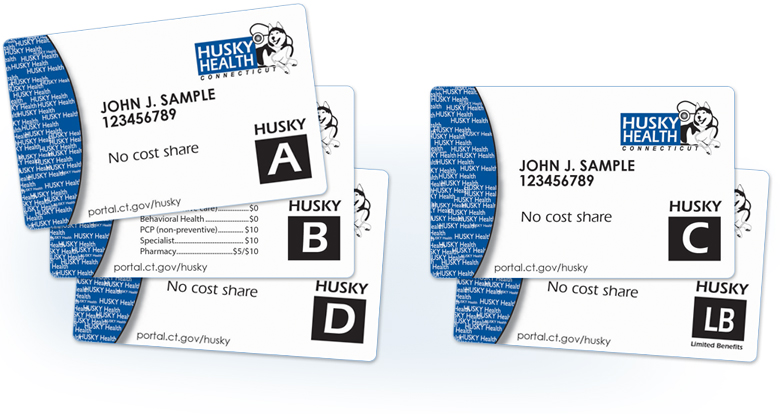
HUSKY C, the Medicaid program only for those who are disabled/blind or over 65, currently has an income limit of $1,234/month, far below any of the other Medicaid programs, like HUSKY A and D, which are, respectively, for families and for non-disabled, non-elderly adults. Because of the current very low HUSKY C income limit (around the federal poverty level), thousands of needy disabled/elderly adults right now have no access to the health care services covered only under Medicaid (even if they have Medicare), like dental care, vision care, hearing aids, medical transportation, most home care services, long-term care, etc. If they are able to find a provider willing to provide services without insurance coverage, they have to incur substantial medical debt for these non-covered services.
In 2023, having been made aware of the harmful discrimination in our laws against disabled and older adults in our Medicaid program, the legislature voted to end the income eligibility discrimination against them, once and for all. It increased the income limit for HUSKY C, effective October 2024, to $1,829/month, which is a little higher than the income limit for the Medicaid program for non-disabled adults in HUSKY D.
While advocates were disappointed that the law passed did not immediately put an end to the obvious discrimination, they appreciated that it at least would be ended in October, which is now just six months away. The governor readily signed the law.
But now, before the increase even goes into effect, the governor proposes to dramatically lower the income limit for HUSKY C, undoing the law just passed, so that there will be a yawning $400/month + gap in the income limit for disabled and elderly versus non-disabled, non-elderly people, with the former singled out for much stricter access to this essential program. He proposes a massive cut which will allow only a tiny increase in the income limit in October, to 105% of the poverty level ($1,318/month) – and thus the intentional perpetuation of discrimination against disabled people.
You may be asking yourself, why would the governor propose to do something so harmful? His budget director does not say he wants to affirmatively discriminate against the most vulnerable people in our state, but rather says we just didn’t budget adequately for the new law and can’t afford to treat them fairly.
And this is not because we don’t actually have plenty of money to fund the increase in October; we actually have hundreds of millions of dollars in surplus this year. Rather, it is because the governor just doesn’t want to spend it, because he would have to be agreeable to being flexible with the arbitrary “fiscal guardrails” he seems to be so enamored of.
Here’s the thing, if you are expressly treating people differently based on their membership in a protected class, it is not okay to continue to discriminate because you are discriminating against them a little less. Less discrimination is still discrimination.
More importantly, is it really okay to reinstate discrimination just because ending it costs money? Since when do we put a price on ending unfair discrimination? These guardrails have become nothing more than handcuffs, the key to which the governor happens to hold in one of those hands.
The governor has it within his power to avoid his odious choice to re-discriminate. He can agree to adjust the arbitrary guardrails so as to allow the expenditures which were already committed to by both the legislature and him when he signed the anti-discrimination law last year…. or he can continue on this cruel path and adopt one of the awful, discriminatory rules mistreating people such as I outlined, in this case a much lower income limit for accessing essential health services based on the mere fact of being disabled (or elderly).
I am a Black Muslim woman, who could be affected by any one of the kinds of discrimination in the scenarios. But I appreciate that, as a matter of both moral imperative and constitutional requirements, it is no better to discriminate on the basis of disability than on any of the other categories of which I am a disadvantaged member.
Just like I appreciate this, our white, male, able-bodied governor, who also is wealthy and never has had to worry about access to health care, should as well. It is expensive to be poor in Connecticut.
Catherine John is Lead Organizer for Black and Brown United in Action based in New Haven.