



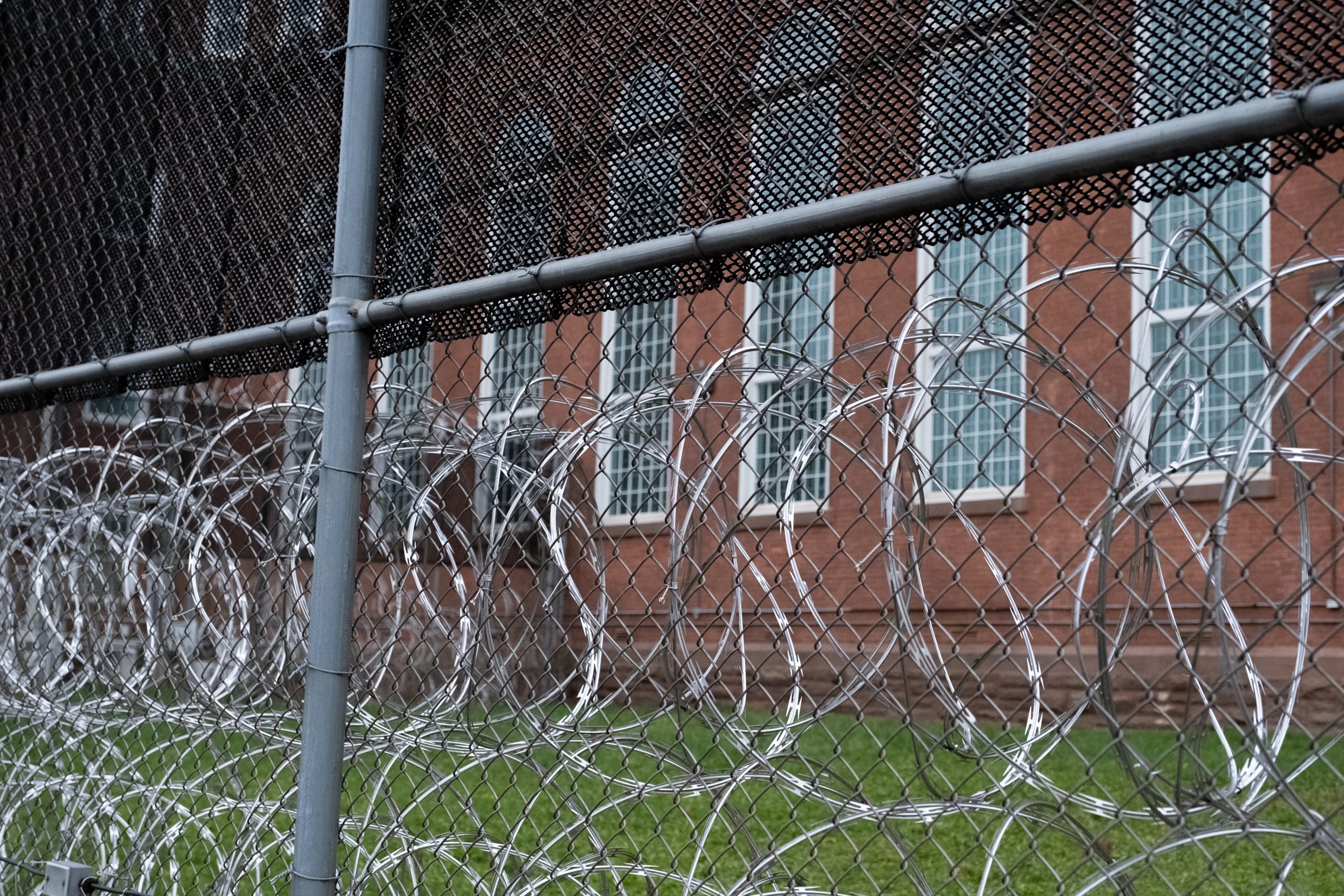
The way society views Black prisoners has drastically contributed to their experiences within and outside of today’s prison system.
With the common occurrences of police brutality, it is clear that there is an inherent aggressiveness towards black skin. This inherent aggressiveness can also be seen during a Black prisoner’s sentence through the excessive use of violence and harassment. The information within this opinion editorial should not be treated as a light read. Instead, I invite you to share a burning passion — a passion that encourages you to participate in organizations built to dismantle the horrifying conditions of prisons within Connecticut, and more generally, the United States.
This is the way they see us.
They see us as individuals undeserving of our own families. In 2021, Black children were “14% of the total child population but 22% of all kids in foster care.” Although the child welfare system is generally viewed as a system that protects all children, it was a system built against, not for, Black individuals. The government removes multiple Black children from their families based on the perceived inadequacy of Black parents; this perceived “inadequacy” stems from the long-lasting effects of slavery — the racial generational wealth gap and sustained prejudicial stereotypes against Black individuals. Rather than reducing the basis on which they remove Black children from their homes, the state government instead focuses on maintaining the line of social demarcation that hinders the spread of Black culture and increases white superiority.
They see our black skin as a crime. According to the Prison Policy Initiative, Black individuals in Connecticut make up “43% of the incarcerated population, three times higher than the national average.” Despite popular belief, the preceding statistic does not only consist of adults but also teenagers. The dystopian practices of forcing a teenager to inhabit the same space as an adult three times older than them leads to a plethora of power imbalances. It was under these conditions that Korey Wise, a 16-year-old sent to an adult prison, was harassed by correction officers, beaten up by prisoners, and sent to solitary confinement.
The prison system’s purpose is to rehabilitate its residents; however, how can a system’s primary purpose be rehabilitation if it persistently destroys its inhabitants?
They see us as animals they need to tame. Although the presumed intention of correctional officers (COs) is to control and maintain the “safe” nature of prisons, who is truly the one making the environment unsafe? In prisons, correctional officers persistently go beyond the scope of their occupation; for example, as shown by a study conducted among 710 officers, “33% of respondents knew about correctional officers who had committed unreported domestic violence.”
In Connecticut, “three correctional officers were charged with assaulting an inmate at Garner Correctional Institution.” Despite the popularized notion that characterizes COs as an integral part of maintaining order within prisons, at times, they are perpetrators of the disorder.
They see us as individuals incapable of experiencing internal emotions. As a result of the isolationist and dehumanizing practices within today’s prison system, countless prisoners develop mental and behavioral disorders during their sentences. The individuals within these prisons are pushed to their absolute limit by their living conditions, abusive administration, and degrading experiences. Prisons have grown into breeding grounds for mental illness and addiction, which has led to the construction of housing in Newtown specifically for individuals with extensive mental illnesses; hundreds of prisoners currently reside within this location today.
The COs who are supposed to be protecting the prisoners are the ones prisoners need protection from. Black individuals within these prisons are no different than the average human being. They are not able to withstand the treacherous and demeaning conditions, similar to you and I. I invite you to utilize the privilege that you have on the outside of the prison system to join prison reformation organizations, help create anti-isolationist policies, and advocate for rights inside prisons until your voice is heard.
They will not see us until it is too late.
Jaylen Moment is a member of Stop Solitary CT.