



We all live in stories — even inhabit them, like second skins. Stories anchor us in the world. They remind us who we are, and where we’ve come from. In the face of threat, we lean into their heroes and villains, good choices and bad ones. They assure us our moral compass is well-calibrated; that we are on the right side of history.
What happens when our stories fail us?

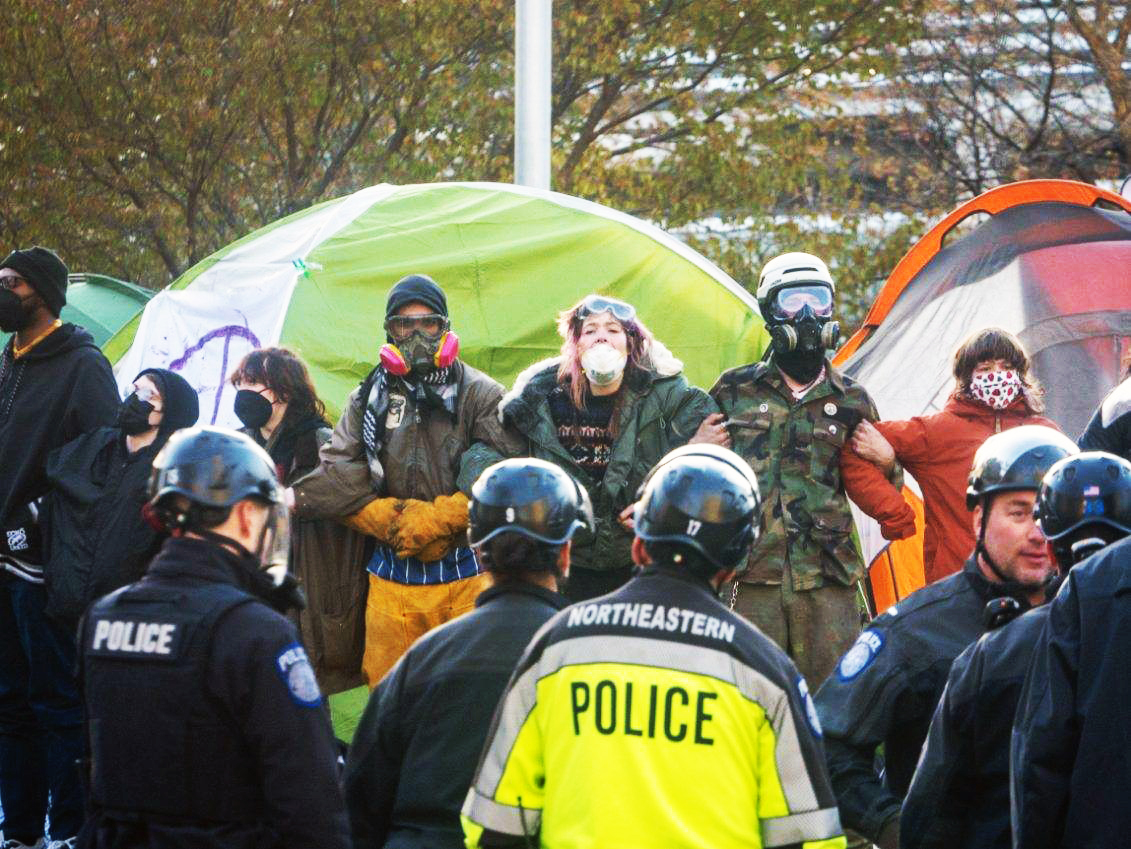
For many people, the violence shattering lives in the Middle East — and now convulsing U.S. college campuses — threatens the stories that ground us, orient us in our families and our communities, and give our lives meaning. I am a longtime scholar of Israel/Palestine, an active member of the Jewish community with loved ones in the Middle East — and a parent of two attentive children who are troubled, and confused, by what they see and hear. And I know my stories are failing me.
Americans bound to Palestine or Israel by history or family, religion or culture have lived these past seven months with our hearts in our throats. As we struggle to grasp indescribable violence and devastating loss, our emotions have run the gamut — abject horror, paralyzing fear, unspeakable outrage, crushing disappointment — but not necessarily at the same time, or for the same reasons.
Conversations with friends and family, students and colleagues — with and without regional ties — confirm how widely this welter of feelings is shared. At times, we feel like people’s moral compasses — maybe others’, maybe our own — are broken, or spinning out of control. Increasingly, so many of us struggle to hear and understand each other — including people we’ve long known and trusted.
Our stories hold us and nurture us — but they can also haunt us. Even for those with no direct experience of the Nakba, or the Shoah, these past months have reactivated what scholar Dominick LaCapra calls our “founding traumas” — collective memories of mass trauma that can be reactivated when a group feels threatened. Traumas like these leave wounds that endure across generations. As wisps of memory, they thread through the stories that shelter and guide us as children — and that warm us, and warn us, as we move into adulthood. Sometimes, they crystallize in fears and anxieties that burden our minds, our hearts, and even our bodies.
Inherited stories of violence, trauma, and loss can be powerful tools of collective memory and healing. But they can also shield us from uncomfortable, and inconvenient, truths. They can filter our news consumption, coax us into social media bubbles, and cut off opportunities to talk — or listen. If we retreat further into their embrace, the stories that comfort us can also harden our hearts and blind us to horrors we would roundly condemn if we counted those now suffering among “our own.”
Now is not the time to cling to stories that reassure us we are on the right side of history. Now is the time to ask tough questions, among them: Are the stories I inhabit — those that ground me in my community, and my community in the world — supplying the moral guidance I need right now? Are they clarifying my moral vision by helping me see the full humanity of all my human siblings — and the power of democracy in action? Or are they hardening my heart, stoking irrational fears, or keeping me from speaking out against fundamentally repugnant choices, words, and actions?
Do I have the courage to listen to stories other than my own, different from my own, parallel to my own — and risk being transformed?
Would I — do I — have the moral courage to see, and name, shattered myths and recognize their shards beneath my feet?
Founding traumas reverberate forcefully across time and generations — but not in any singular or straightforward way. The reactivation of a founding trauma can draw out the worst in humanity: a yearning for vengeance, wanton military destruction, even genocidal language — or actions. But these possibilities are not inevitable. The reactivation of traumas can also spark the opposite: Recognition of all humans’ shared vulnerability. A capacious sense of our interconnectedness and interdependence. An impulse to rise up, in voice and deed, when innocent people face violence and collective suffering, whatever terms we may use — or refuse — to call them.
Our old stories are failing us, but we can’t just swap in new ones. First, we need to recognize how our stories can haunt us, confuse us, and lead us astray. Only then can we weave new ones from old tatters, creating tapestries of pain and sorrow, joy and meaning that are strong enough to spark new ways of connecting across our grief, pain, fear, and outrage.
Sarah S. Willen of West Hartford is Associate Professor of Anthropology at the University of Connecticut, where she is also Co-Director of the Research Program on Global Health and Human Rights at the Human Rights Institute and affiliated faculty in Judaic Studies. She is also a member of the Connecticut Scholars Strategy Network.