



As a first-time candidate for local office, my party chair claimed there was no aspect of the campaign more important than lawn signs.
In addition to showing key neighborhood support and effective organization, I learned over years of campaigns that what folks show on their property, their home, is a public commitment not given lightly — and only when all members of the household agreed. If my wife and I disagreed on candidates, we would include signs for both or neither. And we would have to agree to allow either of us to post signs about referenda issues.
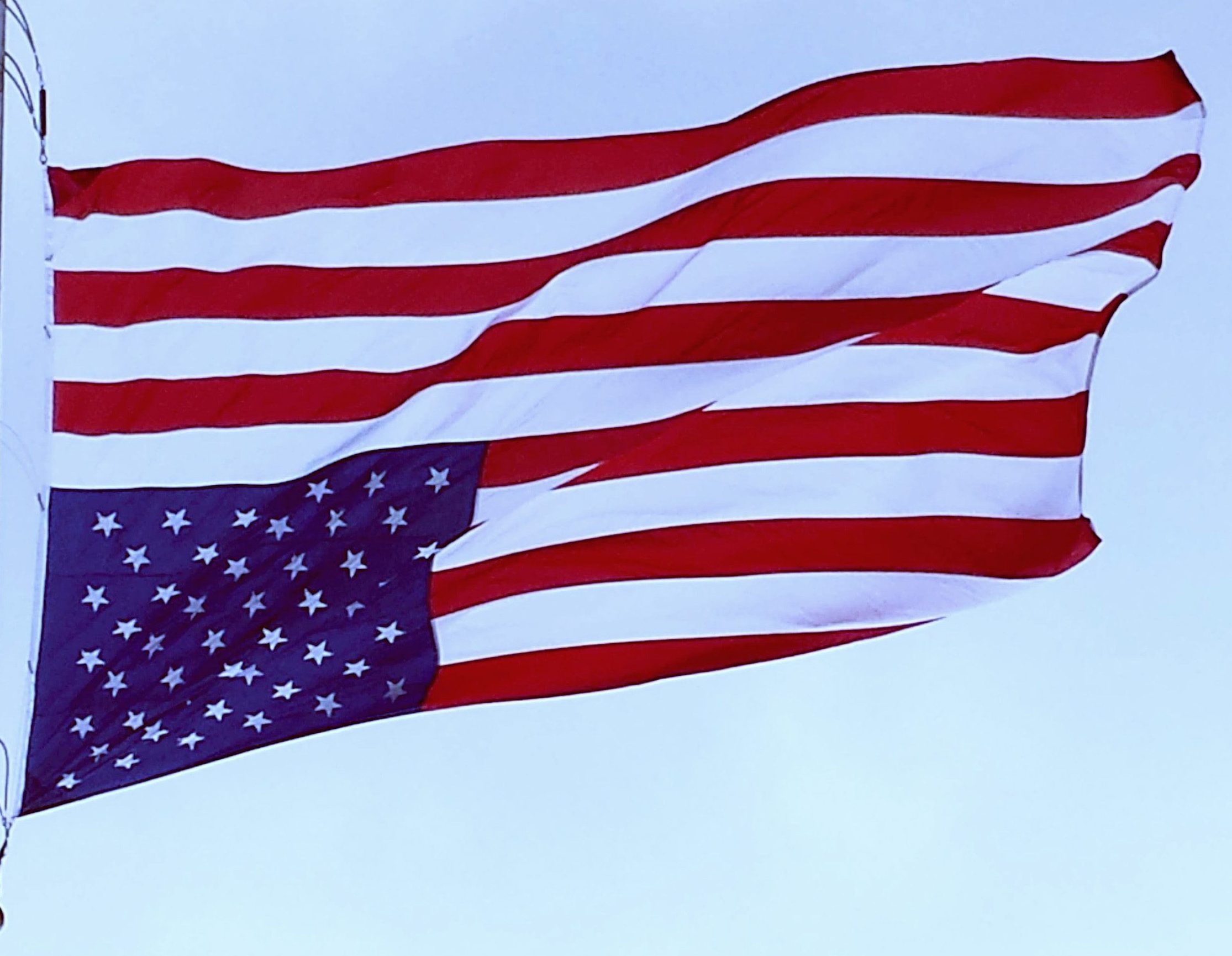
So I’ve been intrigued by the “upside down” American flag that flew on the suburban Washington, D.C. property of Supreme Court Justice Samuel Alito and his wife, Martha, following the Jan. 6, 2021 “insurrection” at the nearby U.S. Capitol. Alito has tried to downplay its significance in refusing to recuse himself from (not take part in considering) cases about the election and insurrection.
Alito included his views in a letter to members of Congress. Alito claims (i) his wife likes to fly flags and he doesn’t, (ii) she has a First Amendment right to fly a flag, (iii) the house is owned jointly, and (iv) he asked her to take down the “upside down” flag and she refused for some period.
These excuses may be true — and perfectly understandable — for why Alito didn’t forcibly remove the flag. And his focus on process and his wife’s “rights” is laudable, though my inner civil libertarian wishes he’d be more supportive on process and rights in his Constitutional decisions on the court.
But Alito’s arguments are irrelevant to the issue of recusal.
The key to recusal is what a reasonable person might conclude. Judicial ethics has always focused not only on actual impropriety but also on any “appearance of impropriety.” Our judicial system needs that protection, especially now, as public approval of the courts, and especially the Supreme Court, is at historic lows. After all, the court has no army to enforce its decisions, and its important rulings historically — including protecting against discrimination and violations of due process — have succeeded only when there has been public and politicians’ support.
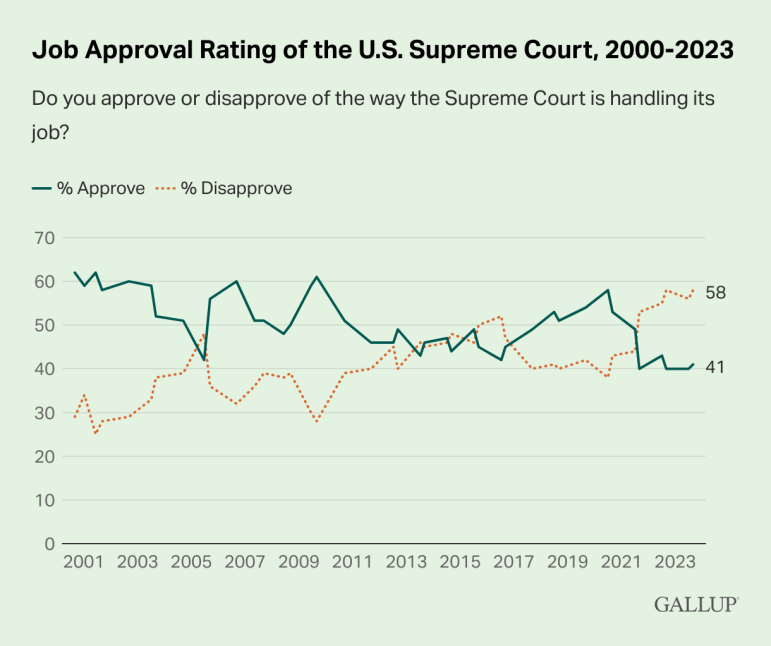
Some might argue we will need such support for the Supreme Court if the “upside down” flag is replaced by an attempted insurrection such as the one it supported.
Justice Alito’s own letter quotes the Supreme Court’s Code of Conduct: “A Justice should disqualify himself or herself in a proceeding in which the Justice’s impartiality might reasonably be questioned, that is, where an unbiased and reasonable person who is aware of all relevant circumstances would doubt that the Justice could fairly discharge his or her duties” (emphasis added). The clarifying clause (starting “that is”) somewhat dilutes the stricter requirement, which is also verbatim the standard in the governing federal statute (requiring disqualification “in any proceeding in which his impartiality might reasonably be questioned”).
But whether the standard is what a reasonable person “might question” (federal statute and standard in Supreme Court Code) or “would doubt” (diluted explanation in Supreme Court Code), Justice Alito should recuse himself — or, if necessary, be forced out — from any cases coming before the Supreme Court that raise issues about that 2020 election and 2021 insurrection — because a reasonable person thinks that what flies outside a home is a statement for the household; because a reasonable person thinks that a lawn sign doesn’t stand nor a flag fly unless both members of a marriage agree with the sentiment expressed, regardless of whether they agree on whether or how it is manifested publicly.
A reasonable person certainly at least “might question” and likely “would doubt” Justice Alito’s impartiality given the strong views expressed by his household about the election and insurrection by displaying the “upside down” flag. That’s not to mention the recent statements to an undercover documentary maker confirming that Alito thinks the nation should return to “a place of godliness” and his wife’s desire to raise a “Sacred Heart of Jesus” flag to counter a “gay pride” flag in the neighborhood.
I’m also concerned about two of the “legal defenses” offered by Justice Alito. Alito claimed his wife had “First Amendment” rights to free speech, but as a Supreme Court Justice he knows — and should properly educate others — that the First Amendment only applies to government action and doesn’t protect his wife from action by him to take the flag down. And though Martha Alito may be a “joint” owner, that generally means that neither has the right to take actions without the other, though I doubt any spouses have sued over a decision to fly a flag.
If Alito as husband is suggesting some broader right of his wife (privacy, perhaps), it runs directly into… Justice Alito. In eliminating women’s constitutional right to abortion, Alito suggested rights not specifically spelled out in the Constitution would be limited to those “fundamental to our scheme of ordered liberty” and “deeply rooted in our history and tradition.”
Just recently, in an unrelated trademark case, a court majority, including Justice Alito, based its analysis of restrictions on free speech under the First Amendment on “history and tradition” for the first time, over internal disagreement, perhaps not coincidentally, by all four of the court’s female Justices. Not only did women historically not have many rights, but during the early 19th Century — a particularly religious period that has formed the improper basis for Alito’s harsh restrictions on abortion — husbands had complete ownership and control of joint property (including property his wife owned before marriage). So, based on history, Alito the Justice is not likely to support a wife’s right to display anything, even if there were a statute (triggering the First Amendment) — when that position doesn’t support his personal predicament.
I’ve noted elsewhere, as have others, that Justice Alito previously subordinated the Constitution to his religion. Is he now showing a willingness to subordinate ethics to his politics?
Andy Schatz, a retired lawyer and former member of the West Hartford Town Council, teaches classes about the Constitution and Supreme Court, has served as the board president of the American Civil Liberties Union of Connecticut and on the national ACLU board and executive committee. He is also currently a member of the Commission on Social Action of Reform Judaism and its committee addressing judicial ethics. The views expressed here are personal and do not represent the views of any organization.