Connecticut’s out-of-control utility costs stem from regulatory failure.
The Public Utilities Regulatory Authority (PURA) lacks the expertise appropriate to making billion-dollar decisions affecting Connecticut for 100 years or more. Commissioners are former legislators and/or lobbyists, appointed by political patronage, lacking pertinent credentials or experience and are expected to learn on the job — at great expense to ratepayers.
It was a long series of bad decisions by PURA, protracted over decades, that led to Connecticut’s evolution of runaway costs. One was allowing state-granted monopoly utilities to be sold into out-of-state and out-of-country ownership, exporting staffing and resulting in a loss of taxes collected and legislative influence. Another was when regulators forfeited four nuclear plants which could have operated until 2045 producing very cheap carbon-free power.
Conceding power plant siting and transmission-system planning to the regional grid operator and private developers was yet another costly error, forcing the costs of a billion-dollar transmission-system rework onto ratepayers. So was concealing taxes in utility rates to subsidize political missives having nothing to do with utilities, such as allowing municipal waste disposal plants to charge 300% of fair market rates for incinerator-generated electricity, or conducting a “jobs program” for in-state and out-of-state fuel cell manufacturers.
I could go on, but the bottom line is that legislators need to put qualified people on the PURA board.
State statute speaks to the qualifications of PURA commissioners, requiring three years of experience, including the disciplines of “economics, engineering, law, accounting, finance, utility regulation, public or government administration, consumer advocacy, business management, and environmental management.” Yet for over 20 years there has not been any commissioner with a background in engineering, business management, economics, or environmental management, and the lack of consumer advocacy speaks to the absence of that skill.
PURA appointees ought have a minimum of ten years’ experience commensurate with executive level responsibilities. The body should be restored to the original five commissioners, independent of the Department of Energy and Environmental Protection. (PURA was reduced to three commissioners and consolidated with the DEEP by then-Gov. Dannel Malloy.)
Most importantly, each PURA commissioner should have a different expertise, maintained through in-kind replacements, as follows:
• A legislator having served on energy and technology committee, with proven consumer advocacy.
• An attorney having experience in contract and regulatory law for public and municipal utilities (all services), inclusive of merchant power, distributed generation, commodity and services suppliers.
• A licensed professional engineer experienced in infrastructure design and construction for electric, gas, water, sewer, data and telecommunications.
• A consulting environmental scientist experienced in project compliance for air, water, acoustic, project siting, electromagnetic fields, radioactive materials.
• A project developer/operator, credentialed in either engineering, finance or law, experienced in project siting and permitting, techno-economic analysis, and turn-key project delivery.
The entrenched political patronage system that awards legislator/lobbyists commissionerships, especially to the benefit of legislators who have been voted out of office, is not serving the public good. These appointments must be focused on competency, not political plums serving the party faithful across the aisles, even apportioned so the party in power gets no more than 60% of the appointees.
Sitting lawmakers are conflicted; it is doubtful that any will initiate change in opposing a self-serving paradigm. Gov. Ned Lamont has demonstrated bipartisan resolve, especially so in the battle over guardrails, so lets be hopeful that common sense might prevail. It’s up to you, Governor!
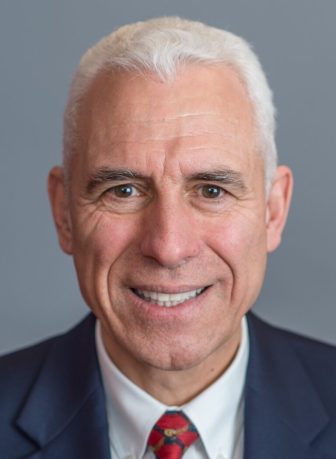
Joseph F. Camean, P.E. of Old Lyme is a consulting engineer with over 50 years of professional private practice experience in fossil, nuclear, biomass, solar and wind power for numerous utility and infrastructure projects. He is also a Connecticut Power and Energy Society past president, adjunct Professor at Central Connecticut State University, Professor of Practice Emeritus of the U.S. Coast Guard Academy, and Economic Development Commissioner for the Town of Old Lyme.