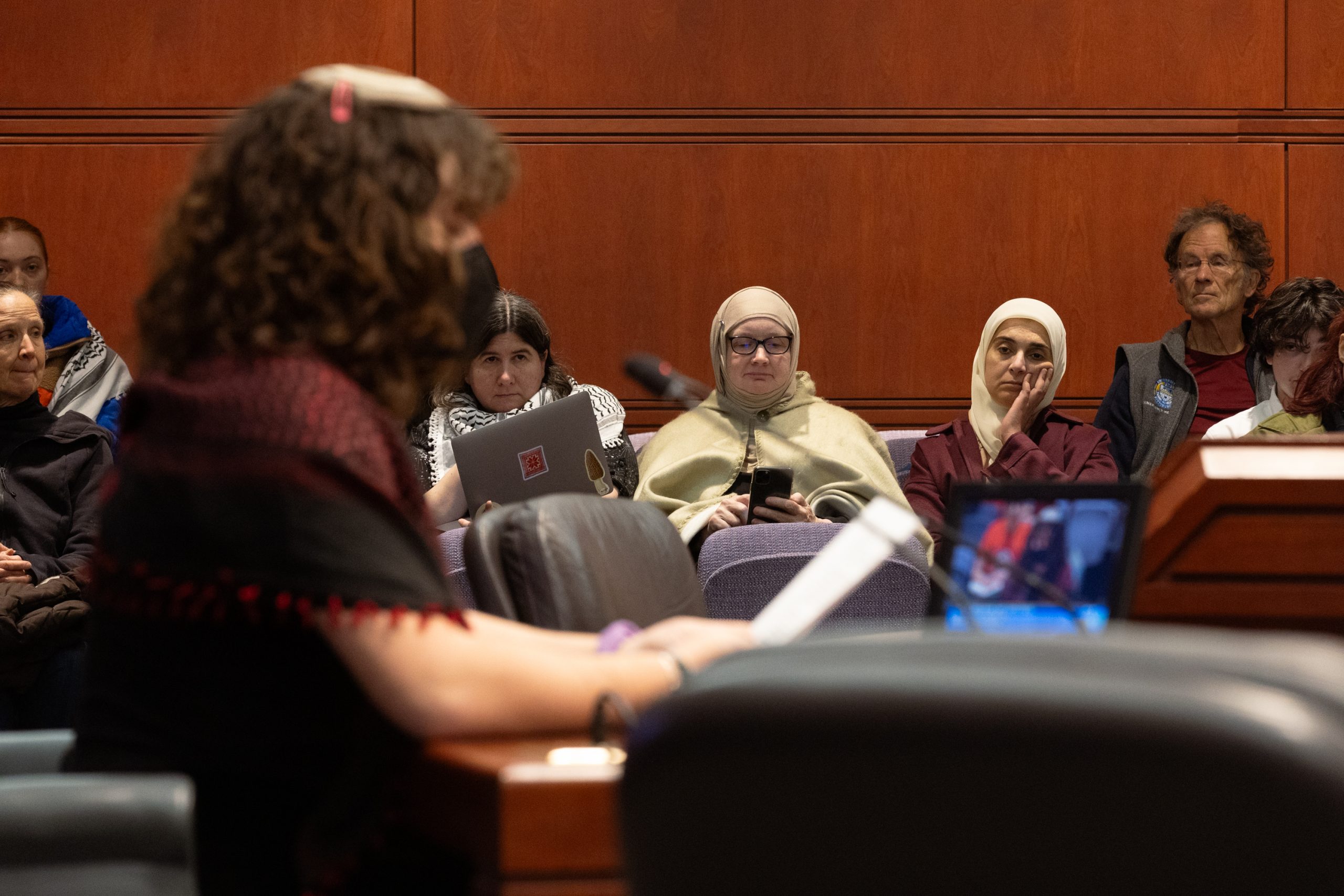
Connecticut lawmakers are considering a bill that would change the way colleges and universities monitor and handle speech that some consider hateful.
On Friday, the legislature’s Higher Education and Employment Advancement Committee heard public testimony on Senate Bill 980, which would require all higher education institutions in the state to hire a Title VI coordinator to address instances of racial discrimination and adopt at least one other policy — such as expanding training, investigating complaints, creating a task force or partnering with police — to address hate. Title VI is a federal law banning racial and ethnic discrimination within any programs or activities that receive federal funding.
“The purpose and intent of Senate Bill 980 is really quite simple. It’s to protect students from illegal hate incidents and racial discrimination by asking universities to each designate a Title IV coordinator,” said Sen. Matt Lesser, D-Middletown, who co-sponsored the bill. “If students do not feel safe on campus, we cannot expect them to learn.”
The bill has been met with both fierce opposition and staunch support from students, professors and community members across the state. Over 100 people submitted written testimony on the bill, and dozens of people spoke at the public hearing. Most of the testimony took issue with the bill.
Tess Goodman, a Middletown resident and librarian at Wesleyan University, described the proposed legislation as a “wolf in sheep’s clothing.” She said it wouldn’t accomplish its purported goal of making students feel safer on their college campuses.
“Supporting and protecting our students from discrimination and hate is extremely important. But this bill is not the right tool for the job,” Goodman said. “It creates a pipeline for surveillance and police intervention that would damage our higher education institutions and endanger our students at a time when both are vulnerable.”
The bill comes at a time of heightened tensions at universities across the state and the nation regarding student protests. Last spring, dozens of students were arrested at pro-Palestine encampments at Yale University and the University of Connecticut.
At Friday’s public hearing, several people expressed concern that the proposed bill would silence student dissent. Many were especially alarmed by the language in the bill involving policing on campus.
“These kinds of police partnerships, by nature, bring violence and brutality into our campuses and communities,” said Yale student Nora Wyrtzen. She said students and New Haven residents were “brutalized by the New Haven police department while peacefully protesting on their own campus” last spring.
“What it means is a disturbing erosion of our freedom of speech and right to peacefully assemble,” Wyrtzen said.
But UConn student Noah Saben expressed support for the bill’s goal to reduce hate speech. He said he’d experienced antisemitism on campus — he was shouted at and called names during an event sponsored by the university’s Jewish student organization. Saben said he believes these incidents need to be addressed at the state level.
“I’ve experienced the reasons for this bill’s necessity myself,” Saben said. “I have since been hesitant to proudly display my culture, the representation of myself and of my family and friends, in fear that there were students around me who want me dead.”
During Friday’s hearing, Lesser addressed the abundance of commentary on the bill.
“I know that this bill has attracted an unusual amount of interest, and from some quarters quite a bit of concern,” he said.
Lesser said he’s willing to consider removing the language involving policing, and reemphasized that his primary focus was on requiring Title VI coordinators at universities across the state.