


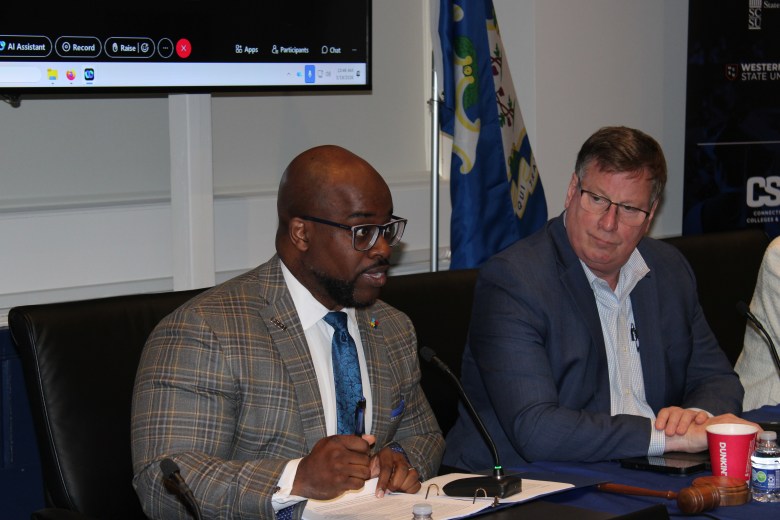
Chancellor John Maduko of the Connecticut State Colleges and Universities resigned on Friday after being notified that he was the subject of an investigation for an alleged policy violation.
According to a statement from Samantha Norton, communications director at CSCU, Maduko was informed on April 20 that he was being investigated in response to a complaint that he “violated policy.” Three days later, he was placed on administrative leave. The next day, he resigned.
Norton did not say which policy Maduko is accused of violating.
CSCU General Counsel Karen Buffkin will temporarily take over Maduko’s role. Board of Regents Chair Marty Guay has appointed Board Vice Chair Juanita James to lead a national search for someone to permanently fill the position of chancellor.
Maduko, who had previously worked at Minnesota State Community and Technical College, was chosen to lead the Connecticut State Community Colleges system in April 2022 after a nationwide search. He was appointed interim CSCU chancellor in June after former Chancellor Terrence Cheng stepped down in the wake of an investigation by CT Insider and an audit from the comptroller’s office that found Cheng had charged the university system for expensive meals and chauffeured rides.
The audit, released in December 2024, found that Cheng and a number of other campus presidents had used state funds to pay for things like dry cleaning, expensive meals and, in one case, a ticket to a Yale University football game.
“Based on our findings, this is a systemic problem that is impacting the entire CSCU leadership and their staff,” Comptroller Sean Scanlon said at a press conference shortly after the audit was released.
Scanlon told the Connecticut Mirror on Monday that the Board of Regents had adopted all of the recommendations he made in his 2024 audit report. Two bills that passed in the legislature last year require new guardrails around the use of university purchase cards and regular audits of the CSCU system, as well as additional transparency around the system’s expenses.
After his resignation, Cheng remained employed by the Board of Regents as a strategic advisor to the board. During a debate earlier this month on a bill that would require the Connecticut State Colleges and Universities system to report student performance data, personnel numbers and financial information to the legislature, Republicans complained that Cheng has been receiving a salary of $442,000 and had not appeared at any Board of Regents meetings.
Cheng’s contract ends in July.
In a statement on Saturday, Seth Freeman, president of the 4Cs, criticized the CSCU system for continuing to pay a salary to Cheng, and said that the turnover at the executive level was having a negative effect on professors and staff.
“The Board of Regents must stop asking frontline educators at Charter Oak [State College] to accept below minimum wage compensation while executive instability continues to consume public and student dollars,” Freeman said. “If the Board of Regents can find money for executive salaries, consultants, transition deals, and administrative churn, then it can find the money to establish a fair wage floor for Charter Oak faculty.”
Scanlon told CT Mirror that he hoped the university system would continue the investigation into Maduko’s conduct despite his resignation. He said the allegations he had heard about were “quite serious,” and were not fiscal in nature.
“ I really think we have to be very, very thoughtful and careful when we select the next chancellor to make sure that that’s a person that can right this ship and bring stability to this important system,” said Scanlon.
