


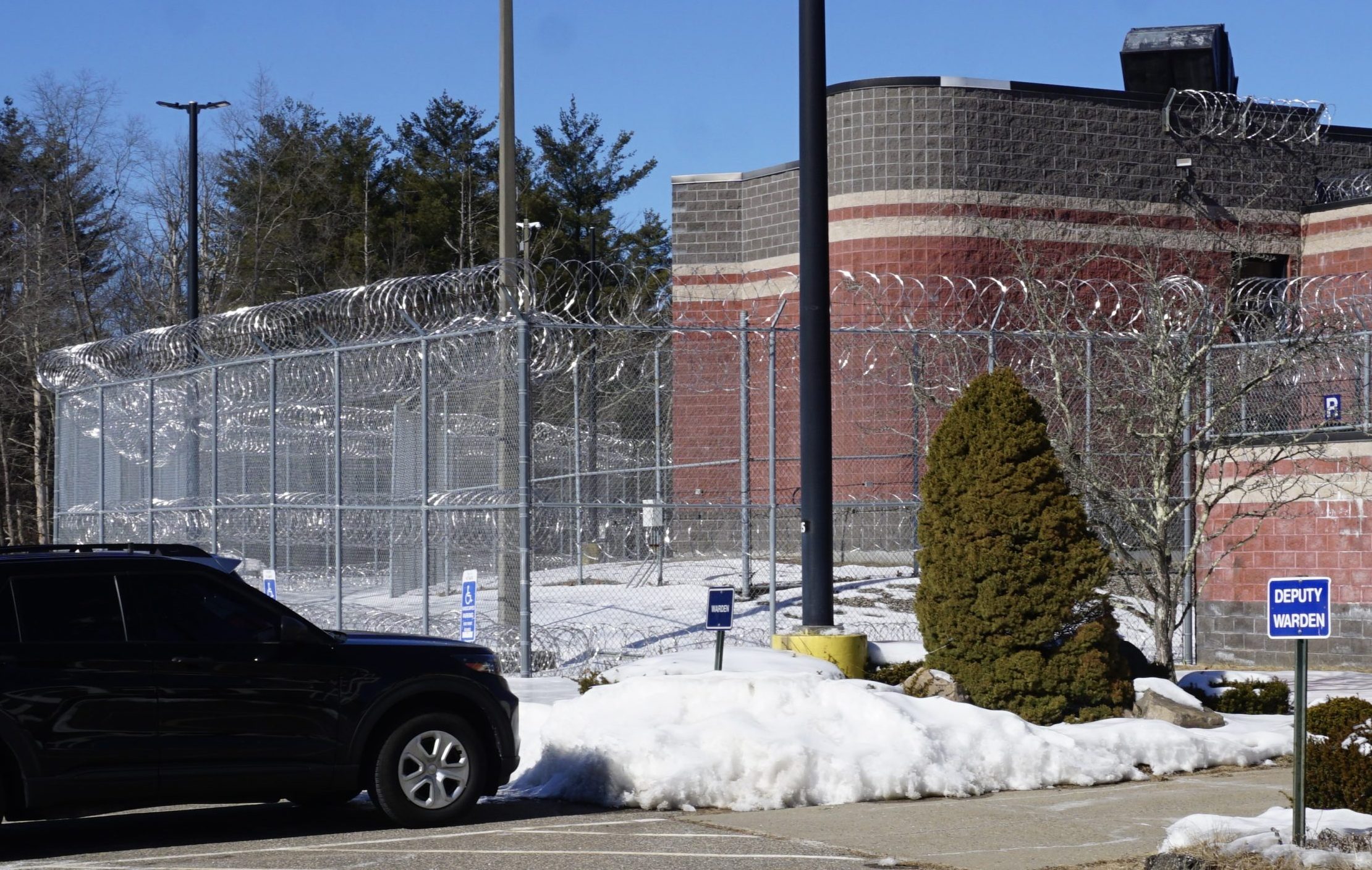
During the four years Deandre Brown was incarcerated in Connecticut, he was relocated several times to different correctional facilities. The 26-year-old said an electronic messaging program and tablet devices, provided for free by the state, allowed him to maintain steady contact with his wife and mother.
The ability to communicate closely with family is one of the “basic things inmates need for their mental health” he said.

But the system that kept Brown grounded, which has been available for free to incarcerated people in Connecticut prisons since 2022, is facing the threat of budget cuts. Gov. Ned Lamont’s proposed biennial budget seeks to cut state funding for the e-messaging program, putting the cost for online communication back onto individuals like Brown and their loved ones.
“They want to turn off the inmate messaging … If anything it needs to be strengthened,” Brown said.
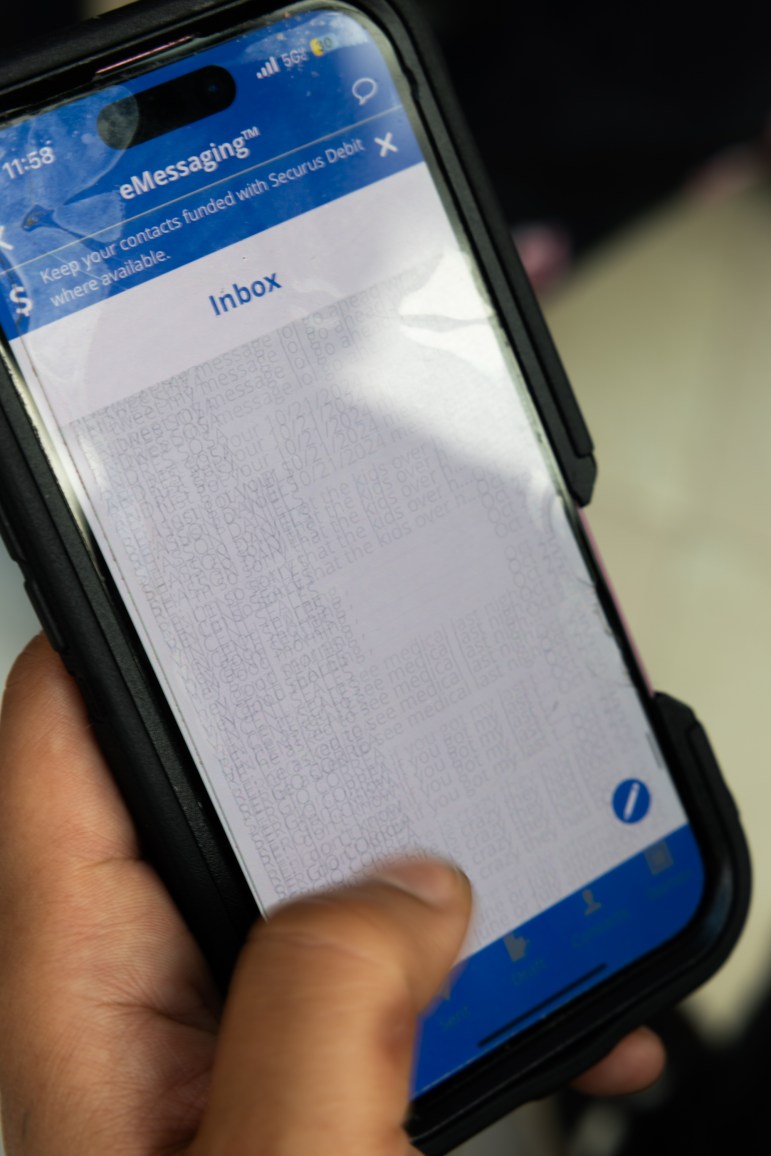
The governor’s office said that the messaging system has become overly expensive, adding that while it’s important for families of incarcerated people to be able to communicate regularly, the program is difficult to maintain given other demands on the state’s limited finances.
Phone calls would remain free of charge under the governor’s proposal.
“This text messaging system has a considerable cost, and other communication systems are more affordable,” said Rob Blanchard, director of communications for the governor.
The population in Connecticut’s correctional facilities has increased by over 2,000 in the past four years, from 9,111 people in early 2020 to 11,371 people at the end of 2024.
The savings from canceling e-messaging services would amount to $3.5 million, a small portion of the governor’s proposed $55 billion budget for the next two years.

The governor’s proposal was swiftly met with opposition, from lawmakers and corrections officials as well as advocates and families.
Sen. Gary Winfield, D-New Haven, who co-chairs the legislature’s Judiciary Committee, supported the effort in 2021 that established free communications services — including phone calls and e-messaging — in Connecticut correctional facilities. The legislation passed with strong support in both chambers in May 2021, making Connecticut one of the first states in the country to take this step.
Winfield said the proposal in this year’s budget to cut out free online messaging would effectively be going back on a promise made to the state’s most vulnerable. “I don’t know why the administration are doing this,” Winfield said. “Given that the communications program was put in place in 2021, I am disappointed. They feel like walk backs.”
Jovaan Lumpkin carried out a 14-year suspended sentence at multiple correctional facilities in the state between 2005 and 2019. He said that during this time communication with people close to him “was essential” — calls from Lumpkin’s mother kept him connected to his family and helped him stay present in his little sister’s life as she grew up. Had it all been free, that would have lessened stress on his family, he said.
“We talked about everything. She would keep me updated on my family,” he said.
Lumpkin finished his sentence before free communications came into effect, but he said he sees how clearly the program could improve the mental wellbeing of people in prison and set them up for fuller lives after release.
Lumpkin’s mother, Diane Lewis, said she remembered paying high rates to speak with her son during the eight years he was in the corrections system. “When they run out of calls for the day, then messaging becomes crucial for keeping families together,” she said.
“People want to get their normal lives back before they were imprisoned,” Lewis said. The phone calls “pushed him to be with his family. Through messaging, he realized what family really meant,” she said.
“I did not want a stranger to come home to me,” Lewis said.

Lewis is now an advocate for prison reform. She expressed relief that since her son’s release, free phone calls and electronic messaging have helped thousands of people.
Other lawmakers, including Judiciary Committee members Rep. Craig Fishbein, R- Wallingford, and Rep. Greg Howard, R-Stonington, said given the state’s budget constraints, eliminating the free messaging service makes fiscal sense.
Fishbein said he supports families of those incarcerated, but the governor has to make “difficult” decisions when laying out a budget.
Howard said, “The budget is a finite resource … at some point in time there are certain things that have to be cut out.”
For now, individuals in Connecticut correctional facilities may send up to 10 messages a day free of charge. Several people, including Brown, said they believed that should be expanded. Brown suggested allowing for photos and videos to be shared, and adding video-chatting capabilities.

His wife, Ivelisse Correa-Brown, is also an advocate, serving as executive director of ‘The Good Trouble Coalition’, which supports the rights of incarcerated individuals, and as vice president of local Black Lives Matter group ‘BLM860’.
She said the proposed budget cut would take away a crucial avenue for incarcerated people to flag problems around welfare in state prisons, as well as seek legal representation. Messaging was especially important for the couple during COVID, when in-person visits at the correctional institution were restricted.
“Messaging provided a method for people to express themselves to their loved ones,” she said. They “let family know if they were only getting two hours outside a day or if they were being treated well.”
The Connecticut chapter of the American Civil Liberties Union is also opposed to the cuts. In an emailed statement, Executive Director David McGuire wrote: “The state cannot balance the budget on the backs of Black and brown people, as it has for more than 200 years. Continuing to fund free communication services is both the morally correct and fiscally responsible thing to do because family unity and connection reduce recidivism and helps build thriving communities.”
Jermaine Davis is carrying out a sentence at MacDougall-Walker Correctional Institution in Suffield, Connecticut. In a message to The Connecticut Mirror, he said he uses the system for multiple purposes and he’s anxious to see it remain.
“Receiving a message from my family and friends … can allow incarcerated individuals to feel some type of normalcy in today’s time,” Davis said. “Using e-messaging I am able to effectively communicate with my mother, prepare myself for future employment opportunities, for preparation of community release and religious purposes.”
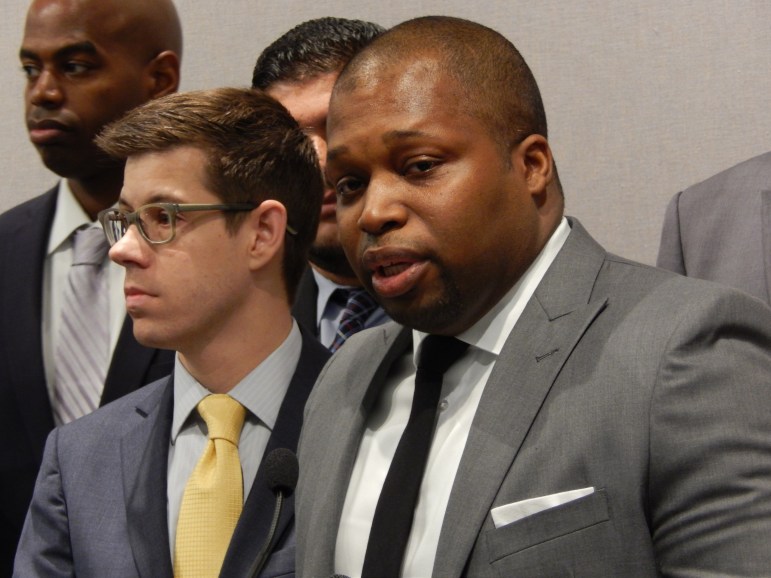
Bianca Tylek, a prison reform advocate, said she was concerned free e-messaging couldn’t be cut without removing communications entirely. “It has created a lot of confusion,” she said.
Alex Taubes, a criminal justice attorney based in New Haven, said the proposed cut could cause financial challenges for the loved ones of incarcerated individuals. “It’s ultimately the family members of people who are incarcerated, who want to keep in touch with their loved ones, who end up spending the most money,” he said.
Brown is currently seeking a sentence modification while on parole. After finishing a four-year sentence on burglary charges, he said he is ready to see his life move forward. But without the support that free texts gave him, he does not believe he could have come this far.
Rather than cutting back, Brown said he thinks the state should expand communications services for people in correctional facilities. Specifically, doubling the number of free messages allowed, he said, “would make the inmates very grateful.”