

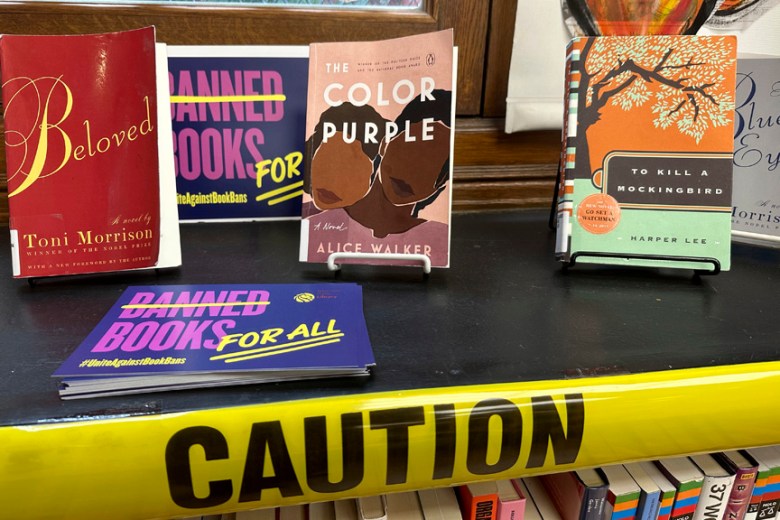
Since July 2021, an estimated 15,940 book titles have been banned in public schools across America, in 43 states and 415 public school districts. During the 2023-2024 academic year alone, PEN America counted over 10,000 book bans in 29 states and 220 school districts.
Seventy-eight percent of surveyed educators said that their “students read more when they have free choice in what to read, including access to banned books,” and 81% “feel that conversations around banned books and restrictions to book access harm students.”
The data speaks for itself. Book bans have become a core facet of contemporary American politics, and continue to more forcefully occupy our collective political conscience with each passing year.
Such censorship is a federal overreach that actively breeds illiteracy, ignorance, and intolerance. Simultaneously, these restrictions deprive states, school districts, libraries, families, and individuals of their autonomy, choice, and freedom to educate and be educated. Without protected educational rights, there is no individual and collective progression or evolution, no ability to cultivate future generations, affect global change, or resist systems of oppression. Without education, the very seats in government that create and contest bills aimed at addressing these pressing issues will not be conscientiously filled, nor their obligations dutifully fulfilled.
In order to preserve liberty, support existing educational precedents, and generate new precedents that may lead to further reform and greater literary and scholastic protections, it is necessary that the state of Connecticut show its support of civil liberties and the fundamental right to read and read freely by passing H.B. 5508: An act concerning a freedom to read.
This bill would restore agency to the state of Connecticut and its local and regional boards of education in their ability to prescribe the materials accessible in school libraries.
Other states have already started setting legislative precedents in opposition to censorship and infringement, including California with law AB-1078 (forbids the prohibition or denial of approval of the use of instructional materials, including those in school libraries, simply for containing information about diverse groups) and Illinois with HB 2789 which became Public Act 103-0100 (holds that the State’s policy is to support and safeguard the ability of libraries and library systems to obtain materials without external restrictions, and to protect libraries and related library systems from efforts to ban, remove, or otherwise limit access to books or other resources/materials).
Beyond this data, however, I find it even more important to return to the very heart of this issue: our humanity. Ultimately, this is a matter of people, of personhood, and of the right to question and oppose, and learn and affect change.
I remember falling in love with reading in preschool. Having access to a wide and uninhibited range of literature has helped me develop a unique identity and thought process over the course of my lifetime. Volunteering at the preschool I attended as a young child, I have seen countless other children embark on this same process of self-discovery, using these scholastic spaces and materials to self-educate and explore the world around them. I now attend Yale, speaking and engaging in political discourse, realizing and exercising my political efficacy, innately aware that so much of this opportunity has been granted to me because of the skills I developed from an expansive, inclusive, and multi-faceted education.
Participation in and resolutions of sociopolitical issues such as these require critical thinking. Critical thinking is developed through an education that begins with access. If the literature in jeopardy provides us with the developmental and social tools to question their very place in our society, it is imperative that we consider what might occur – or perhaps what might cease – in their absence.
Without access to these materials that are now in threat of extinction, we will not have the tools to generate such discourse.
Literacy grants us knowledge. Knowledge gives us power. Power vests the next generations with the capacity to affect positive change. Ensuring this legacy begins with providing and protecting the liberty and the resources that promote a global, holistic, inclusive, productive, and universally apt education.
Discourse surrounding such controversial issues might cease to exist if we do not safeguard access to the very knowledge that assists in our development into critical thinkers and global citizens. To eliminate certain perspectives, viewpoints, and media is to effectively eliminate the ethics and integrity of education.
If you want to protect these fundamental educational rights within the state of Connecticut, I ask that you take positive action. Show your support for this bill that currently awaits passage in the Connecticut General Assembly. Contact your local representatives. Interact with your legislators. Support school districts, libraries, and other public educational institutions in their quest to provide unmitigated access to reading materials.
Above all, recognize the power of your voice. All of the beloved heroes and villains and protagonists and side characters from your favorite books are beloved because they had a unique voice that inspired you. They are memorable and remarkable because of the impact they made and the imprint they left. They taught you to recognize and believe in your own voice. So, out of love for them and every other person and piece of wisdom that has shaped you, protect their continued existence by using your voice now.
Become a part of this moment in time. Become a change-agent in your present, and help to shape the future. And if you are to ban anything, work towards banning these bans.
Mia Gorlick is a member of the Yale College Democrats.