



|
Getting your Trinity Audio player ready...
|
Editor’s note: We are now offering an audio version of our Sunday features. To access, click on the player above.
With final passage Saturday of a major early childhood education bill, legislators will return Monday to begin their three-day push to Wednesday night’s adjournment deadline with a limited to-do list topped by adopting a biennial budget and voting on a bipartisan energy deal.
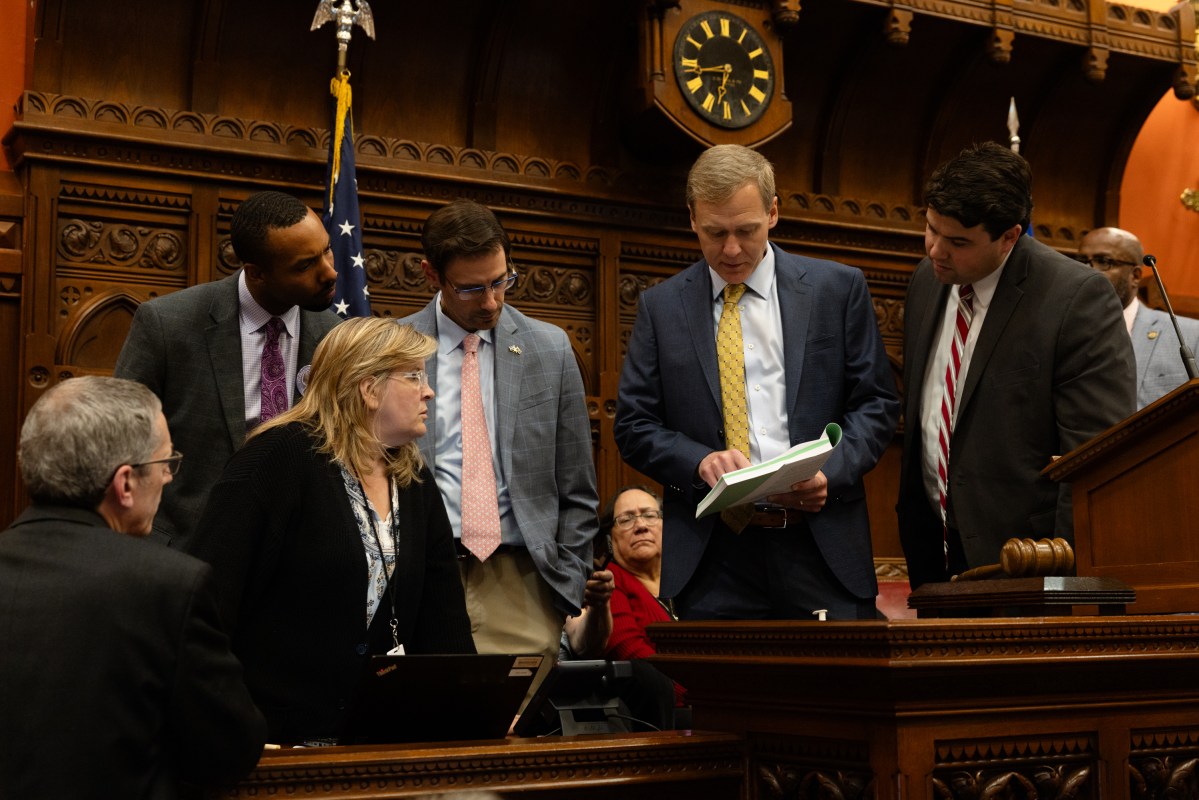
Gov. Ned Lamont, and his wife, Annie, made a surprise visit to the state Capitol as the House debated Senate Bill 1, legislation creating a groundbreaking new fund for early childhood education that was Lamont’s major initiative in a year dominated by his desire to keep state finances under a spending cap.
“I think that’s a really big deal,” Lamont said of SB 1. “That was my No. 1 priority.”
The bill also expands the state’s support for special education, a legislative initiative accepted by an administration wary of new spending, even as the state is sitting on record budget reserves and continues to pay down Connecticut’s considerable unfunded pension liability.
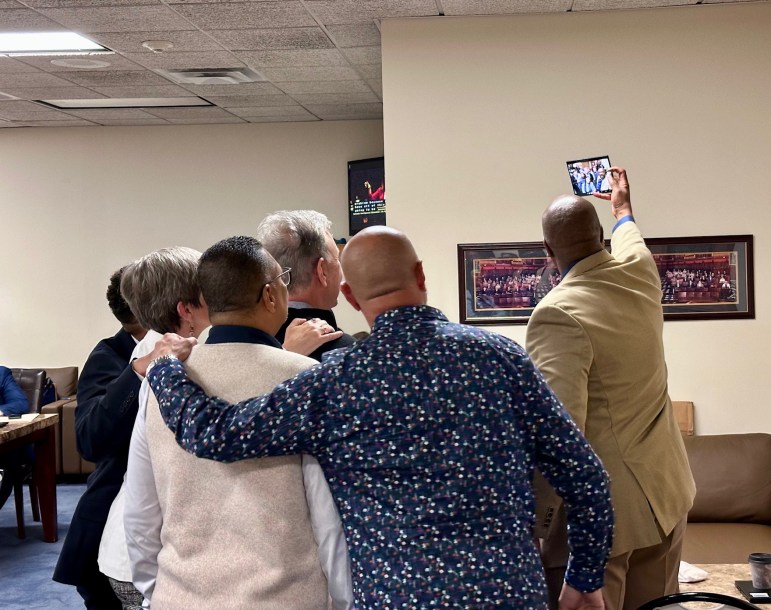
While the governor posed for selfies with Democratic lawmakers, House Speaker Matt Ritter, D-Hartford, invited him to a brief, private discussion about an unresolved budget issue: a desire by Democratic lawmakers to establish even a modest child tax credit.
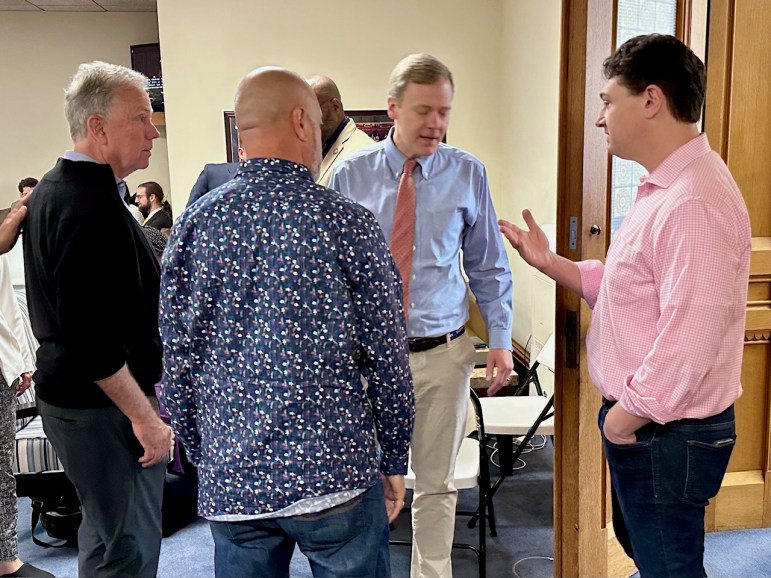
It was an unscripted moment.
“I was just walking through. Figured we’re here, say hi to the folks, wish them well. They just said, ‘Come on in. Let’s talk about something,’” Lamont said, as he exited the impromptu negotiation.
His top budget official, Jeffrey Beckham, was hastily summoned to join the chat, which also included the governor’s chief of staff, Matt Brokman. Nothing was resolved during the conversation, and the child tax credit’s prospects faded as the day progressed.
The last days of every annual session are unlike the previous months.
The combination of an unyielding constitutional adjournment deadline of midnight Wednesday and a tradition of unlimited debate means little can pass without bipartisan consent, empowering Republican minorities that hold fewer than one-third of seats in the House and Senate.
That shift means that Senate Bill 4, an effort to reduce Connecticut’s high electric rates, was being rewritten to accommodate a demand by House Minority Leader Vincent J. Candelora, R-North Branford, over procedures at the Public Utilities Regulatory Authority.
“There is definitely movement. I think the PURA language that was important, that we’re negotiating, is going our way. We’re having consensus. The legislature has come together in that language. It looks like we will have rate relief,” Candelora said. “It looks like we’ll be able to run it on Monday or Tuesday.”
On Friday, debate on a highway safety bill, HB 7160, was halted while lawyers discussed whether a Republican amendment increasing the penalty for distracted drivers could be adopted under the rules without a referral to the Judiciary Committee. Such a late referral would kill the bill.
“There are always bumps in the road and things that throw us off, right?” House Majority Leader Jason Rojas, D-East Hartford, said Saturday, before the House convened. “I think there’s general agreement on the underlying bill.”
Indeed, the bill was brought back for passage on a 140-5 vote Saturday evening with bipartisan backing — and the briefest of debates. It now goes to the Senate.
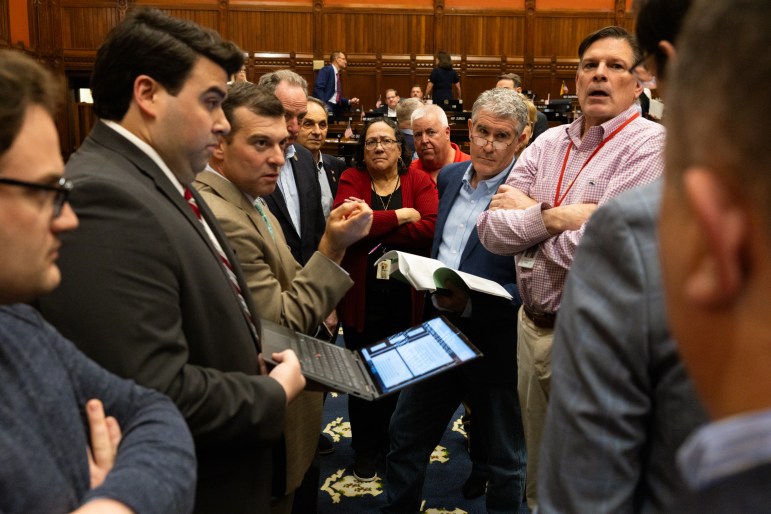
There is nuance in how the tradition of unlimited debate and power sharing in the final days is observed. The legislature’s rules allow a motion to end debate and call a vote, a tool rarely employed. If filibusters are overused, Candelora knows that is an invitation for Democrats to call the question.
What constitutes overuse is not precisely defined.
Candelora opposes Senate Bill 1, which would create an early childhood trust fund that is off budget and outside the spending cap. It passed on a 101-45 vote with no Republican support. But Candelora did not consider trying to stop final passage Saturday with a filibuster.
“We know this is going to be in the budget. So for us to filibuster this and talk it ’til Wednesday is kind of unrealistic, and it’s physically difficult to get members to stay here for six days,” Candelora said.
A multi-day filibuster likely would have provoked a vote to end debate.
On opening day on Jan. 8, Ritter warned his own party to have their bills ready for votes before the final weeks of the session, when passage grows more difficult. And he cautioned Republicans not to abuse the filibuster. Both warnings were applauded.
The Senate was not in session Saturday after voting for final passage of House Bill 5002, the session’s major housing legislation, at 2:13 a.m. The House came in at noon and worked into the evening, debating SB 1. Both chambers will be in session Monday, Tuesday and Wednesday.
Ritter, Rojas and Senate Majority Leader Bob Duff, D-Norwalk, proclaimed themselves satisfied with the annual session, even if scores of bills will die from inaction, as occurs every year.
“We’re in a really good place,” Ritter said.
“We’ve been working really well together so far. So I think that there’s a good opportunity to get a lot more done still,” Duff said.
Duff said the Senate hopes to deliver final passage of a climate bill that is a House priority. The legislation, House Bill 5004, would strengthen the state’s existing carbon-reduction goals and create a new “Clean Economy Council” to develop strategies and policies to help meet those targets.
Rojas said the House intends to vote on Senate Bill 10, a bill that strengthens the state’s rules to ensure insurers comply with mental-health parity coverage requirements.
Some bills that languish on the final few days might find a path to passage by being folded into a budget bill, but Duff noted that requires agreement of the House, Senate and governor’s office.
He declined to speculate on which favored few might get such treatment.
Seventy-three House bills await final passage in the Senate. Ninety-three Senate bills were on the House calendar Saturday when debate began on SB 1. A small minority are guaranteed votes.
As for the rest?
Ritter smiled Saturday and alluded to the fact it’s the time of year when pretty much anyone can kill a bill simply by talking. If a lawmaker made enemies during the session, they will find out if one of their bills are called.
“Look, Tuesday and Wednesday, we’ll find out how you treated your colleagues, right?” Ritter said. “It’s the ultimate sign of how people feel about you.”
